Tag: literature

  • Keep Calm, Shut Up, and Write—By Lea Beddia

    Keep Calm, Shut Up, and Write—By Lea Beddia

    One full-time teaching job (hybrid online teaching included), three school-aged children (complete with homework, lunches and the occasional emotional meltdown), and one pandemic (anxiety I never thought I’d have, a bonus). Add a house to help maintain, and there’s no time for a creative outlet. It’s enough to turn me into a Netflix zombie. You may be busy like me, but even if you’re not, you may find your creativity stifled, vacuum-packed, and freeze-dried during this whole soul-sucking, stay-at-home-and-don’t-come-out situation. The state of the world is so real, yet surreal and heart-breaking, that my aspirations for all my wonderful ideas and plots are twisted up with anxiety, sleeplessness, and an obsession with watching the news. Enter Shut Up and Write.

    Shut up and Write: the name says it all. We really just shut up and write, for twenty-five minutes at a time followed by five-minute breaks. I don’t know about other writers, but in twenty-five minutes of absolute silence, with nothing but focus and my fingers tapping away, I’m more productive than during a full weekend in front of the television with my kids on my lap spilling popcorn all over me. It’s such a great stress-reliever to know I’m prioritizing myself ahead of my to-do list. I commit to be present when all my best-laid schemes have gone awry, and it’s the only chance for the stories swarming my head.

    I myself never attended the in-person sessions. I live an hour out of the city, and taking a Saturday morning away from busy mom life was not feasible. But since the sessions have moved online, we’re only limited to the distance our laptop charges will allow us to roam. I started attending after my QWF mentorship ended last June. I was so close to finishing what I had started and needed a little extra push to get my manuscript done. The result, for me: a manuscript completed and queries written.

    More importantly for my soul and morale, however, are these tenacious people, who like me, are ignoring real life for a little while to meet online and pursue personal or professional writing. Every time I sign up for a session, there’s this excitement: I’m going to see other people, and they’ll be writing, because their writing is important to them, too!

    I miss meeting with my writing critique group: an ensemble of talented, funny women who I met during a workshop, now almost two years ago. We still keep in touch, but each of us admits to lacking the energy and/or time for our writing, because “How can I not place my family, health, work, fresh air, and rabbit hole of online shopping ahead of writing?”

    SUAW is my antidote to isolation. I have something to look forward to in a time with no appointments or visits. I’ve found a community of writers willing to have my face in a two-inch square on their screen for two and a half hours a few Saturdays a month. Loneliness is at bay when I write during these sessions. There’s camaraderie in knowing we’re all struggling for time to be creative. I am grateful for the connections I’ve made.

    In our five minutes off, we chat, and in a short time, we share what we’re working on, or talk about recipes and make each other laugh. We’re all starving for positive human connections to people with a common interest and here it is, at my fingertips! When those five minutes are up, I’m like a superhero, relinquishing the destructive powers of procrastination because I’ve got twenty-five minutes to make the rest of my story shine, or at least get it from my head to my screen. Good enough.

    We may all be “Zoomed-out” and tired of hearing “You’re on mute” or “Can you mute yourself, please?” But to be honest, I kind of like it when someone forgets to turn off their mic and I can hear their keyboard clicking. It’s not a race, but it gets me going every time.


    Lea Beddia is a high school teacher, writer for young adults, and mom of three. She grew up in Montreal and now lives in the woods, on top of a mountain. She’s published short stories for young and old and you can find her work @LeaBeddia or www.leabeddia.com. In her free time (those rare, glorious moments), you can find her with her nose in a book, tuning everything out.

    Photo credits: Header banner is licensed under CC BY-NC-SA 2.0; Sarah Fortin Photographe (headshot)

  • Realists of a Larger Reality (Or Why I Read and Write Science Fiction)—By J. DeLeskie

    Realists of a Larger Reality (Or Why I Read and Write Science Fiction)—By J. DeLeskie

    I started reading science fiction young, before realizing it wasn’t suitable material for a girl with aspirations of fitting in with her fourth-grade contemporaries. It was the genre my dad and older brother favoured, and the surfaces of my childhood home were littered with paperbacks with lurid covers: a dinosaur riding an ichthyosaur across the desert (Jack Chalker’s Midnight at the Well of Souls); or a humanoid cat glowering over a worried-looking, two-headed tripod (Larry Niven’s Ringworld). Who could resist opening these books to see what tales lay inside? Not I.

    I soon discovered that the sex scenes in these books were way more interesting than the chaste kissing and petting the kids at Sweet Valley High were up to (albeit in a Dürer’s Rhinoceros sort of way; in retrospect, many of these old-school SF authors did not appear to possess firsthand knowledge of female anatomy or— you know—the actual mechanics of sex). Soon I was hooked, and not just for the salacious content. When the reality of being an introverted, slightly awkward kid attending Catholic school in rural Ontario became unbearable, I’d escape to Arrakis and lose myself in the messianic journey of Maud’Dib, or follow the adventures of a resurrected Richard Burton (the explorer, not the actor) as he searched for the source of the great river on Riverworld.

    By my teens, I contained within me an archive of worlds, characters, concepts, and stories that enriched my life immeasurably. The trade-off—a sense of not quite existing on the same planet as many of my peers—was worth it, even if it didn’t always feel that way. Not only did science fiction provide escape, it was an antidote for religious indoctrination, challenging the conservative, Catholic vision of the world I had been raised to accept as my own. My allegiance was to a universe far bigger and weirder than anything Christian dogma could encompass.  

    At some point in my early twenties, however, I stopped reading science fiction. I lost patience with the flat characters, clunky prose, and outright misogyny that typifies so much of the genre. My reading began to veer toward realism and non-fiction. In retrospect, I think I was trying to accept the world as it was, to put away childish things. I went to law school, got married, had kids, and embarked on a career as a corporate lawyer. I felt I no longer had the luxury of questioning the world as it was; my job as an adult was to succeed according to its metrics.

    Yet gradually, as my kids grew older and began asking the thorny questions that kids ask, I started to wonder if my acceptance of things had gone, perhaps, too far. It took a few years, but I managed to find my way out of the corporate cul de sac. And slowly, I found science fiction again. I rekindled a childhood love for Ursula K. Le Guin and was dazzled by her ability to imagine less destructive ways of organizing society. I read Octavia Butler for the first time and was astonished by her depiction of society collapsing into a racialized dystopia— and then being rebuilt, one community at a time. These authors and others—Marge Piercy, Kim Stanley Robinson, Corey Doctorow, Karel Čapek, etc.—eroded the shell of cynicism I’d formed over my conscience by insisting that there was nothing inevitable about environmental degradation, white supremacy, capitalism or misogyny.

    Thus, when I decided to try my hand at writing, it was science fiction that called to me. I’m now in final revisions of my first novel, Everclear, a coming-of-age story set in the near future in northern Quebec. The act of imagining this future feels laden with responsibility, and I’m attempting to construct this story with great care. I believe firmly that our words bring potential worlds into being.

    In her brilliant and fearless acceptance speech at the 2014 National Book Awards, Ursula K. Le Guin put out a call to “realists of a larger reality” who “see alternatives to how we live now and can see through our fear-stricken society […] to other ways of being, and even imagine some real grounds for hope.” The call is increasingly being answered by Indigenous, Black, and LGBTQIA writers of science fiction such as jaye simpson, Cherie Dimaline, Nnedi Okorafor, and N.K. Jemison— writers who, because of their lived experiences, assemble the pieces of our shared reality in unexpected ways. To me, this is the opposite of escapism; it’s an invitation to see the world with new eyes and answer the moral imperative this vision affords us. This is why I read science fiction, and why I write it: not to escape this world, but to re-imagine it.

    And, of course, for the cringy sex scenes.

    Suggested Reading List

    Love After the End: An Anthology of Two-Spirit & Indigiqueer Speculative Fiction, edited by Joshua Whitehead, 2020

    The Dispossessed: An Ambiguious Utopia, by Ursula K. Le Guin, 1974

    Woman on the Edge of Time, by Marge Piercy, 1976

    The Parable of the Sower, by Octavia Butler, 1993

    Ministry for the Future, by Kim Stanley Robinson, 2020


    Jennifer DeLeskie is a former lawyer and new writer, currently revising a draft of her first novel. Her non-fiction piece, “April 2, 2020,” will appear in Chronicling the Days (Guernica Editions), forthcoming in Spring 2021. Jennifer volunteers on the board of the Quebec Writers’ Federation.

    Photo credits: Header banner is licensed under CC BY-SA 2.0; Annabel Simons (headshot)

  • Writers Need Libraries; So Do Our Children—By Deborah Ostrovsky

    Writers Need Libraries; So Do Our Children—By Deborah Ostrovsky

    Not long ago, during the Before Times, I received a small award to pursue a non-fiction project. I planned to dedicate an entire week, maybe two or three, to writing without interruptions.

    The morning I opened my laptop to begin—it was World Book Day, which seems ironic now—I found an email from my daughter’s primary school. They needed a parent to volunteer at the library.

    Our primary school is fortunate to have a library at all. Many schools don’t have libraries. A primary school a few blocks from ours recently turned their library into a supply closet. Over 20 per cent of Laval’s public schools are without libraries, or enough books in classrooms.

    Radio-Canada reports that a quarter of all school boards in Quebec don’t have librarians. Our library is run by volunteers. We shelve. We search for lost books. Like a team of amateur first responders in an emergency room that should be staffed by qualified surgeons, we learn to repair the broken spines of bandes dessinées from video tutorials.

    The email from the school said that a few classes hadn’t been able to borrow books for months. Could you come today, maybe now, to turn on the computer and let the kids finally take some out?

    So I did what any emerging writer starved for time to write would do. I closed my laptop. I put on my coat. I rushed to the school. I stayed all morning and returned in the following weeks until the pandemic shut everything down. 

    Writing, editing, and translating are jobs that can sometimes feel easy to walk away from. This is especially so when other urgent business gets in the way—like helping to provide literacy and library resources for kids when neoliberal education budgets consistently sap them dry.

    It’s overwhelming to try and comprehend all the ways the arts, books, and writing are shaped by government policy. Even more overwhelming is the thought of my own personal luck at being born at the twilight of a golden age of state interventionism—right before the neoliberal assault on education. The idea of dedicating a life to writing would have never been possible for someone of my family’s background without policies that made public libraries, and librarians, part of every school.

    “Books have their sources in, are made from readers (would-be writers) reading other people’s books,”muses Kate Briggs in her book This Little Art. “All books are made from other books,”she writes. Anything I have ever written, then, has come in some way from other books, and in turn from a childhood of reading books that had date due slips glued to the back cover, and which were tucked under my pillow at night. The stories within these books made their way into my dreams. These books were always borrowed. They belonged to my public school.

    Now school libraries only open when parents have the income and the time to spend mornings taping together torn pages of Astérix.

    It’s okay, a parent told me a while ago when we talked about this. We have plenty of books at home.

    Lucky you, I thought. And what about those who don’t?  

    Lucky me, though. I get to write. It’s a privilege, in today’s economy, to do this thing with my life. But access to a school library should be a right, and not a privilege. The deep connections between my privilege and this right are buried somewhere within the early manifestations of my own creative desires over which I can take some measure of ownership; but they were undeniably helped along by state policy, making it possible for the artistic inclination and writerly imagination to be fostered by something other than luck, wealth, or family. It can’t be denied. My writing life is a result of private ambitions but also public will.

    For now, I’ll keep writing until the school library finally reopens, when the pandemic is under control. Then the school will call and say that they need somebody to help the kids take out books. I should really say no, and stay at my desk, to avoid more interruptions.

    But I will say yes. I will do this until something in the system changes radically, so kids can get their hands on more books. Maybe some of those kids can write in the future, too. In the meantime they’re waiting, hopefully not for long.


    Deborah Ostrovsky is an editor, writer, and translator. Her work has been generously supported by the Barbara Deming Memorial Fund, the Marian Hebb Research Grant, the Banff Centre for Arts and Creativity, and the Writers’ Trust of Canada.

    Photo credit: Gopesa Paquette

  • On Best-of Lists and How We Actually Read—By Genny Zimantas

    On Best-of Lists and How We Actually Read—By Genny Zimantas

    I am a big believer in lists. Grocery lists. To-do lists. Lists on phones and bits of envelopes and bills. Lists are satisfying to write, and even more satisfying to work through. But best-of lists, the kind of lists which flood journals and newspapers towards the end of each year, summarising “The 10 Best Books of 2019” or “The 100 Best Books of the 21st Century”—even though we’re only a fifth of the way through that century—are a pet peeve of mine.

    It’s no secret that yearly best-of lists are a marketing tool: for specific books, and publishers, and the journals or newspapers in which they appear. Few journalists, after all, can boast of having read every book they enumerate come December, let alone the thousands of other titles published in English and translated into English each year. The “best” books are usually chosen from an already shallow pool of previously successful titles, titles already supported by big marketing machines.

    That best-of lists so often equate financial success with literary value can be deflating, but my problem with best-of lists isn’t the “best” books themselves. It isn’t even whatever methods the list-makers use to arrive at their final selections. Instead, my issue with year-end best-of lists is how they dominate mainstream readerly conversation and keep us so focused on the immediate past—on the latest publishing triumph or controversy. To be clear: at this point in history, more books have been published than any of us could feasibly read in a dozen lifetimes. So why restrict our focus to the last year, or even fifty? Best-of lists help solve the problem of picking a next title out of overwhelming choice, but they distort perceptions of how we can (and do) read.

    In what I like to think of as defiance of market-driven, “of the moment” reading, booklovers around the world have come up with inspiring and invigorating criteria for deciding what to read next. UK-based reader and author Ann Morgan launched a project called “A Year of Reading the World” in 2012, embarking on a mission to read one book from each of the “196 independent countries—plus one extra territory chosen by blog visitors.” Making a similar readerly commitment the year he turned 25, Jerome Blanco decided to “stop reading white people,” in the process discovering more about himself, reorienting what he thought of as “real” literature, and revaluing his own work as a writer, too.

    These selection methods are, of course, restrictive in their own ways, and both readers relinquished complete adherence to their own rules after the periods in question. Both also maintained, however, that their reading habits were more open and varied after their readerly experiments than they had been before. Other bibliophiles set themselves more pointed challenges, like reading all of Proust during lockdown or responding to each of Emily Dickinson’s 1789 poems (from the Franklin variorum edition) online. Perhaps the most prominent rebellion against “best-of” reading, though, comes in the form of the counter list.

    Claiming to present “The Best Overlooked Books of 2019” or “The 13 Most Underrated Books of All Time,” counter lists seek to redress the presumed authority of yearly best-of lists and to expand our horizons beyond the already popular. They are, however, comparable to their more mainstream analogues in several key ways. Like year-end lists, they select and elevate specific titles. Also like year-end lists, they make an authoritative claim for quality, privileging not just books they identify as great, but books they claim are better than all the other great books. Counter lists thus fall into the same myopic trap: they claim objectivity and project a knowable universe of reading, where neither objectivity nor comprehensive knowledge exists.

    I’m not trying to suggest that best-of lists should be discarded, or even that we should shift our focus away from popular contemporary authors. We owe a certain responsibility, I think, to read work that is being produced now, to engage with our world and support living writers—especially writers from continually underrepresented backgrounds and marginalized groups. Best-of lists do, of course, bring attention to deserving new titles, and so have an important role to play. But a list, any list, is first and foremost a way to collect and categorize information, to make that information seem manageable, finite, knowable, known. Fortunately, if overwhelmingly, that just isn’t how the catalogue of 21st-century reading works.

    So, this year, I’ve started making my own lists, of books I want to read but also of new routes to discovery: talking to independent bookstore owners, and librarians, and friends; reading non-list articles; consulting catalogues from local small presses; seeking out books written in languages I’ve never read in translation before. I’ll be looking for books I can share with hundreds of thousands of other readers around the world, but also books few other people have read, books from two thousand years ago and books written this year, but from perspectives unlike my own. Best-of lists are fine, of course, but books are just so much cooler than “best.”


    Genevieve Zimantas is a writer and educator from Montreal whose poems and essays have appeared in journals across North America. She holds degrees from McGill University, Dalhousie University, and the University of Cambridge. In 2018, she was pleased to have been selected as the QWF’s poetry mentee and had the privilege of working with poet Peter Richardson. She now lives and reads in the United Kingdom.

    Photo credit: Lewis Weinberger

  • Writing on the Edge—By Lise Weil

    Writing on the Edge—By Lise Weil

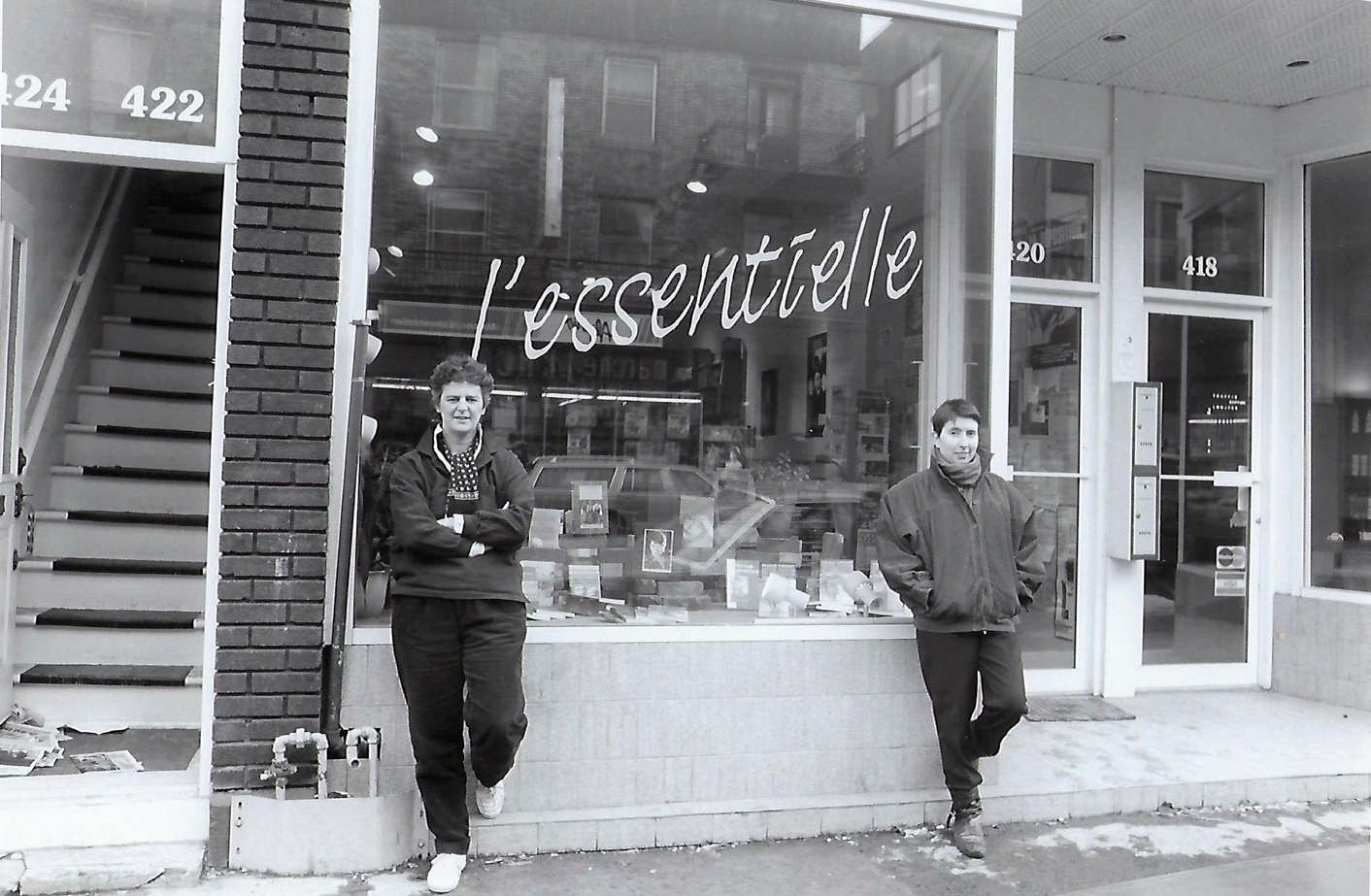
    Odette DesOrmeaux and Martine Huysmans, two members of the l’essentielle collective which also included Ariane Brunet and Harriet Ellenberger, 1988.

    Just over thirty years ago, in June of 1988, I drove up to Montreal from my home in Montague, Massachusetts to attend the Third International Feminist Book Fair. At the time I was editor of the feminist literary review Trivia: A Journal of Ideas; we had a table in the exhibit hall, alongside books, presses, and journals from all over the world. The Fair, housed on the Université de Montréal campus, was attended by some 8,000 people, featured over 300 authors, and hosted the largest gathering ever of Indigenous women writers from Canada. Coming off three days of head-spinning, exhilarating, often revelatory panels, readings and conversations, co-editor Linda Nelson and I decided to devote the next two issues of Trivia to the event.

    Trivia 13 focused on the feminist writers of Quebec and those influenced by them: Nicole Brossard, Gail Scott, Erín Moure, Louise Cotnoir, Michèle Causse (France), and Betsy Warland (BC).[i] The energy and vision of this community of feminist writers (which also included Louky Bersianik, France Théoret, Louise Dupré, and Daphne Marlatt) had provided much of the impetus for the Fair itself.[ii] In my editorial I attempted to name what it was about these writers that excited me so much. It had to do with their understanding of language as transgressive, and as material. With their exuberant flouting of genre boundaries—poetry becoming essay, fiction theory (“fiction/theory” – Brossard’s term)—all in deference to their insubordinate, uncooptable female bodies (“The breasts refuse”—Warland). And it had to do with the edge they/we were all on—as women claiming space for our own bodies and thoughts for the first time ever.

    Just over a year before the Book Fair I had driven up for the opening of the bilingual bookstore l’essentielle, a word Brossard coined in her epic poem “Sous la langue/Under Tongue.” A bilingual edition of that poem was being launched to mark the occasion. The little store on Rachel was spiffy, with hot pink shelves and track lighting. I remember women in dress shirts and bright scarves hoisting glasses of white wine. I remember Brossard and her translator Susanne de Lotbinière-Harwood taking turns reading the stanzas. On ne peut vas prévoir / You cannot foresee, each verse began, crescendoing as the lover’s mouth approached the body she desired, launching her into the unknown.

    You cannot foresee so suddenly leaning
    towards a face and wanting to lick the soul’s
    whole body till the gaze sparks with furies and yieldings. . . .
    Desire is all you see.

    And I remember walking into my study one Sunday morning not long after that launch to find Linda with Brossard’s chapbook in her lap, weeping. “We don’t write like this here,” she said. “No one writes like this here.” Eros: words embodied it in Quebec women’s writing. Words were marks of possibility, thrusting us out to a precipitous edge where nothing was foreknown… No, there was nothing like this in our feminist world. Plus the lesbians I hung with favoured jeans and flannels.

    Some two years after the Book Fair I moved to Montreal, in part drawn by that subversive brew of Quebec au féminin, wanting to be immersed in it (and yes, admittedly, wanting to be among women who dressed up for each other). Beneath all this was a desire to write… in order to do which I knew I needed to get away from the home that was Trivia’s operating base. But weaning myself from the role of editor and translator took more than a physical move. It was thirteen years before I found myself in the grip of a long writing project: a memoir that began—not surprisingly—as a meditation on lesbian desire and that chronicled a series of disastrous love adventures that drove me, heartbroken, to this foreign city where I finally learned to abide—in love, and in place. A QWF mentorship with Elaine Kalman Naves in 2003-4 was foundational to this project. It would take me another twelve years to complete the memoir, but I wrote some two-thirds of a first draft in those months. Elaine’s encouragement and her insight were just the spurs I needed.

    l'eugelionne2
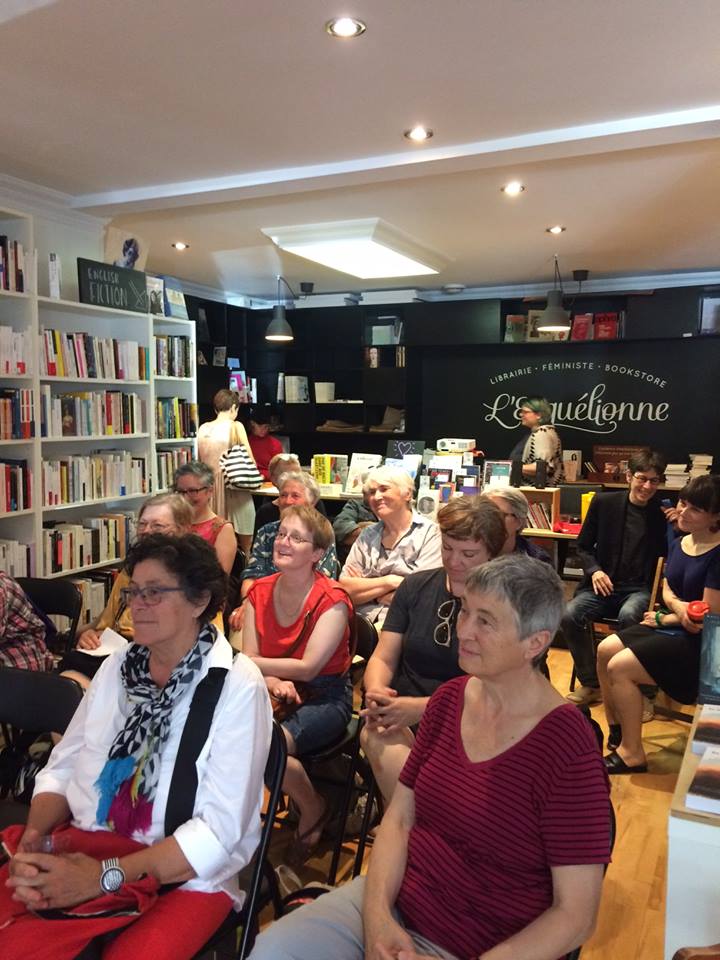
    Launch of “In Search of Pure Lust” at L’Euguélionne, June 2018.

    But it is also true that my memoir, In Search of Pure Lust, would not exist in its present form were it not for my immersion in Quebec au féminin (where the last section of the memoir is set) and its climate of formal permissiveness and political passion, its celebration of language as erotic. I imagine many literary products of this century, not only here in Quebec but throughout North America, owe a similar debt. So it’s both surprising and dismaying to me that nowadays in Anglophone literary contexts there is so little acknowledgement—or even knowledge—of these Quebec writers and their pioneering body of work. Even when the topic is formal innovation.[iii] Even in Montreal.[iv] At least here in Montreal, as of two years ago, we have a monument to this genealogy in the form of the bilingual feminist bookstore L’Euguélionne—named after Louky Bersianik’s kickass, visionary feminist novel. Long live L’Euguélionne!

    I can’t help longing for the kind of literary community that first drew me to this city, a locus for deep conversation revolving around a common cause that felt urgent enough to unite writers of different cultures and languages. What might that common cause be today? As global forces thrust us towards a darker precipitous edge, and an endless expanse of unforeseen. . . .


    Lisebookstore

    Lise Weil’s memoir, In Search of Pure Lust (Inanna Publications, 2018), is a finalist for an International Book Award and winner of an Ippy Award. Her essays, literary non-fiction, and translations have been published widely in Canada and the U.S. She was founder of the feminist review Trivia: A Journal of Ideas (1982-1991) and its online offshoot, Trivia: Voices of Feminism (2003-2011)She is currently editor of Dark Matter: Women Witnessing, which publishes writing and artwork created in response to an age of mass extinction and ecological collapseShe teaches in the Goddard College Graduate Institute. www.liseweil.com

    [i] Contributors to Trivia 14, “Language and Difference,” included Lee Maracle, Jeannette Armstrong, Gloria Anzaldua, and Jewelle Gomez. Copies of Trivia 13 and 14 can be ordered for $5 plus postage. lweil22@gmail.com

    [ii] Six of these writers met on Sundays every three months in Montreal to talk about feminism and theory. Theory, A Sunday (Belladonna, 2013), a recent translation of La théorie, un dimanche (1988), collects the writings that emerged from these conversations.

    [iii] See, e.g., Bending Genre: Essays on Creative Nonfiction (eds. Margot Singer and Nicole Walker, Bloomsbury, 2013). Much of the bending and unsettling described in these essays was being performed by the writers of Quebec and was addressed explicitly in Gail Scott’s “Shaping a Vehicle for Her Use” (Spaces Like Stairs, Women’s Press, 1989).

    [iv] Not even at a recent reading by a visiting Canadian author from a work of fiction titled Theory.

    Photo credits: Marik Boudreaul (header image); Favor Ellis (headshot)

  • A Connected World—By Christopher DiRaddo

    A Connected World—By Christopher DiRaddo

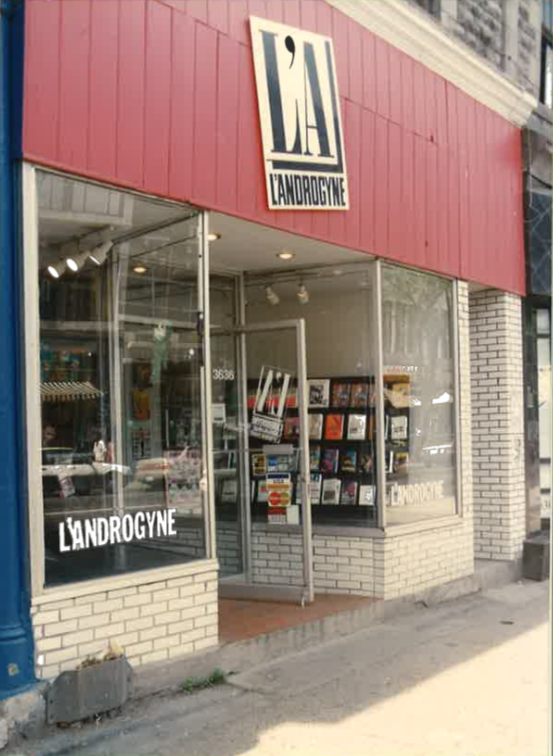
    Montreal’s gay, lesbian, and feminist bookstore, L’Androgyne, closed for good in 2002. At the time, I knew I was going to miss it, but even now, some seventeen years later, I still feel its loss.

    I don’t remember the first time I went inside, but I remember being nervous about it. Who would see me go in? And what would I find there? I still remember its address: 3636 St. Laurent. I remember its smell too: the books, the paper, the glue that held everything together. The place was small, a mere 1,200 square feet, with three rows of white bookshelves all built by hand. It was here where I discovered my favourite authors, where I first picked up copies of books by Armistead Maupin, Ethan Mordden, Sarah Schulman, Andrew Holleran, and Sarah Waters.

    It was also here where I found community. Where I made friends—France, David, and Johanne—all working behind the counter. I’d visit several times a week, if I could, leaving not only with books or magazines but with stories about real people’s lives and the places and events and collected history that were all a part of this exciting community I had just found. Before the Internet, a city’s LGBTQ bookstore was where you got your news. It was where you could pick up queer publications like Fugues or Xtra or the Guide, flyers for parties, maps for marches. And it was also a place where you could develop a crush among the stacks, where you could smile and flirt and finally meet others who shared your interests.

    Walking down the aisles, I’d sometimes imagine my own book on the shelves. At that time, I’d been writing for years with no indication that anything would ever come of it. How great would it be, I’d think, to see a book I had written alongside these legends (under D, somewhere between Delaney and Donoghue)? Sadly, I never got to know that feeling. By the time my first book was published, L’Androgyne was twelve years cold in the ground.

    I’m sure many of you can relate to losing your favourite bookstore. L’Androgyne was not the only one to lose out as the world moved online. For the LGBTQ community, though, there was a moment when the arrival of the Internet held such promise. It meant that people could have more access to resources and information (especially those who didn’t live in urban areas). It was a place where we could congregate easily, expand our networks, and make connections. Yet something authentic was lost. Gone was the human touch, the spontaneity, the chance for discovery, the surprise of the unknown. Sure, I could Google “new gay fiction” if I wanted to know what to read next. I could add “booklover” to my dating profile. But gone were the deep conversations, the quiet browsing, the raucous laughter, the looking for friends, lovers, and other limited editions in the aisles.

    When my book finally came out in 2014, I was disappointed there wasn’t a home for it. I did a few public readings in straight spaces, but rarely sold copies. There was no forum in Montreal for me to introduce my book to my community. And it wasn’t just me. All around I was seeing Canadian writers continuing to publish LGBTQ books and they too struggled to reach an audience.

    So, I decided to start my own reading series. I figured, if Montreal didn’t have an LGBTQ bookstore, I’d make one—at least for a few nights a year. Now, every two months, the Violet Hour takes place in a bar in Montreal’s gay village. And not just any bar, but Stock—a gay male strip club. Why a strip club? Because I wanted a place with a different energy, one where writers could feel like they could take risks with their work. I also wanted to host something in the village because that neighbourhood too had suffered from the shift online and I wanted to bring back some culture to the place that had given me life in my twenties. Above all, I wanted my series to be more like a party, more social. I wanted there to be music and drinks and fun and laughter. Like it was back in the good old days of L’Androgyne. I wanted to unite LGBTQ booklovers in one room and get them talking—about their favourite books, about their favourite writers, about themselves.

    To date, there have been more than twenty events and more than a hundred writers who have taken to the stage. That’s hundreds of new connections made between writer and audience. Montreal may not have a dedicated English-language LGBTQ bookstore anymore, but I’d like to think the Violet Hour is the next best thing. And I hope, as long as this country continues to publish LGBTQ literature, that I can provide it with a stage.


    unnamed

    Christopher DiRaddo is the author of The Geography of Pluto and president of the Quebec Writers’ Federation. You can find out more about future Violet Hour events here. The next event is at the Montreal Fringe Festival on June 5, 2019 at 6 p.m. (Mainline Theatre, 3997 St. Laurent).

    Photo credits: France Désilets (header banner), Paul Specht (headshot)

  • Trauma Ethics—By Lindsay Nixon

    Trauma Ethics—By Lindsay Nixon

    Recently, I was lucky enough to sit on a panel with fellow writers Erín Moure and Will Aitken. During the question period, an audience member asked: Is it ethical to write, publish, and profit off books that include accounts of personal traumas? An interesting question, indeed, and one that Indigenous writers are often pressed to answer.

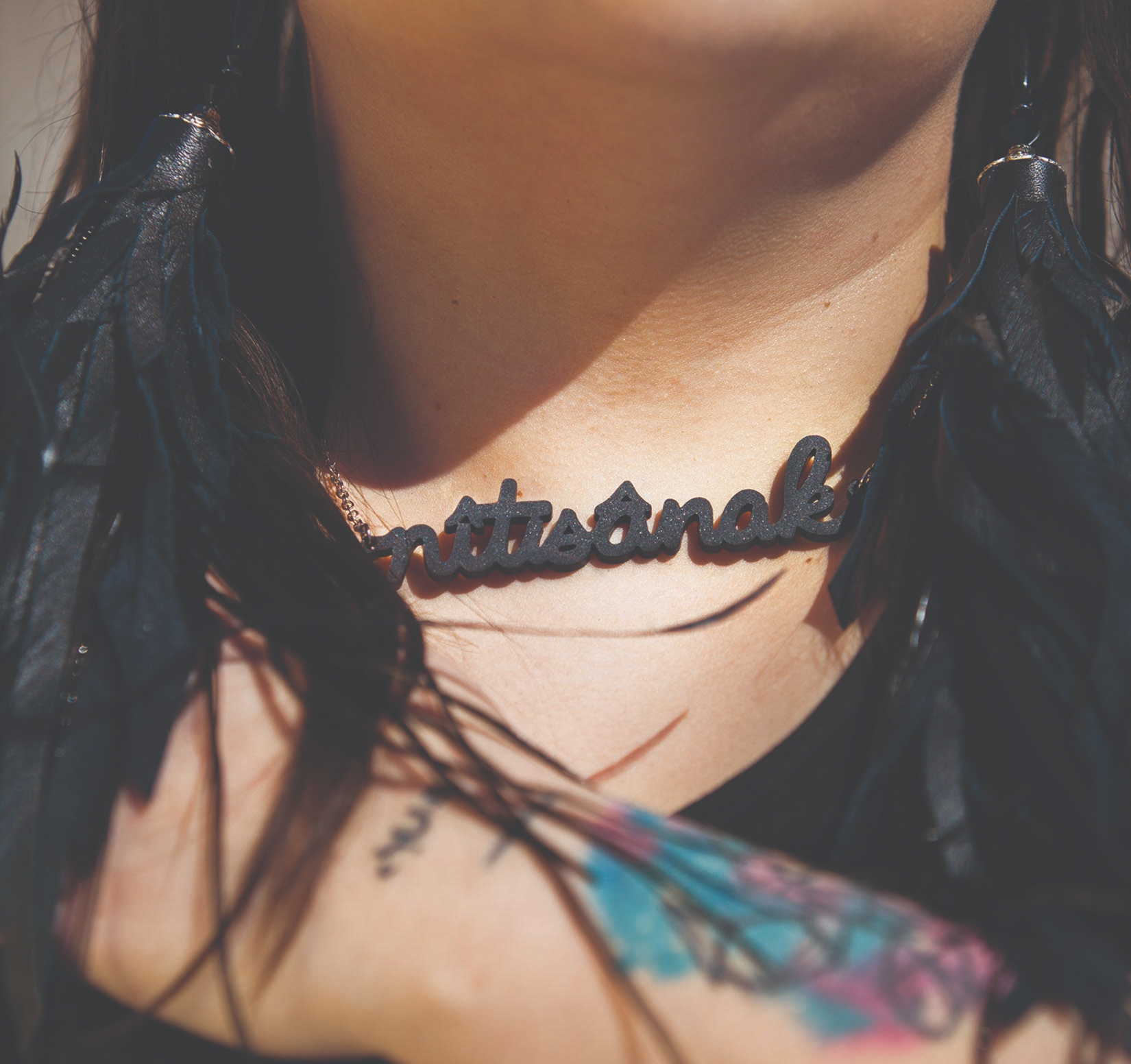
    Having just published my first creative non-fiction collection, nîtisânak, through Metonymy Press, I’m no stranger to weighing the ethics of writing about myself, and my relations, embodying various forms of trauma. I’m especially conscious of the vulnerable states some of my Indigenous relations live in, a fact that remains ever in the back of my mind when I write creative non-fiction. I’m also interested in the role that audiences play in how trauma-based writing is received. I would argue, even, that the audience—the reader—has a great deal of responsibility in how Indigenous trauma is perceived.

    As a thought experiment, I will draw examples from the ethics associated with publishing personal traumas in the recently-released television series based on a Shirley Jackson novel, The Haunting of Hill House. It tells the story of the Crain children, who grew up in (spoiler alert) a haunted house, experiencing various traumas culminating in their mother’s suicide one supernatural night. Oldest son Steven has made millions selling books depicting the now infamous murder trial against his father, after his mother’s death was presumed a homicide.

    Steven does not gain consent from the family members whose trauma he depicts. He also describes trauma he has not himself experienced. Viewers learn it was actually the other siblings who saw everything that happened that night, while Steven was fast asleep. What Steven depicts, as his sister would later tell him, is wholly untrue. He takes liberties with many events that occurred, fabricating his own account based on bits of information he has gathered over the years. It is not just that he publishes experiences that are inaccurate and not his own, but that the people who experienced them are still working through their understanding of what did happen. Steven’s publication of his fabricated version of events only further exacerbates the siblings’ already fragile states.

    Yet Steven’s stories are presented as authoritative truth. Understanding “truth” in this context means understanding positionality. When Steven goes to visit a fan, she is enamoured by Steven’s celebrity. She assures him he did the right thing by publishing and asks when the next book will come out. Steven’s authority is assumed.

    The Crains’ story is supernatural fiction. But for Indigenous peoples in Canada, the embodied traumas of colonialism can be a daily experience—not unusual, just a facet of everyday life. When Indigenous narratives are described as “traumatic,” I wonder: whose truths are we centering as the consciousness of Canada’s literary canon? Whose authorities, whose “truths” are deemed true, and whose are not?

    In reply to the question, Is it ethical to publish (Indigenous) trauma, I would ask: trauma to whom? Who gauges what constitutes trauma? Now, are we talking about the ethics of writing about trauma, or the ethics of writing about Indigenous lives? Because, the lives of Indigenous peoples might seem traumatic to a largely white audience. What some might call trauma is just what we call life. So are we just not allowed to write our lives? Some of the power I feel comes through in my own writing, and that of my peers, is the biting wit we can tell our stories with despite what some might call “trauma.” As I told the audience member who asked about trauma, there are so many Indigenous narratives that haven’t been told because of the overwhelming whiteness of CanLit, as Vivek Shraya termed it.

    The literary industry and Canadian publics are constantly, and especially, denying the truths of Indigenous women. McClelland & Stewart recently garnered negative media when it was uncovered that they had censored a portion of Maria Campbell’s Half-Breed that described her account of being raped by a Mountie. The ethics of Indigenous peoples writing their own lives is constantly called into question because of a normalized culture of paternalism in publishing when dealing with Indigenous stories. A white-coded lens propagates the assumption that Indigenous peoples are not equipped to make judgments about what stories are ethical to tell, and what stories might be harmful to tell, because their lives are positioned as inherently traumatic. Colonial actors such as ethics boards, in the supposed interest of Indigenous peoples, are seen as better equipped to make authoritative judgments regarding Indigenous knowledge and knowledge production about Indigenous communities than Indigenous communities themselves. All this denies Indigenous peoples self-determined representation. Indigenous peoples internalize that their truths are not, indeed, true.

    Indigenous writing forces Canadian literary communities to confront the question of whose truth is witnessed as authoritative truth, and whose truths are not considered truth at all, because they negate a naturalized colonial and capitalist order in Canada (and Canadian publishing). Questions about the ethics of publishing trauma are seldom asked about fiction writing, though many a fiction writer has smarmed to me over cocktails, It’s all non-fiction darling, we just change the names. I remember reading Joseph Boyden’s The Orenda for the first time, taken aback at the incredibly violent, traumatic, and disturbing depictions of exploitative Indigenous trauma. But, because it was fiction, because it was in the name of literary writing, somehow it was presumed ethically above board. The Orenda is an example of the literary aesthetic of trauma written for a voyeuristic, non-Indigenous audience. It should come as no surprise, then, that it remains one of the most successful works of “Indigenous” fiction in Canada.

    I won’t say that writing about trauma is always black and white. In my book nîtisânak, I was very thoughtful about the narratives I did include. In fact, a lot of it deals with working through my relationships with my white relations. That said, it would be nice to have the kind of conversations I want to about my work, not just from the perspective of the aesthetic trauma that CanLit so loves. Because I’m not trying to write about trauma. I’m just trying to write about what it’s like to be in this body. I’m just trying to write a beacon of light for all the other poor, queer, prairie NDNs trying to survive into the Indigenous future.

    As I wrote in my book: Don’t mistake my words for trauma porn, because this is just how it went down for us. If these stories can’t be told without yt* tears being shed, that’s not my problem. No, my trauma is not a commodity, but my story doesn’t always have to be uplifting, resurgent, or revolutionary to be my truth, either.

    * “Yt” is an abbreviation for the word “white.”


    Lindsay_Nixon_headshot_new

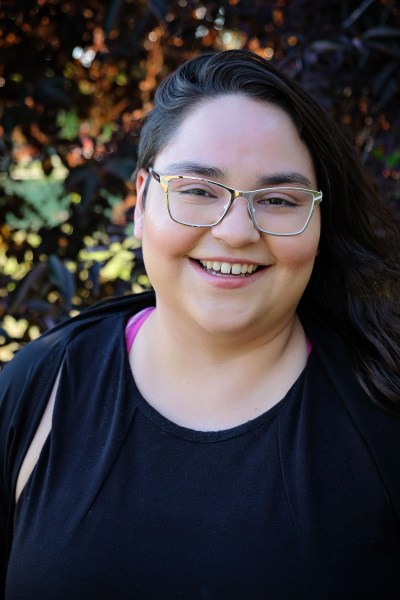
    Lindsay Nixon is a Cree-Métis-Saulteaux curator, award-nominated editor, award-nominated writer, and McGill Art History Ph.D. student. They currently hold the position of Editor-at-Large for Canadian Art. Nixon’s first book, nîtisânak, is out now through Metonymy Press.

    Photo credits: Dayna Danger (header image); Jackson Ezra (headshot)

  • Amazing Grace: A Literary Friendship—By S. Nadja Zajdman

    Amazing Grace: A Literary Friendship—By S. Nadja Zajdman

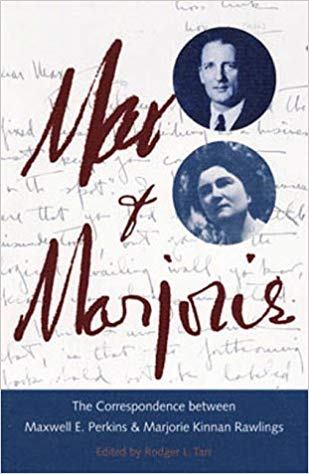
    I was sitting by the gas-lit fireplace in my local library when a book on the table caught my eye. It was the collected correspondence of the novelist Marjorie Rawlings and her editor, Maxwell Perkins. As I read their letters I could hear their long-stilled voices speaking to each other, and to me, across the expanse of decades. I tried to check out the book, but was told it was a reject from a book sale, and if I wanted it I would have to buy it. So I did.

    At home, I looked up Maxwell Perkins on the Internet. A link led me to Perkins’ granddaughter, the novelist Ruth King Porter, who lived in rural Vermont. Ruth was giving away her novels, asking nothing in return but that readers post reviews on her website. I sent for Ruth’s books, and a correspondence began. Soon, we wanted to meet in person. I scheduled a visit to Ruth in spring, then her mother’s dying began. I rescheduled to autumn, then my mother’s dying began.

    Instantly I cancelled travel plans and let go of my already-purchased bus ticket, but a friend with a car offered to take me on a shorter day trip to Vermont. Encouraged by my mother, I accepted.

    “We are two middle-aged women, both wearing glasses.” I wrote to Ruth. “My friend is a blonde with dark roots. I still think of myself as brunette, but there is more salt than pepper in my hair, now.” Ruth wrote that she would be waiting for me under the clock tower of Montpelier’s City Hall. I knew what Ruth looked like from the photographs on her website.

    PerkinsRawlingsBookCoverWe rode into Montpelier on a gloriously warm day at high noon. I saw Ruth sitting on a bench under the clock tower, scribbling in a notebook. Main Street was packed with tourists, and we couldn’t stop the car in front of City Hall. We found a parking space down the street. My friend waited in the car, while I ran down the block. “Ruth?” The woman on the bench looked up, and then leapt up.
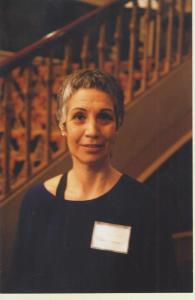
    Ruth was a pre-hippie Back-to-the-Lander, in her early seventies when I first met her. At our first encounter, she wore a white work shirt, faded blue jeans, and a black money belt slung over her shoulder. She walked like someone who rode horses.

    “Where’s your friend?” Ruth called through the crowd of tourists blocking the sidewalk.

    “She’s waiting in the car!” I called back. I led Ruth to the car and the friend in it. Ruth led us both on a tour of the golden-domed state capital building. “I hope we don’t run into my son.” Ruth twinkled. “He’d be embarrassed by the way I’m dressed. My son Louis works as an aide to the governor.” When the tour was over Ruth led the way in her battered old car out of Montpelier and higher into the Green Mountains, where another world awaited.

    Ruth’s husband Bill and a second son, Robbie, rode their tractors out of the woods to greet us on the porch of a rambling farmhouse. Nearby, three large dogs stiffened in alert: Ellie and Flora danced in attendance to the top dog, Chief. Ruth’s daughter Molly, an artist who lived, Thoreau-like, in a cabin she built with her hands, bounded up a hill to join us. The open and friendly faces of Ruth’s family smiled at me kindly. I’m sure they were aware of my situation, though no one referred to it. Taut, lean, Alabama-born Bill wiped the grime off his hands and stepped forward to shake mine. I felt as though I’d stepped into an illustration by Norman Rockwell.

    As an early darkness fell my companion and I crossed back over the border, returning to Montreal and my mother’s apartment. “Hello sweetheart.” My dying mother smiled tenderly. “How did it go with the lady in Vermont?”

    What could I say? I felt guilty at having left her, even for a few hours. I didn’t feel like relaying the details of an excursion to Vermont.

    Six months later I returned to Montpelier by bus, alone. Once more, Ruth met me under the clock tower. For a few days I curled under Ruth’s wing, sunning on her roof, sleeping in Max Perkins’ bed, waking to birdsong and skimming the staggering array of autographed out-of-print books dedicated by grateful authors to their engaged and caring editor. “Grieving is hard work,” Ruth would say in greeting when, after a nap, I descended a steep staircase into her dark country kitchen. As we stood side by side in the verdant meadow which was her front yard, Ruth added, as much in amazement as in sadness, “A year ago this time, both our mothers were alive.”

    Ruth King Porter is an American blueblood whose antecedents hark back to a woman who held a door open for George Washington. I am the Canadian-born daughter of refugees. My mother, a woman who survived three invasions and the Warsaw Ghetto, later in life became prominent in Holocaust education. Many people find my mother’s story repellent and turn away from any mention of it, whereas Ruth and her husband Bill were fascinated. Ruth did for me what I had done for my mother; she listened. And she encouraged me to tell my mother’s story.

    Six months after that, I was back on the farm. Ruth and Bill acknowledged what would have been my mother’s birthday by lighting large candles in a spectacularly tangled chandelier made entirely of logs. Through the wall-sized picture window we watched the cold autumn rain and wind lash the last leaves off a forest full of trees. As we ate hot squash and a pot full of peas grown in Ruth’s garden, the lit log chandelier shone, the tree-bark-shaded lamps glowed, and the wood stove burned.

    I have been back to Ruth and Bill’s farm several times since. In between visits Ruth does for me what her grandfather did for Ernest Hemingway, F. Scott Fitzgerald, Thomas Wolfe, and Marjorie Rawlings: she writes to me and elicits writing from me, reads and critiques my material, encourages, cajoles, indicates where and when she believes I have veered off-track, and gently nudges me back. Clutching the psychic lifeline tossed to me by the descendant of a legendary literary editor, I live and work alone and in growing peace in my suburban Montreal apartment, producing a memoir of my mother. My mother knew that my writing would sustain me after she was gone. Ruth Porter’s mentorship sustained me during the darkest days of my life.


    S Nadja Zajdman_HeadshotS. Nadja Zajdman is a Canadian author. Her short stories and non-fiction pieces have been featured in newspapers, magazines, literary journals and anthologies across North America, in the U.K., Australia, and New Zealand. In 2012 Zajdman published the related short story collection Bent Branches, which spans four continents and seventy years in the life of a family. Recently Zajdman completed a second short story collection, as well as the above-mentioned memoir of her mother, the noted Holocaust activist and educator Renata Skotnicka-Zajdman, who passed away at the end of 2013.

    Photo credit: MaxPixel (header banner)

  • On the Back of Turtle Island Reads—by Shannon Webb-Campbell

    On the Back of Turtle Island Reads—by Shannon Webb-Campbell

    A year ago, I’d have never believed I would be asked to advocate Indigenous literatures on CBC for Turtle Island Reads. Given that I was living in St. John’s, Newfoundland, teaching and studying in the English department at Memorial University (MUN), I had no clue I’d be islanded again, but this time in Montreal. Let alone be invited to speak about Indigenous literature on national radio.

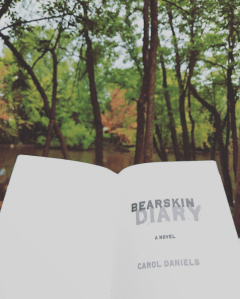
    Just over thirteen moon cycles later, after taking the first (and only) “Aboriginal Myth, Medicine, and Magic” course offered at the graduate level at MUN by Dr. Valerie Legge and co-instructor Amelia Reimer, I shared a knowing wink with Creator while sitting on the stage with my fellow Indigenous advocates. As a student of literature, I came out of the academy and into the public with Métis poet and musician Moe Clark, who advocated for Leanne Betasamosake Simpson’s This Accident of Being Lost; and Anishinaabe comedian and writer Ryan McMahon, who heralded Eden Robinson’s Son of a Trickster. I trumpeted Carol Daniels’ novel, Bearskin Diary.

    “I shared a knowing wink with Creator while sitting on the stage with my fellow Indigenous advocates.”

    We gathered at Tanna Schulich Hall at McGill University on September 20, days before the fall equinox. Our host and moderator, CBC’s Waubgeshig Rice and Nantali Indongo, facilitated a vital conversation spanning issues of storytelling, trauma, healing, and the need for Indigenous literatures. Truthfully, all three of us advocates could have sung praises for one another’s texts, as each book is made of powerful medicines and provocative storytelling, and each one embodies Indigenous knowledge systems.

    Bearskin-diaryPart of the role of advocates is to select a book, and each of us picked texts that spoke to our own craft and the relationship to our own Indigenous being. Clark was drawn to Simpson’s This Accident of Being Lost because of its poetic and sonic qualities. Much like Simpson’s work, Clark’s music breaks and beckons to tradition. Simpson doesn’t adhere to the infrastructure of the colonial English language. She avoids capitalization. Sometimes she writes in Anishinaabe, and doesn’t feel it necessary to translate. Clark approached her pitch in a similar fashion.
    McMahon highlighted the fact that each of the authors were First Nations women: “We’re in a moment now for Indigenous women artists. We need to not forget that.” He pitched Robinson’s Son of a Trickster with his trademark humour and intelligence.

    As I first encountered Daniel’s Bearskin Diary when reviewing it for The Malahat Review last year, I recognized how much the novel has shaped my own work. Not only did I feel a strong kinship with the novel’s protagonist, Sandy, a Cree journalist and TV reporter for CBC who comes into her Indigenous culture through telling other people’s stories, but also with the book’s relationship to the ongoing genocide of Canada’s Missing and Murdered Indigenous Women, Girls, and Two-Spirits.

    “I feel a strong kinship with … the book’s relationship to the ongoing genocide of Canada’s Missing and Murdered Indigenous Women, Girls, and Two-Spirits.”

    My own work spans genre, as I began my writing career as a journalist. Much like Sandy, I became comfortable asking questions and conveying the narratives of other people’s lives. Criticism has always been equal parts discovery and intellectual engagement. It’s a place to find and be found. From there, I became a poet (Daniels writes poetry, too). My forthcoming book, Who Took My Sister? (BookThug 2018), is a collection of poems and texts that hold and carry trauma. These poems are contemporary poetic strategies, both haunting testaments and a mix of Indigenous medicines. Who Took My Sister? is a rally cry, a space for raising awareness and cutting truths. It bears witness to the national genocide of Indigenous Women, Girls, and Two Spirits, whose lives are cut short due to the colonial agenda.

    “Criticism has always been equal parts discovery and intellectual engagement. It’s a place to find and be found.”

    Who Took My Sister? is also being transformed into a touring classical music piece for violin and piano composed by Melissa Hui, and will be performed by Indigenous Inuk artist Laakkuluk Williamson Bathory in spring 2019.

    Poetry has been an ongoing journey with many twists and turns. Recently, it’s led me to writing plays. I’ve been working on The Landless Band, a theatre show about a character who grows up in the suburbs, then learns she’s Indigenous. Tying back to Daniel’s work, while her protagonist Sandy was visibly Indigenous with darker skin, her storytelling techniques overlap with mine: we both draw from a personal narrative and explore it through characterization. The Landless Band is being presented in a workshop form at LSPU Hall in St. John’s, Newfoundland in spring 2018 by Eastern Edge Gallery.

    “The most exciting writing in this country is rooted in Indigenous writers, playwrights, and poets.”

    While Turtle Island Reads promotes Indigenous literatures, it also honours the advocates and their practice. Having only recently arrived in Montreal, to find myself in a room full of avid readers who are excited about Indigenous writing was an honour. It’s a testament that we’re ready to step beyond the canon, and unpack Canadian literature. We’re making room for new voices. Perhaps I’m biased, but the most exciting writing in this country is rooted in Indigenous writers, playwrights, and poets.


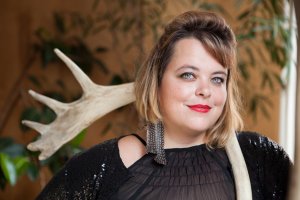
    Webb-Campbell by Dayna DangerShannon Webb-Campbell is a mixed Indigenous (Mi’kmaq) and settler poet, writer, and critic currently based in Montreal. Her first book, Still No Word (2015), was the inaugural recipient of Egale Canada’s Out in Print Award. She was the Canadian Women in the Literary Arts (CWILA) critic-in-residence in 2014, and sits on CWILA’s board of directors. Her work has appeared in many anthologies, journals, and publications across Canada, including the Globe and Mail, Geist magazine, The Malahat ReviewCanadian Literature, Room, and Quill and Quire. In 2017 she facilitated a book club-style reading of The Final Report of the Truth and Reconciliation Commission of Canada at Atwater Library. Who Took My Sister? is her second book.
    Photo credits: Courtesy of the CBC (header banner); Shannon Webb-Campbell (Bearskin Diary); Dayna Danger (headshot)

  • How to Get Out of the Slush Pile—by Rachel Thompson

    How to Get Out of the Slush Pile—by Rachel Thompson

    I yawn and keep flicking through my virtual stack of submissions. I need one more piece that will not only fill a few pages in the next issue but also resonate with the writing I have already accepted for the magazine.

    A short story pops up; a few lines in and I’m wondering: is anything going to happen? Flick to the next one, and words start to blur together. Is this the same story, or another one? Why does it sound like everything I’ve already read today? I click, click, click, until I land on one that startles me at the first line. I read on. And on. Now I’m alert, driven to read to the end. I scan the cover letter and see it’s submitted somewhere else at the same time; a competitive voice in my head says, Mine first! I hit the “accept” button.

    Reading, accepting, and rejecting lit mag submissions has taught me so much about writing and publishing.

    For one thing, I’m totally over the idea that if my writing doesn’t make it into an issue of a magazine, it means they think my work is no good. Editors get many, many submissions: far too many for us to print. The people reading these can be tired (see above) and overlook things. We try to give it our best attention, but at our drop-dead deadlines, we have to make quick and cold choices.

    Writing that doesn’t begin at a critical moment upon which everything else hinges, or with an opening line that raises more questions than answers, is unlikely to hold my attention for long. You never quite appreciate in media res until you’ve read hundreds of submissions that languish in the beginning. If you’re writing narrative work, and you don’t open with an action or decision point, you’re going to lose me. Consider the opening line of Rebecca Fisseha’s story, “What Grows”[1]:

    “Once, upon a day of politics trouble, I saw my mother burying her gold in the vegetable and herb garden at the back of our house.”

    After just one sentence, I have so many questions. What is the politics trouble? Who calls it “politics trouble”? Why is the mother burying the gold? Where is this home? When is this trouble happening? When an opening line makes me ask at least three of the five W’s, I feel as if I have struck gold. No wonder I picked her piece for Room issue 38.1.

    More often I read submissions that start by explaining things to me—where we are, when we are, who these people are, etc., etc., when the most compelling narratives make us curious and allow us to savour the discovery of these answers. There’s a simple explanation for why this happens. New writers just don’t have the experience to know how many drafts professional writers go through before publishing. (It’s more than most think, likely by a factor of ten.)

    “You never quite appreciate in media res until you’ve read hundreds of submissions that languish in the beginning.”

    Speaking of explaining, in cover letters I find writers are often tempted to tell me what their writing is about, and why it’s important for me to read it. But I’m going to read it anyway. You don’t need to convince me. And telling me why I should read something I’m already going to read puts me off a bit. Let your work show me what it’s about. Let the cover letter just deliver the facts we ask for.

    Writers often ask me if simultaneous submissions are cast in a negative light. Quite the opposite. It’s more likely to compel me to accept something I like more quickly and it has never had the effect of turning me off of reading something.

    Another thing I’ve learned is that the earlier you submit in a reading period, the likelier your piece will make the cut. Remember how I said earlier I was looking to fill not only a space but to find a piece that would join in a conversation started by the other pieces I’ve already accepted? We truly do sometimes turn down some of the best work because it a) either repeats themes, styles or settings in work we’ve already accepted for the issue, or b) is too long to fit into the space we have left. Because most magazines will read the work in order of receipt, if your piece is in an early stack and we like what you’re doing, there’s a better chance we’ll make other pieces fit around your writing than vice versa.

    “New writers just don’t have the experience to know how many drafts professional writers go through before publishing. (It’s more than most think, likely by a factor of ten.)”

    Start in the middle. Revise, revise again, revise better. Don’t explain in your story or in your cover letter. Tell us you sent it elsewhere. And submit early. My last bit of advice is to submit more often. You’re only going to increase the chance your work is published by sending it out to more places.

    But make sure it’s the right place. If you’re sending to Room, a journal that publishes women and genderqueer writers, and you are in fact a man (this happens a lot)—then I can’t help you.


    rachelthompsonRachel Thompson’s book of poetry, Galaxy (Anvil Press, 2011), won the SFU First Book Competition. Contest judge Gregory Scofield said her poems had “Wonderful and clear imagery as well as a ‘real’ and ‘true’ sense of place, love, longing, family, and the constant struggle and re-negotiation of self and experience.” She’s a current editorial collective member and former Managing Editor at Room. Rachel helps writers level-up their writing lives with practical advice and kind support at LitWriters.co.

    [1] Used with permission.

    Photo credits: Joel Penner (top banner); Vivienne McMaster (headshot)