Tag: manuscript

  • Keep Calm, Shut Up, and Write—By Lea Beddia

    Keep Calm, Shut Up, and Write—By Lea Beddia

    One full-time teaching job (hybrid online teaching included), three school-aged children (complete with homework, lunches and the occasional emotional meltdown), and one pandemic (anxiety I never thought I’d have, a bonus). Add a house to help maintain, and there’s no time for a creative outlet. It’s enough to turn me into a Netflix zombie. You may be busy like me, but even if you’re not, you may find your creativity stifled, vacuum-packed, and freeze-dried during this whole soul-sucking, stay-at-home-and-don’t-come-out situation. The state of the world is so real, yet surreal and heart-breaking, that my aspirations for all my wonderful ideas and plots are twisted up with anxiety, sleeplessness, and an obsession with watching the news. Enter Shut Up and Write.

    Shut up and Write: the name says it all. We really just shut up and write, for twenty-five minutes at a time followed by five-minute breaks. I don’t know about other writers, but in twenty-five minutes of absolute silence, with nothing but focus and my fingers tapping away, I’m more productive than during a full weekend in front of the television with my kids on my lap spilling popcorn all over me. It’s such a great stress-reliever to know I’m prioritizing myself ahead of my to-do list. I commit to be present when all my best-laid schemes have gone awry, and it’s the only chance for the stories swarming my head.

    I myself never attended the in-person sessions. I live an hour out of the city, and taking a Saturday morning away from busy mom life was not feasible. But since the sessions have moved online, we’re only limited to the distance our laptop charges will allow us to roam. I started attending after my QWF mentorship ended last June. I was so close to finishing what I had started and needed a little extra push to get my manuscript done. The result, for me: a manuscript completed and queries written.

    More importantly for my soul and morale, however, are these tenacious people, who like me, are ignoring real life for a little while to meet online and pursue personal or professional writing. Every time I sign up for a session, there’s this excitement: I’m going to see other people, and they’ll be writing, because their writing is important to them, too!

    I miss meeting with my writing critique group: an ensemble of talented, funny women who I met during a workshop, now almost two years ago. We still keep in touch, but each of us admits to lacking the energy and/or time for our writing, because “How can I not place my family, health, work, fresh air, and rabbit hole of online shopping ahead of writing?”

    SUAW is my antidote to isolation. I have something to look forward to in a time with no appointments or visits. I’ve found a community of writers willing to have my face in a two-inch square on their screen for two and a half hours a few Saturdays a month. Loneliness is at bay when I write during these sessions. There’s camaraderie in knowing we’re all struggling for time to be creative. I am grateful for the connections I’ve made.

    In our five minutes off, we chat, and in a short time, we share what we’re working on, or talk about recipes and make each other laugh. We’re all starving for positive human connections to people with a common interest and here it is, at my fingertips! When those five minutes are up, I’m like a superhero, relinquishing the destructive powers of procrastination because I’ve got twenty-five minutes to make the rest of my story shine, or at least get it from my head to my screen. Good enough.

    We may all be “Zoomed-out” and tired of hearing “You’re on mute” or “Can you mute yourself, please?” But to be honest, I kind of like it when someone forgets to turn off their mic and I can hear their keyboard clicking. It’s not a race, but it gets me going every time.


    Lea Beddia is a high school teacher, writer for young adults, and mom of three. She grew up in Montreal and now lives in the woods, on top of a mountain. She’s published short stories for young and old and you can find her work @LeaBeddia or www.leabeddia.com. In her free time (those rare, glorious moments), you can find her with her nose in a book, tuning everything out.

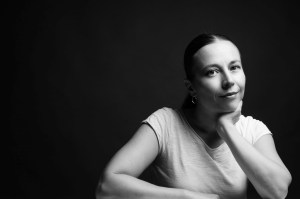
    Photo credits: Header banner is licensed under CC BY-NC-SA 2.0; Sarah Fortin Photographe (headshot)

  • The Honeymoon Phase—By Ann Cavlovic

    The Honeymoon Phase—By Ann Cavlovic

    Someone with two decades of experience getting critiques of their writing shouldn’t curl into a ball after an editor’s comments, right?

    Then why, after receiving a developmental edit on my first attempt at a novel, did I find myself in such a pit of despair? (Yes, that pit, that ball; I was every cliché imaginable.)

    The simplest explanation involves basic math: a novel is about twenty times the length of a short story, so you have twenty times the problems to fix. On top of this, the stakes for me were especially high: I’d taken a year off work to complete the draft on a small grant, and circumstances left me a single mother, all of which necessitated a weekly budget of $330. Just my son’s weekly piano lessons cost $50.

    After taking this big leap and working so hard, I wanted accolades. Instead, the editor posed neutral questions that my anxious mind could easily un-neutralize: ‘What governed your decision to include character X?’ became ‘Why did you even write this useless asshole?’ She didn’t trust the perceptions of the character whose purpose was to explore the nature of human perception, which sent me into an epistemological head explosion about my own perceptions. Sure, many of us ignore positive feedback and focus on the negative (and I hold a PhD in Catastrophizing). This cognitive distortion comes readily when the things working well are described in one page, and the things that aren’t take up fifteen.

    It wasn’t so much like I felt this editor had seen me naked. It was as if she’d seen me naked upon return from a ten-day backwoods camping trip and offered logical and helpful observations like: ‘Have you considered taking a shower?’ and ‘But first perhaps another go with some toilet paper?

    Naturally, my first inclination was to troll the editor on the internet to find evidence of her incompetence. Instead, I rediscovered her facility for insight, nuance, and skilful prose. Dammit.

    Yet as I followed the advice of friends and allowed myself a break, ideas started popping up in my mind. How to fix this. How I really could cut that. Yes of course that part was misleading. And I really have no idea how to deal with that subplot but perhaps it will become clear after I fix fifty other problems. These were the kind of blind spots my critique circle might have pointed out on a short story too. Maybe, after such a long period of isolation, I was out of the feedback-receiving habit?

    Now my draft manuscript sits on my desk in a neat pile, with dozens of paperclips—all red, I have my standards!—holding together scenes that have literally been cut and collated over months of arduous writing, reworking, and organizing. The day I got back to work, I glanced at my manuscript, and realized the little bubble of joy I’d cradled in my bosom during the brief honeymoon between completion and feedback had popped.

    But it probably had to. When I initiated my de-catastrophization protocol and mulled over places to begin, I saw how the editor’s interventions saved me from spending more energy in fruitless directions. I need that energy, because there is a lot, a whole lot, of work still to be done. Instead of resentment or embarrassment, I’m starting to feel appreciation and even something close to affection for this woman I’ve never even met in person. A stranger who’s seen my work, by necessity, at an earlier stage than I’d ever shared work before. There’s a strange intimacy to this.

    Speaking of intimacy, I met a wonderful man when finalizing the draft (which is, by the way, not ideal timing for a wannabe novelist, but I’ll take it). Months in, we are still in our honeymoon phase and I am enjoying it fully. Surprisingly, I see that phase more positively than ever, whether it’s for a manuscript or a partner. You need it. You need to build up a reserve of good feelings to get you through the work to come.

    Looking at my manuscript now, I realize maybe it was okay how stupidly in love I was. Maybe my delusional vision that my first draft would turn out like a fifth draft wasn’t all bad. Maybe, in part, I needed my delusion to get me through.

    Some relationships break down. Some manuscripts never get published. Don’t even try to tell me it’s the journey, not the destination; to deny the cost of failure is to deny the courage involved in trying. But with both my manuscript and my new relationship, deep down I have a strong sense of potential. So I will again pour my heart into both, with all the attendant hard work and brutal vulnerability.


    Headshot1 - AnnCavlovic - Irvine2017-crop all black

    Ann Cavlovic’s fiction and creative non-fiction have appeared in EventThe FiddleheadThe Globe and Mail, Little Bird Stories, PRISM international, Room, SubTerrain, the anthology This Place a Stranger (Caitlin Press), and elsewhere. She wrote Emissions: A Climate Comedy, which won “Best in Fest” at the 2013 Ottawa Fringe theatre festival. If the heart-pouring works, her novel Count on Me will one day see the light of day. Find her in the Gatineau Hills and at: anncavlovic.com.

    Photo credits: Ann Cavlovic (header image); David Irvine (headshot)

  • What Playing Piano Taught Me About Writing-by Carly Rosalie Vandergriendt

    What Playing Piano Taught Me About Writing-by Carly Rosalie Vandergriendt

    The movers cost about as much as the piano. When they pulled up in front of our house on a muggy day last August, I understood why. Cars darted around the delivery truck as two men coaxed the swaddled instrument down a ramp and onto a dolly. They worked swiftly. Soon, the piano was being ushered up the walkway to our home. I stepped out of the way.

    “Who plays?” asked the first mover, in a thick eastern European accent. “You or him?” He nodded at my partner, who was standing on our front porch with a mystified look on his face.

    “Both of us,” I said. It was both true and untrue. My partner, a musician, could play the piano. You wouldn’t find him fleshing out a riff on one, though, as he often did on guitar. As for me, I’d played as a child and into my late teens. But the only keys I’d graced as of late were the ones on my MacBook.

    The movers hoisted the piano up our front steps. I hovered while they deliberated removing our front door. My partner hurried away to procure the necessary tools. Then the men decided they wouldn’t remove the door. When my partner reappeared, the piano was crossing the threshold.

    “You play Bach?” the first mover called to me as he disappeared inside the house.

    “Ten years ago I did,” I said. Piano still felt like a first love, cast off with the arrival of adulthood. During my time at university, the digital piano I’d optimistically bought and shuffled from one apartment to another had all but gathered dust. Eventually, I had resigned myself to reality and sold it off.

    Now, I was keenly aware of the privilege of owning a piano, especially in the city, where space, soundproofing, and noise-tolerant neighbours are limited. My partner and I had just moved into an apartment that felt like a real homeanother privilege. Fortuitously, that home also happened to be on the ground floor.

    With the piano stationed in our living room, the movers left as quickly as they’d arrived. I stared at the instrument with both awe and unease. It had been my partner’s idea: something for both of us. Privately, I had reservations. Where would I find the time? Could I even still play? Would this piano, like its abandoned digital cousin, become a symbol of the person I wanted to be, instead of the person I actually was?

    “Would this piano, like its abandoned digital cousin, become a symbol of the person I wanted to be, instead of the person I actually was?”

    I spend a lot of time thinking about the person I want to be. I may call myself a writer, but without a published book, I don’t always feel like one. I may have a string of small-time successes, but those publications are also reminders of the frustrating slowness of the writing process. Patience is a virtue when it takes years to go from an idea to a polished manuscript to a published story.

    “I spend a lot of time thinking about the person I want to be. I may call myself a writer, but without a published book, I don’t always feel like one.”

    The piano arrived during a transition period. The move meant more financial responsibility, and as a freelancer, I quelled my anxiety by taking on a full-time contract in addition to my regular workload. Suddenly, I was juggling clients and rising at an unspeakable hour, hoping to squeeze in some writing. Most of the time, I was barely managing my inbox. I thought constantly about my stalled manuscript, and envisioned its completion date slipping farther and farther into the future.

    Playing music, I soon remembered, was exhilarating. My fingers settled back into the waltzes and études I hadn’t played in years. I had never been a technically oriented player; now, the mistakes I made mattered little, if at all. There was nothing to prove and no one to prove it to. The joy of playing was enough.

    As busy as I was, piano felt like a reprieve instead of an obligation. Sometimes, just seeing the piano—the fact that it took up a quarter of our living room made it hard to miss—was enough to make me stop whatever I was doing, sit down, and play. Why, I wondered, couldn’t writing be that easy?

    “Sometimes, just seeing the piano… was enough to make me stop whatever I was doing, sit down, and play. Why, I wondered, couldn’t writing be that easy?”

    As summer turned into fall and fall into winter, I kept juggling work commitments. Yet, I knew it wouldn’t be like this forever. A few months of industriousness meant I was in a position to be more selective in the months to come.

    Meanwhile, I’d learned a new song on the piano. I hadn’t told myself I would learn anything; I’d simply made a habit of sitting down on the bench. My new musical practice served as a reminder that it is the act itself, not the end result, that counts. As the year wound down, I kept thinking about my manuscript but I stopped agonizing over when it might be finished. All I can do is keep writing when I can. That is enough.


    CRV_HeadshotCarly Rosalie Vandergriendt is a Montreal-based writer and translator whose work has appeared in Prairie Fire, Matrix, The Malahat Review, The Fiddlehead, RoomPRISM International,and elsewhere. Her story “Resurfacing” was recently shortlisted for the Carter V. Cooper Short Fiction Prize. Carly is a recent graduate of the University of British Columbia’s Optional-Residency Master of Fine Arts in Creative Writing program, and is currently working on a short story collection titled Playing the Man. Visit her at carlyrosalie.com or follow her @carlyrosalie.

    Photo credits: Simon-Pierre Lacasse

  • Bye Bye Darlings: The Editing Gauntlet by Alice Zorn

    Bye Bye Darlings: The Editing Gauntlet by Alice Zorn

    Farine Five Roses
    Alice Zorn’s new novel, Five Roses, is named after the FARINE FIVE ROSES sign that marks the southwest horizon of Montreal and Pointe St-Charles, where the novel is set. Photo: Alice Zorn


    You’ve finished your novel manuscript and you even – finally! – get a publisher. It took ten years. You have Neanderthal muscles across your brow from frowning at the computer screen. But now you’re home-free. Bingo!

    Then you get the first slew of comments from your editor. She’s the objective eye who sees what the book can be, but isn’t yet. Does it begin in the best possible place? Is there too much exposition? Does it have structural integrity? What about the ending? She tells you all the darlings you cherished while you were writing don’t belong unless they serve the book. The clever turns of phrase, the crisp dialogue, the research that shows off your erudition, the quirky events that really happened. Your clean manuscript pages are tattooed with strokes and question marks. Some editors slash with red pen. I’m so glad mine used pencil.

    With my first novel, Arrhythmia, I was advised to lop two main characters, cut ninety pages and replace them with new writing. I couldn’t believe it. Hadn’t the publisher already accepted the book? My editor was firm. I had to learn how to rethink developments in the novel as narrative choices. I reminded myself that my editor, like me, only wanted what was best for the book. After all, she brought the manuscript to the acquisitions table, arguing that – out of all the other manuscripts being vetted – mine should be published.

    I rewrote those ninety pages because I realized the change was structurally necessary to the novel. And I rewrote them, yes. My editor didn’t tell me what to write, only that the direction I’d originally taken wasn’t the best option. However, I did not lop those two characters. I made them stronger and more integral to the novel. Writing the novel was hard, but editing it might well have been the more profound learning-about-writing experience.

    “Writing the novel was hard, but editing it might well have been the more profound learning-about-writing experience.”

    My second novel, Five Roses, will be published by Dundurn Press in 2016. I’m at the copy editing stage now. This is the finicky time when syntax, word choice and punctuation come into question. I open the document and scroll through 320 pages with red commas added, words underlined and lassoed to dialogue bubbles. Individual words are highlighted in yellow. A character is cycling along a city street, alert to the nervous rush hour traffic, as she thinks about the police sending out an alert to catch a criminal. I swear at myself for not having noticed. I must have read this page twenty times already! But my brain was in a groove. And as I’ve repeatedly witnessed, my brain is willful in its fondness for repetitions, internal rhymes and alliteration.Now, too, is when I discover that grammatical niceties aren’t as ingrained as I assumed they should be after five decades as a voracious reader. Shouldn’t I simply know all these distinctions by now? Seems not.

    And so I learn that there’s a difference between hanged and hung when it refers to a human body that is being put to death. I hung a picture on the wall. The executioner hanged a man. However, a human body that was already dead hung from a hook. I need to know that for this novel, since a character was hanged.

    6777082592_d2ba71334d

    I had to teach myself the farther/further dance after having worked with a copy editor who changed all my farthers to furthers. He thought further sounded more posh. Fine, I thought. He’s the copy editor. Maybe it’s one of those UK vs US things. For a couple of years I banned all farthers from my writing. Then I had a story returned from a copy editor who had changed some of my furthers to farthers. That was more curious. I finally pulled a tome of grammar off the shelf and discovered there’s a rule. Farther is for physical distance. Further is the abstract concept. You might think that I would already have known this, but I didn’t. And I’m not the only one. I continue to see farther and further misused in books published by reputable houses. (If you want a trick to remember which to use when, think far > farther. Thank you to Carol Weber for this tip.)

    You aren’t the best judge of your work, because you’re too close to the writing.You need an editor. Not your partner nor your best friend, who won’t want to hurt your feelings, but an experienced and discerning professional who will help you realize the full potential of the book.

    I’m now at the last read-through before Five Roses goes to the design people. I’ve rewritten the manuscript three times since I thought it was finished in 2013. Cutting, puzzling, moving pages around. Lots of darlings sent marching to the recycling bin. At each stage of editing, the book becomes more of an entity that lives separate from me. Which is what it will have to be when it’s sent off into the world.


    for QWFAlice Zorn’s book of short fiction, Ruins & Relics, was a finalist for the 2009 Quebec Writers’ Federation McAuslan First Book Prize. In 2011 she published a novel, Arrhythmia, with NeWest Press. She has twice placed first in Prairie Fire’s Fiction Contest. Her second novel, Five Roses, will be published with Dundurn Press in July, 2016. She lives in Montreal and can be found at http://alicezorn.blogspot.ca