Tag: tips

  • Keep Calm, Shut Up, and Write—By Lea Beddia

    Keep Calm, Shut Up, and Write—By Lea Beddia

    One full-time teaching job (hybrid online teaching included), three school-aged children (complete with homework, lunches and the occasional emotional meltdown), and one pandemic (anxiety I never thought I’d have, a bonus). Add a house to help maintain, and there’s no time for a creative outlet. It’s enough to turn me into a Netflix zombie. You may be busy like me, but even if you’re not, you may find your creativity stifled, vacuum-packed, and freeze-dried during this whole soul-sucking, stay-at-home-and-don’t-come-out situation. The state of the world is so real, yet surreal and heart-breaking, that my aspirations for all my wonderful ideas and plots are twisted up with anxiety, sleeplessness, and an obsession with watching the news. Enter Shut Up and Write.

    Shut up and Write: the name says it all. We really just shut up and write, for twenty-five minutes at a time followed by five-minute breaks. I don’t know about other writers, but in twenty-five minutes of absolute silence, with nothing but focus and my fingers tapping away, I’m more productive than during a full weekend in front of the television with my kids on my lap spilling popcorn all over me. It’s such a great stress-reliever to know I’m prioritizing myself ahead of my to-do list. I commit to be present when all my best-laid schemes have gone awry, and it’s the only chance for the stories swarming my head.

    I myself never attended the in-person sessions. I live an hour out of the city, and taking a Saturday morning away from busy mom life was not feasible. But since the sessions have moved online, we’re only limited to the distance our laptop charges will allow us to roam. I started attending after my QWF mentorship ended last June. I was so close to finishing what I had started and needed a little extra push to get my manuscript done. The result, for me: a manuscript completed and queries written.

    More importantly for my soul and morale, however, are these tenacious people, who like me, are ignoring real life for a little while to meet online and pursue personal or professional writing. Every time I sign up for a session, there’s this excitement: I’m going to see other people, and they’ll be writing, because their writing is important to them, too!

    I miss meeting with my writing critique group: an ensemble of talented, funny women who I met during a workshop, now almost two years ago. We still keep in touch, but each of us admits to lacking the energy and/or time for our writing, because “How can I not place my family, health, work, fresh air, and rabbit hole of online shopping ahead of writing?”

    SUAW is my antidote to isolation. I have something to look forward to in a time with no appointments or visits. I’ve found a community of writers willing to have my face in a two-inch square on their screen for two and a half hours a few Saturdays a month. Loneliness is at bay when I write during these sessions. There’s camaraderie in knowing we’re all struggling for time to be creative. I am grateful for the connections I’ve made.

    In our five minutes off, we chat, and in a short time, we share what we’re working on, or talk about recipes and make each other laugh. We’re all starving for positive human connections to people with a common interest and here it is, at my fingertips! When those five minutes are up, I’m like a superhero, relinquishing the destructive powers of procrastination because I’ve got twenty-five minutes to make the rest of my story shine, or at least get it from my head to my screen. Good enough.

    We may all be “Zoomed-out” and tired of hearing “You’re on mute” or “Can you mute yourself, please?” But to be honest, I kind of like it when someone forgets to turn off their mic and I can hear their keyboard clicking. It’s not a race, but it gets me going every time.


    Lea Beddia is a high school teacher, writer for young adults, and mom of three. She grew up in Montreal and now lives in the woods, on top of a mountain. She’s published short stories for young and old and you can find her work @LeaBeddia or www.leabeddia.com. In her free time (those rare, glorious moments), you can find her with her nose in a book, tuning everything out.

    Photo credits: Header banner is licensed under CC BY-NC-SA 2.0; Sarah Fortin Photographe (headshot)
  • How Do I Research and Write About My Subject When There’s No Archive?—by Linda M. Morra

    How Do I Research and Write About My Subject When There’s No Archive?—by Linda M. Morra

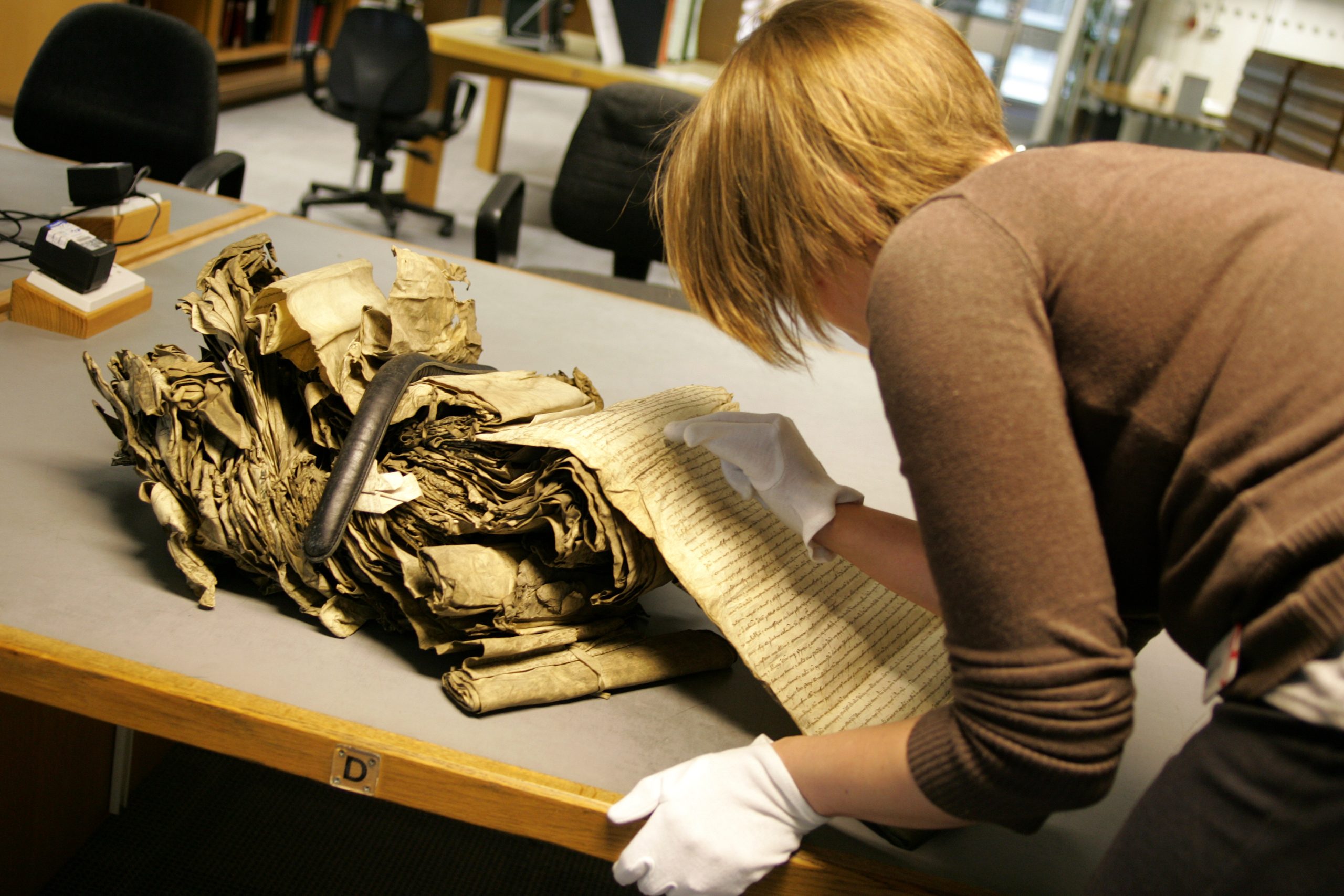
    When perusing the scrapbook of a Canadian female writer and artist, I find a twig of cedar clipped to its pages. Later, I read her handwritten letters, which reveal that the twig was exchanged as a token of affection between correspondents. I have been researching this writer for over a decade, and her archives have undergirded three of my books—a real gift, when I know that women’s archives are often scarce, if they exist at all.

    “But how do I research and write about my subject when there’s no archive?” This is a question I’m often asked because of the frequent lack of material about women’s lives. The answer is layered, multidirectional.

    I.

    Perhaps there is an archive—just not one in an official, state-sanctioned place, such as a university, museum, or library. There are materials; you just haven’t found them yet. You have to go beyond formal institutions and ask surviving family members of the subject in question—sometimes more than a few times. And you have to consult with documents in out-of-the-way places. The latter sometimes means borrowing someone’s truck—or hopping into a stranger’s—and carrying a pocket knife along with your laptop, just to be sure you’re going to be okay.

    “Perhaps there is an archive—just not one in an official, state-sanctioned place, such as a university, museum, or library.”

    II.

    How do I research and write about my subject when there’s no archive? Sometimes you don’t yet have access to the archive, so you have to know how to ask. You have to be there at the right time and the right place and the right day and ask the right person. (Surely, not that guy? Yup, that guy.) Sometimes it means drinking a Guinness for breakfast because that was what was offered to you, and you don’t want to be rude, and you were never one to back down from a challenge. Then it means waiting until you’re headed towards being more than just a bit tipsy, even after the whole omelette you ate for good measure, and then it means asking right then for permission to access files. Who knows if you slurred your words when you asked? That’s not on record anywhere. Sometimes that’s what it takes to gain confidence, and not just your confidence to ask for permission, but also his: he needs to know you’re a worthy candidate for permission. Drinking a whole Guinness at 9 a.m. apparently qualifies you.

    III.

    How do I research and write about my subject when there’s no archive? At other times, the archive is stashed away in a basement, hidden from prying eyes, waiting for daylight—or perhaps, you tell yourself optimistically, waiting for you. And accessing it takes earning trust, but not by drinking beer this time. No, this time it means taking all kinds of precautions: reading documents, preparing documents, writing documents, rewriting those documents, and rewriting them again. It means signing contracts, and trying to do all manner of intellectual calisthenics to be sure you’re in top form to handle this one just right. Oh, you’ll still get it wrong—or, at least, your copy editor will—but it won’t matter. It seems you were doomed not to get this one right. When you work with an archive that no one even knew existed, a misstep can happen in spite of your best efforts.

    “It seems you were doomed not to get this one right. When you work with an archive that no one even knew existed, a misstep can happen in spite of your best efforts.”

    IV.

    How do I research and write about my subject when there’s no archive? Maybe the archive isn’t a tangible thing, such as a document or photograph. My dear colleague and friend, TL Cowan, researches cabaret. A performance is an elusive thing, but someone’s memories about one night can help you reconstruct it; recollections about the scene tell you something about what a performer might have been trying to accomplish. Many witnesses recounted how a Kahnawake poetess at the turn of the century wore a stereotypical “Indian dress”—a short little buckskin number—before an audience of white men. Titillating, you might think, until you read the fiery tone of her lyrics and understand that where and how she performed her work added value and meaning to it. Then you realize she was giving these men unmitigated shit for their assumptions of superiority, and for the violence wrought upon Indigenous nations.

    V.

    How do I research and write about my subject when there’s no archive? Consider archival deposits that may not seem to have anything to do with your subject—at least, not at first. The Royal Canadian Mounted Police files offer one example. Maybe you’re not interested in the RCMP. Perhaps they’re not exactly your cup of military tea. (I personally prefer espresso, if it can be had.) But sometimes you may want to drink that tea because of what you might learn. The RCMP, as it turns out, spied relentlessly on women activists in the 1970s. They have files upon files on feminist associations and meetings. You don’t have to like RCMP tactics, but reading their records will reveal a lot to you about these women activists. And, later on, you can still drink your espresso.

    VI.

    How do I research and write about my subject when there’s no archive? Have you considered different searches on the internet? Ah, the digital world, that mysterious place that consistently reminds me of the ocean, which washes up a wealth of material one day and is a seemingly flat, calm, and inscrutable surface the next. What lies underneath that surface? If you just bait the right hook, what will you draw up? Sometimes the hook dangles there, brings in nothing much—an old shoe, candy wrappers, and some algae. You suppose it’s possible you can reconstruct something from the old shoe. Then, at other times, you find a whale, and you have no idea how to fish for whales. Befriend it, perhaps? Yes, that’s better, and don’t turn your back on it while it frolics in the harbour. How did that whale get there? You download everything you find that day, because tomorrow it may swim away back into the ocean, and only surface again with a whole new set of research terms, whatever those might be.

    “Ah, the digital world, that mysterious place that consistently reminds me of the ocean, which washes up a wealth of material one day and is a seemingly flat, calm, and inscrutable surface the next. What lies underneath that surface?”

    By now, you’ve tried everything you know. What do you have left? You may have found material completely unrelated to your current subject. A postmark, say, that proclaims “God Bless America” or “Help Retarded Children.” You wonder: has anyone written about these postal slogans? Your imagination begins to suggest a future project.

    UBC Archives Feb 22 2016 402_blurred

    Gather these materials. Delight in the wealth of all that’s left behind—from twigs to postmarks to letters. Leave your own trail, to form in effect a new archive—a gift for another generation of researchers. Finally, remember to call upon your own imagination. That has a peculiar and unaccountable wealth of its own. Don’t forget to visit that archive, ever.


    Linda-Morra-e3f6691b87ef626a8515ff84fa924af0Linda M. Morra is a professor of Canadian literature and Canadian Studies at Bishop’s University. Her book, Unarrested Archives (UTP 2014), was shortlisted for the 2015 Gabrielle Roy Prize in English; her edited edition of Jane Rule’s Taking My Life (2011) was a finalist for the LAMBDA prize (2012). She is the current president of the Quebec Writers’ Federation.
    Photo credits: The National Archives (UK) [CC BY 3.0], via Wikimedia Commons (top banner); Linda M. Morra (postmarked envelope)

  • How to Get Out of the Slush Pile—by Rachel Thompson

    How to Get Out of the Slush Pile—by Rachel Thompson

    I yawn and keep flicking through my virtual stack of submissions. I need one more piece that will not only fill a few pages in the next issue but also resonate with the writing I have already accepted for the magazine.

    A short story pops up; a few lines in and I’m wondering: is anything going to happen? Flick to the next one, and words start to blur together. Is this the same story, or another one? Why does it sound like everything I’ve already read today? I click, click, click, until I land on one that startles me at the first line. I read on. And on. Now I’m alert, driven to read to the end. I scan the cover letter and see it’s submitted somewhere else at the same time; a competitive voice in my head says, Mine first! I hit the “accept” button.

    Reading, accepting, and rejecting lit mag submissions has taught me so much about writing and publishing.

    For one thing, I’m totally over the idea that if my writing doesn’t make it into an issue of a magazine, it means they think my work is no good. Editors get many, many submissions: far too many for us to print. The people reading these can be tired (see above) and overlook things. We try to give it our best attention, but at our drop-dead deadlines, we have to make quick and cold choices.

    Writing that doesn’t begin at a critical moment upon which everything else hinges, or with an opening line that raises more questions than answers, is unlikely to hold my attention for long. You never quite appreciate in media res until you’ve read hundreds of submissions that languish in the beginning. If you’re writing narrative work, and you don’t open with an action or decision point, you’re going to lose me. Consider the opening line of Rebecca Fisseha’s story, “What Grows”[1]:

    “Once, upon a day of politics trouble, I saw my mother burying her gold in the vegetable and herb garden at the back of our house.”

    After just one sentence, I have so many questions. What is the politics trouble? Who calls it “politics trouble”? Why is the mother burying the gold? Where is this home? When is this trouble happening? When an opening line makes me ask at least three of the five W’s, I feel as if I have struck gold. No wonder I picked her piece for Room issue 38.1.

    More often I read submissions that start by explaining things to me—where we are, when we are, who these people are, etc., etc., when the most compelling narratives make us curious and allow us to savour the discovery of these answers. There’s a simple explanation for why this happens. New writers just don’t have the experience to know how many drafts professional writers go through before publishing. (It’s more than most think, likely by a factor of ten.)

    “You never quite appreciate in media res until you’ve read hundreds of submissions that languish in the beginning.”

    Speaking of explaining, in cover letters I find writers are often tempted to tell me what their writing is about, and why it’s important for me to read it. But I’m going to read it anyway. You don’t need to convince me. And telling me why I should read something I’m already going to read puts me off a bit. Let your work show me what it’s about. Let the cover letter just deliver the facts we ask for.

    Writers often ask me if simultaneous submissions are cast in a negative light. Quite the opposite. It’s more likely to compel me to accept something I like more quickly and it has never had the effect of turning me off of reading something.

    Another thing I’ve learned is that the earlier you submit in a reading period, the likelier your piece will make the cut. Remember how I said earlier I was looking to fill not only a space but to find a piece that would join in a conversation started by the other pieces I’ve already accepted? We truly do sometimes turn down some of the best work because it a) either repeats themes, styles or settings in work we’ve already accepted for the issue, or b) is too long to fit into the space we have left. Because most magazines will read the work in order of receipt, if your piece is in an early stack and we like what you’re doing, there’s a better chance we’ll make other pieces fit around your writing than vice versa.

    “New writers just don’t have the experience to know how many drafts professional writers go through before publishing. (It’s more than most think, likely by a factor of ten.)”

    Start in the middle. Revise, revise again, revise better. Don’t explain in your story or in your cover letter. Tell us you sent it elsewhere. And submit early. My last bit of advice is to submit more often. You’re only going to increase the chance your work is published by sending it out to more places.

    But make sure it’s the right place. If you’re sending to Room, a journal that publishes women and genderqueer writers, and you are in fact a man (this happens a lot)—then I can’t help you.


    rachelthompsonRachel Thompson’s book of poetry, Galaxy (Anvil Press, 2011), won the SFU First Book Competition. Contest judge Gregory Scofield said her poems had “Wonderful and clear imagery as well as a ‘real’ and ‘true’ sense of place, love, longing, family, and the constant struggle and re-negotiation of self and experience.” She’s a current editorial collective member and former Managing Editor at Room. Rachel helps writers level-up their writing lives with practical advice and kind support at LitWriters.co.

    [1] Used with permission.

    Photo credits: Joel Penner (top banner); Vivienne McMaster (headshot)

  • Bye Bye Darlings: The Editing Gauntlet by Alice Zorn

    Bye Bye Darlings: The Editing Gauntlet by Alice Zorn

    Farine Five Roses
    Alice Zorn’s new novel, Five Roses, is named after the FARINE FIVE ROSES sign that marks the southwest horizon of Montreal and Pointe St-Charles, where the novel is set. Photo: Alice Zorn


    You’ve finished your novel manuscript and you even – finally! – get a publisher. It took ten years. You have Neanderthal muscles across your brow from frowning at the computer screen. But now you’re home-free. Bingo!

    Then you get the first slew of comments from your editor. She’s the objective eye who sees what the book can be, but isn’t yet. Does it begin in the best possible place? Is there too much exposition? Does it have structural integrity? What about the ending? She tells you all the darlings you cherished while you were writing don’t belong unless they serve the book. The clever turns of phrase, the crisp dialogue, the research that shows off your erudition, the quirky events that really happened. Your clean manuscript pages are tattooed with strokes and question marks. Some editors slash with red pen. I’m so glad mine used pencil.

    With my first novel, Arrhythmia, I was advised to lop two main characters, cut ninety pages and replace them with new writing. I couldn’t believe it. Hadn’t the publisher already accepted the book? My editor was firm. I had to learn how to rethink developments in the novel as narrative choices. I reminded myself that my editor, like me, only wanted what was best for the book. After all, she brought the manuscript to the acquisitions table, arguing that – out of all the other manuscripts being vetted – mine should be published.

    I rewrote those ninety pages because I realized the change was structurally necessary to the novel. And I rewrote them, yes. My editor didn’t tell me what to write, only that the direction I’d originally taken wasn’t the best option. However, I did not lop those two characters. I made them stronger and more integral to the novel. Writing the novel was hard, but editing it might well have been the more profound learning-about-writing experience.

    “Writing the novel was hard, but editing it might well have been the more profound learning-about-writing experience.”

    My second novel, Five Roses, will be published by Dundurn Press in 2016. I’m at the copy editing stage now. This is the finicky time when syntax, word choice and punctuation come into question. I open the document and scroll through 320 pages with red commas added, words underlined and lassoed to dialogue bubbles. Individual words are highlighted in yellow. A character is cycling along a city street, alert to the nervous rush hour traffic, as she thinks about the police sending out an alert to catch a criminal. I swear at myself for not having noticed. I must have read this page twenty times already! But my brain was in a groove. And as I’ve repeatedly witnessed, my brain is willful in its fondness for repetitions, internal rhymes and alliteration.Now, too, is when I discover that grammatical niceties aren’t as ingrained as I assumed they should be after five decades as a voracious reader. Shouldn’t I simply know all these distinctions by now? Seems not.

    And so I learn that there’s a difference between hanged and hung when it refers to a human body that is being put to death. I hung a picture on the wall. The executioner hanged a man. However, a human body that was already dead hung from a hook. I need to know that for this novel, since a character was hanged.

    6777082592_d2ba71334d

    I had to teach myself the farther/further dance after having worked with a copy editor who changed all my farthers to furthers. He thought further sounded more posh. Fine, I thought. He’s the copy editor. Maybe it’s one of those UK vs US things. For a couple of years I banned all farthers from my writing. Then I had a story returned from a copy editor who had changed some of my furthers to farthers. That was more curious. I finally pulled a tome of grammar off the shelf and discovered there’s a rule. Farther is for physical distance. Further is the abstract concept. You might think that I would already have known this, but I didn’t. And I’m not the only one. I continue to see farther and further misused in books published by reputable houses. (If you want a trick to remember which to use when, think far > farther. Thank you to Carol Weber for this tip.)

    You aren’t the best judge of your work, because you’re too close to the writing.You need an editor. Not your partner nor your best friend, who won’t want to hurt your feelings, but an experienced and discerning professional who will help you realize the full potential of the book.

    I’m now at the last read-through before Five Roses goes to the design people. I’ve rewritten the manuscript three times since I thought it was finished in 2013. Cutting, puzzling, moving pages around. Lots of darlings sent marching to the recycling bin. At each stage of editing, the book becomes more of an entity that lives separate from me. Which is what it will have to be when it’s sent off into the world.


    for QWFAlice Zorn’s book of short fiction, Ruins & Relics, was a finalist for the 2009 Quebec Writers’ Federation McAuslan First Book Prize. In 2011 she published a novel, Arrhythmia, with NeWest Press. She has twice placed first in Prairie Fire’s Fiction Contest. Her second novel, Five Roses, will be published with Dundurn Press in July, 2016. She lives in Montreal and can be found at http://alicezorn.blogspot.ca