Tag: Writer

  • Poetry via Videoconference—By Louise Carson

    Poetry via Videoconference—By Louise Carson

    Back in the old days—pre-March 2020—we used to have these literary events called book launches, festivals, and poetry readings, which often included open mics. People would gather at little cafes downtown, and/or, in my case, on or off the West Island of Montreal, or in art galleries, book shops, even people’s homes. Sometimes, authors and poets would travel long distances to attend such events in other regions, provinces or (rarely) countries. Sometimes we’d get paid, sometimes not. But it was all stimulating. Nerve-wracking until one had completed one’s contribution to the evening, but enjoyable.

    Now, after a tentative, sometimes fumbling start, the various hosts who were willing to make the transition to virtual events have made it, and we have a plethora of online events to choose from. As I write this mid-July, I am registered to attend before the end of the month: two open mics, a workshop, and a literary group’s business meeting. And because I’m a writer and notice things, and because these video conferences put us all into a fishbowl, it’s become evident that we are still on the upward slope of a pretty steep learning curve vis-à-vis etiquette.

    One of my regular Zoom poetry groups is made up of very docile members. When the moderator says mute, we mute. Well, most of us mute—there’s always one, isn’t there? The idea being, and this may or may not be true, that mics left open weaken the signal for receiving the one mic that should be open. Many open mics are certainly distracting. A sneeze or cough can displace the crucial emotional moment of a poem.

    Another of my groups is the opposite of the one above. About half of us mute. The other half, not so much. Some of the participants are married couples who chat with each other; others have, on occasion, set up their computer at the kitchen table, where they can be observed preparing snacks, moving from fridge to sink, muttering, laughing. The poor designated reader struggles on, their voice fading, returning, fading, returning.

    At one conference, there was an attack. A poet, possibly frightened of participating in her first live video presentation, and unable to make herself visible (although it was not her turn to read), panicked and, unfortunately, made herself only too audible as she accused the moderator of purposely shutting her out. “How could you do this to me?” and other similar comments were made. The moderator didn’t even blink. Peace was eventually restored, and we finally saw the unabashed poet smirking, preening for the camera.

    Then there are the readers who start each line strongly, only to fade away, so you get the verb perhaps or the subject, but not the object or conclusion. It’s most frustrating for the listener. We, as a group, don’t like to interrupt the reader. Sadly, in one instance the partially inaudible poet was the first reader of the night. I just assumed it was me alone who couldn’t hear him. Everyone else did likewise, I guess, as each subsequent reader was quite audible. We had inadvertently conspired against him. At least I didn’t have the nerve to praise him after the reading—like some. I honestly hadn’t heard enough to have an opinion.

    We must now turn to the visual component of Zoom. Where should I look when reading? At myself? At various members of the audience as I do when reading in person? Or at the camera above my screen? If I look there, I have to raise the text from which I’m reading, which then obscures my face. My compromise is to pretend it’s a live reading. I study my text and look up briefly—only to be distracted by a comment box from the chat stream briefly popping into view at the bottom of my screen. I know it’s about me and my words, so I want to look, but if I look I’ll lose my spot. I only did this once. Now it’s “Look away! Look away!”

    Another visual consideration is how do I and my room look to others? I tend, in life and online, to go for neat. I rejoice in the fact that I don’t need to wear a bra for Zoom. I’ve got a nice picture-free pale green wall behind me, which could function, I sometimes imagine, as a green screen, whereon a clever computer manipulator, which I’m not, could project anything. I could be underwater, in outer space, in a monkey house…

    At last night’s Zoom I noticed my floor fan, cooling my back, had made it onto the set and appeared to be attached to my left shoulder, lending it a larger than normal appearance. Innocuous, I thought, and shrugged. But then, more than once, I caught a glimpse of one of my cats, desiring to position himself in the room’s one window, there to view the chipmunks and robins and chickadees in the large cedar outside, leaping from my bed through the air, also behind my left shoulder—a ginger blur. So not monkeys, fish, stars—but cats.

    Let us now discuss Zoom visual no-nos. Please don’t recline while you’re listening to others. It’s too intimate, like we’re all in bed, or soon to be, together. Please, please, if you’re male and wearing short shorts, don’t sit on the sofa with your legs on the coffee table facing your computer. Avert eyes, all.

    It’s time to mention the hosts. With grace and persistence, you are allowing us to connect, not only within our local groups but with far-flung writers and poets, some of whom join us in the middle of their nights. From South America, Nepal, or even, far off Kingston (Ontario). So hats off to you, hosts, as you pilot us through this strange new literary landscape.


    Louise Carson’s latest books are Dog Poems (Aeolus House 2020) and The Cat Possessed, a mystery (Signature Editions 2020). She lives in St. Lazare, Quebec.

    Photo credit: Yasmine Carson (headshot)
  • The Importance of Being Silent—By John Arthur Sweet

    The Importance of Being Silent—By John Arthur Sweet

    A DIALOGUE. Persons: John Arthur and Pal.

    Scene: A deck in Hochelaga-Maisonneuve, one summer day.

    JOHN ARTHUR: Would you like some more kombucha? No? … Hey, I’ve got a little story for you. A while ago, I submitted one of my monologues to a theatre festival where I was hoping to perform it. The comment I got back from the Artistic Director was that the show had too few words in it, relative to the show’s length. He estimated, based on the word count, that the show should take thirty-five minutes, but I’d indicated that it takes sixty minutes in performance, and he said that twenty-five minutes of non-verbal action is too much. Can you believe that?

    PAL: Well, yeah. I mean, people are busy these days. If you give them silence, they’ll just start checking their phones. How many words was it, anyway?

    JOHN ARTHUR: According to the appropriately named Word, it was 4,522.

    PAL: So, that’s a lot of words. Get them out, and let your audience get on their way. Don’t be precious! Everyone has their story to tell, opinions to deliver. But you don’t need to milk it. Get your message across, and then make room for others.

    JOHN ARTHUR: But … First of all, I’m not delivering opinions. It’s a piece of theatre.

    PAL: That’s fine, but there’s a point to it, I imagine. You just need to make your point without dragging things out.

    JOHN ARTHUR: Why does everyone assume that everything has to have a point?

    PAL: You’re a writer, yeah? So when you sit down to write, you must have some point you want to get across.

    JOHN ARTHUR: I have something to communicate, yes. But it’s not necessarily a “point,” as you call it. I’m not a journalist.

    PAL: Okay, let’s say you have an imaginative notion—how’s that?—an imaginative notion to transmit. So, in the monologue you were just telling me about, you had—what was it?—4,522 words by which to transmit that notion. That’s a lot of words! There’s no need to then drag it out—

    JOHN ARTHUR: If you say “drag it out” one more time! Anyway, all this “dragging out,” as you call it, is what is otherwise known as Life.

    PAL: Oh no, please, don’t get all metaphysical on me, it’s ten o’clock in the morning. What I’m saying is, words have meanings. You’re a writer, so express your meaning in words and then leave it at that, don’t dr—

    JOHN ARTHUR: Oh no, stop! Words, words, words!! It’s not all about the words. There’s another way of looking at this. Look, if that artistic director is right, and my monologue features twenty-five minutes where I’m not speaking, then that means a group of people who mostly don’t know one another are sitting in a darkened room together in quasi-silence for twenty-five minutes. When else does that ever happen?

    [Silence.]

    PAL: Look, I’m sorry that guy didn’t want your show. But I don’t really understand what point you’re making here.

    JOHN ARTHUR: The point I’m making, since you’re so fond of “points,” is that we’re drowning in words. As a society, we are gasping for air, desperately thrashing around for a glimpse of the sun as we go under, dragged down beneath a tidal wave of words. Listen, back in about 1999, an editor I worked with raised tired eyes from her computer screen one afternoon and said to me wryly, “I’ve just been dealing with my e-mails. God help us, there is not a thought these days that is allowed to go unexpressed!” That was twenty years ago she said that, and all we were dealing with then was e-mail. Now it’s social media, smartphones, apps, and they’re all talking to us all the time, in words. We have words coming out of our mouths and entering our ears, we’ve got earbuds stuck in our ears to replace some words with other words, we’re writing like mad in the virtual world, tweets, posts, blogs, vlogs. Everybody’s a writer! We’ve got words seeping out of our—

    PAL: Don’t be vulgar.

    JOHN ARTHUR: No, but honestly, how many more words do we need?

    PAL: Right! So don’t do your show at all. That’s 4,522 fewer words in the world.

    JOHN ARTHUR: But I’m a writer-performer! And also an editor. I live by words.

    PAL: Sweetie, you’re getting all worked up and not making any sense. So you’re a writer and you want to make words. But, you insist, there are too many words in the world. So what can I do to help you? You seem to be at an impasse. Would you like some lemonade?

    JOHN ARTHUR: I guess what I’m asking is, are we simply aiming to cram as many words into our lives—into the available time, be it sixty minutes or sixty years—as possible? Or does silence (or, at the very least, word-free time) have a place? I just think that maybe, in 2020, one should have an opinion about this—especially if one is a writer. As writers, maybe we have a responsibility to write less and better, and even to think sometimes about what maybe doesn’t need to be expressed in words. What opinion or thought or observation can we just let sit, without formulating it in prose and then putting it out there? Do people really need to know that I thought Call Me By Your Name was a shitty film? Centuries ago, Saint John of the Cross wrote to a correspondent: “It was not from want of will that I have refrained from writing to you, for truly do I wish you all good; but because it seemed to me that enough has been said already to effect all that is needful, and that what is wanting is not writing or speaking—whereof ordinarily there is more than enough—but silence and work.”

    [Silence.]

    PAL: Um … did you just deliver a fairly lengthy quote from Saint John of the Cross?

    JOHN ARTHUR: I did.

    PAL: Do people even do that in real life?

    JOHN ARTHUR: No, but in literature they do.

    PAL: Okay … So, we’ll just sit with that, then, shall we?

    JOHN ARTHUR: Why not?

    [Silence, broken only by the bells of the church of Très-Saint-Nom-de-Jésus.]

    NOTE: This dialogue was inspired by the form used by Oscar Wilde in “The Critic as Artist.” It may or may not have actually taken place.


    John Arthur Sweet usually writes words that he expects to speak, as opposed to words he hopes others will read. In other words, he is a monologist and occasional spoken word poet. If we were living normal lives, he would currently be in England, performing at three theatre festivals. As it is, his last full-length show (Running to Saint Sebastian) was last year, at the Montreal Fringe, and before that, at the Prague Fringe (where he has performed four shows). He is a regular invited artist at Words and Music, most recently for a live-streaming edition in May. www.johnarthursweet.online

    Photo credits: John Arthur Sweet

  • A Body Divided—By Joe Bongiorno

    A Body Divided—By Joe Bongiorno

    In April 2020, we invited writers in Quebec to submit a story of a single day during the strange, uneasy time of coronavirus and pandemic, of social distancing and self isolation, of lockdown and quarantine.

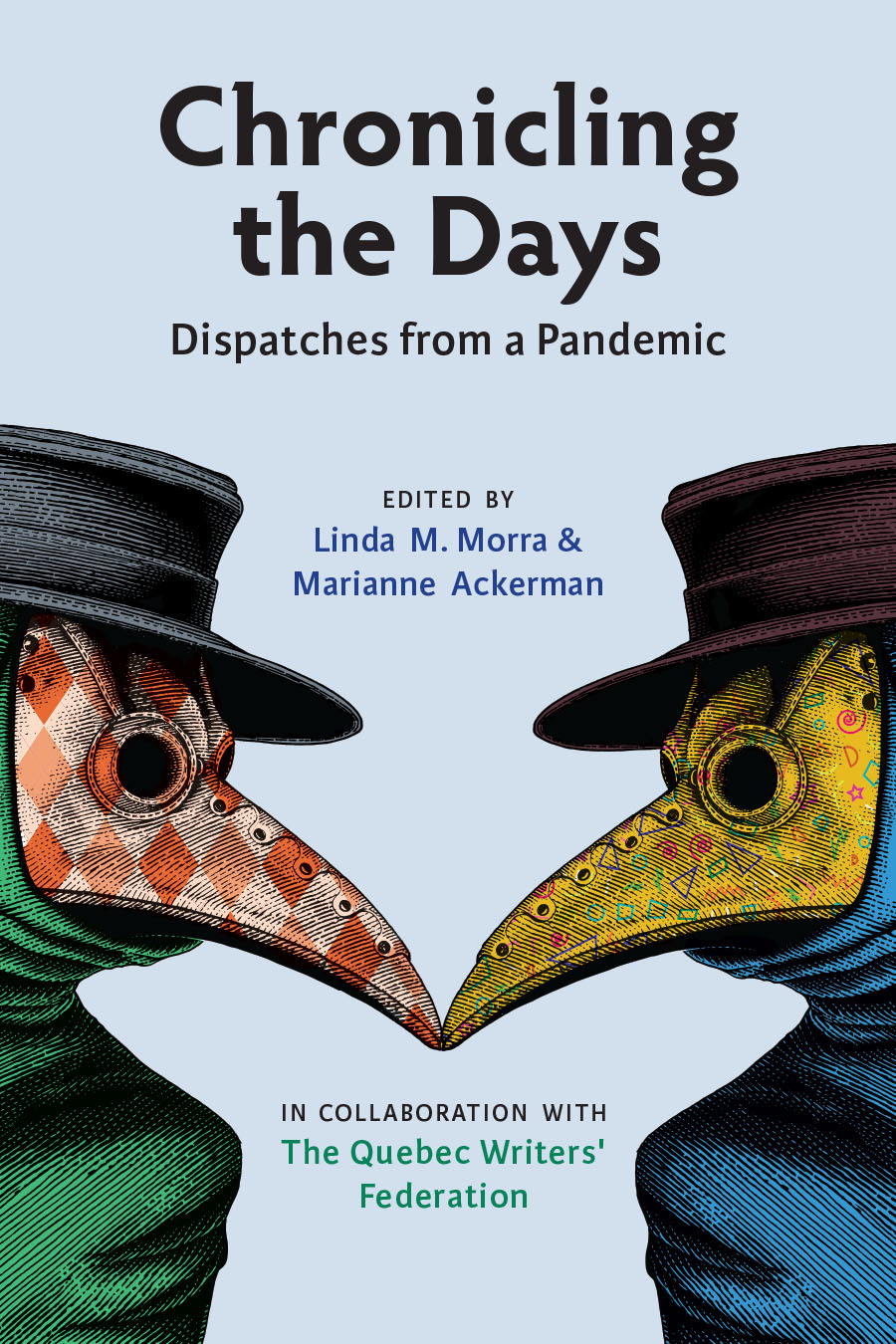
    We’re thrilled to announce that these stories have been gathered in Chronicling the Days: Dispatches from a Pandemic (Guernica Press). To learn more and buy the book, please visit https://www.guernicaeditions.com/title/9781771836579.

    Please also join us on the QWF FB Community page, and let the authors know if their words resonated.

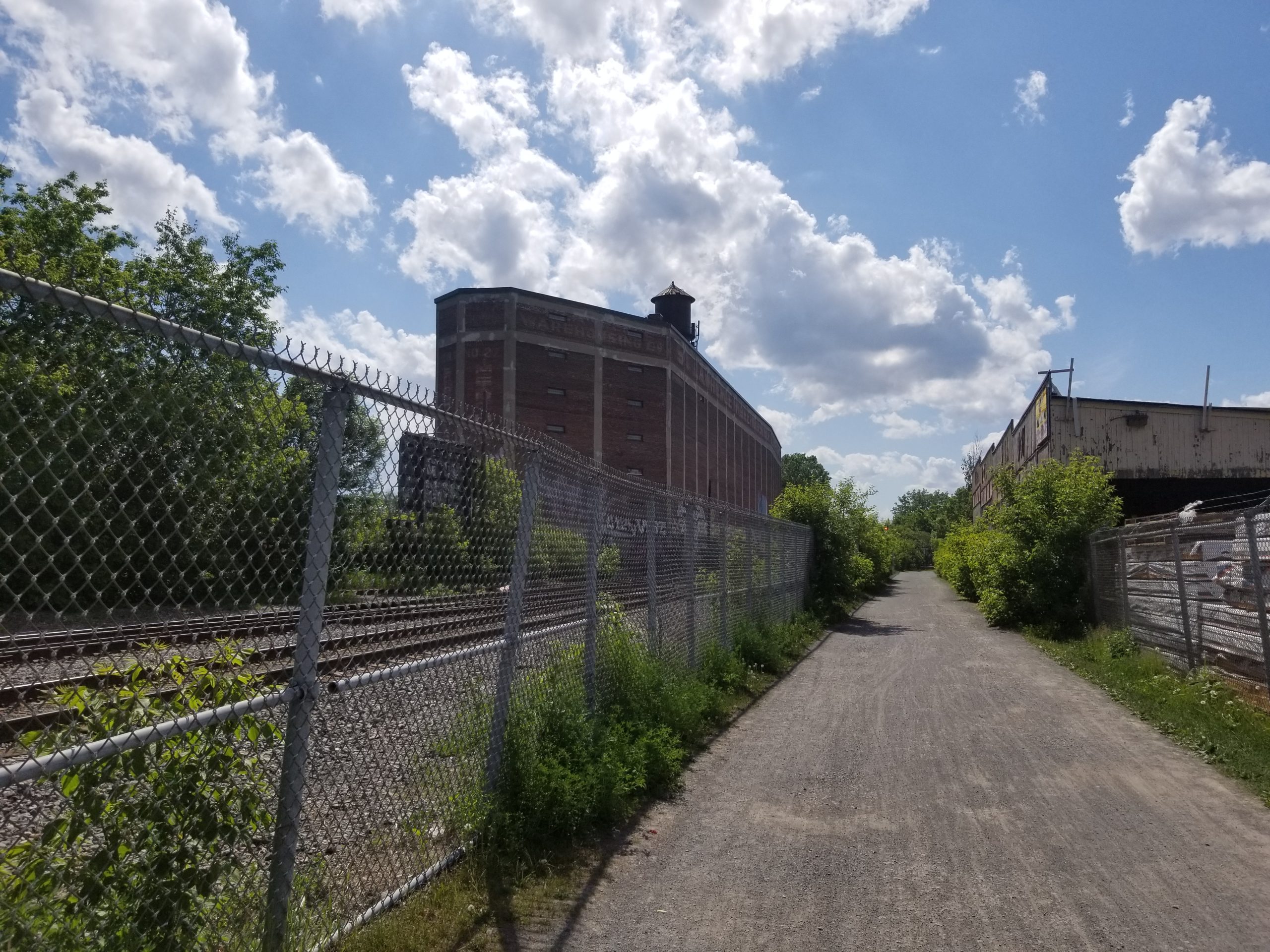
    I jog on the gravel path along the train tracks. I readjust my surgical mask and stray off into the grass to maintain a two-metre distance from a cyclist. My butt throbs. Pain gives way to numbness. Hamstring nerve pinched. I’m out of breath. My lungs open up to the cool air, fortunate to be left breathless by exercise and not COVID-19.

    To read the rest of the story, please support our community and check out Chronicling the Days: Dispatches from a Pandemic

  • The View From My Living Room—By Ariela Freedman

    The View From My Living Room—By Ariela Freedman

    In April 2020, we invited writers in Quebec to submit a story of a single day during the strange, uneasy time of coronavirus and pandemic, of social distancing and self isolation, of lockdown and quarantine.

    We’re thrilled to announce that these stories have been gathered in Chronicling the Days: Dispatches from a Pandemic (Guernica Press). To learn more and buy the book, please visit https://www.guernicaeditions.com/title/9781771836579.

    Please also join us on the QWF FB Community page, and let the authors know if their words resonated.

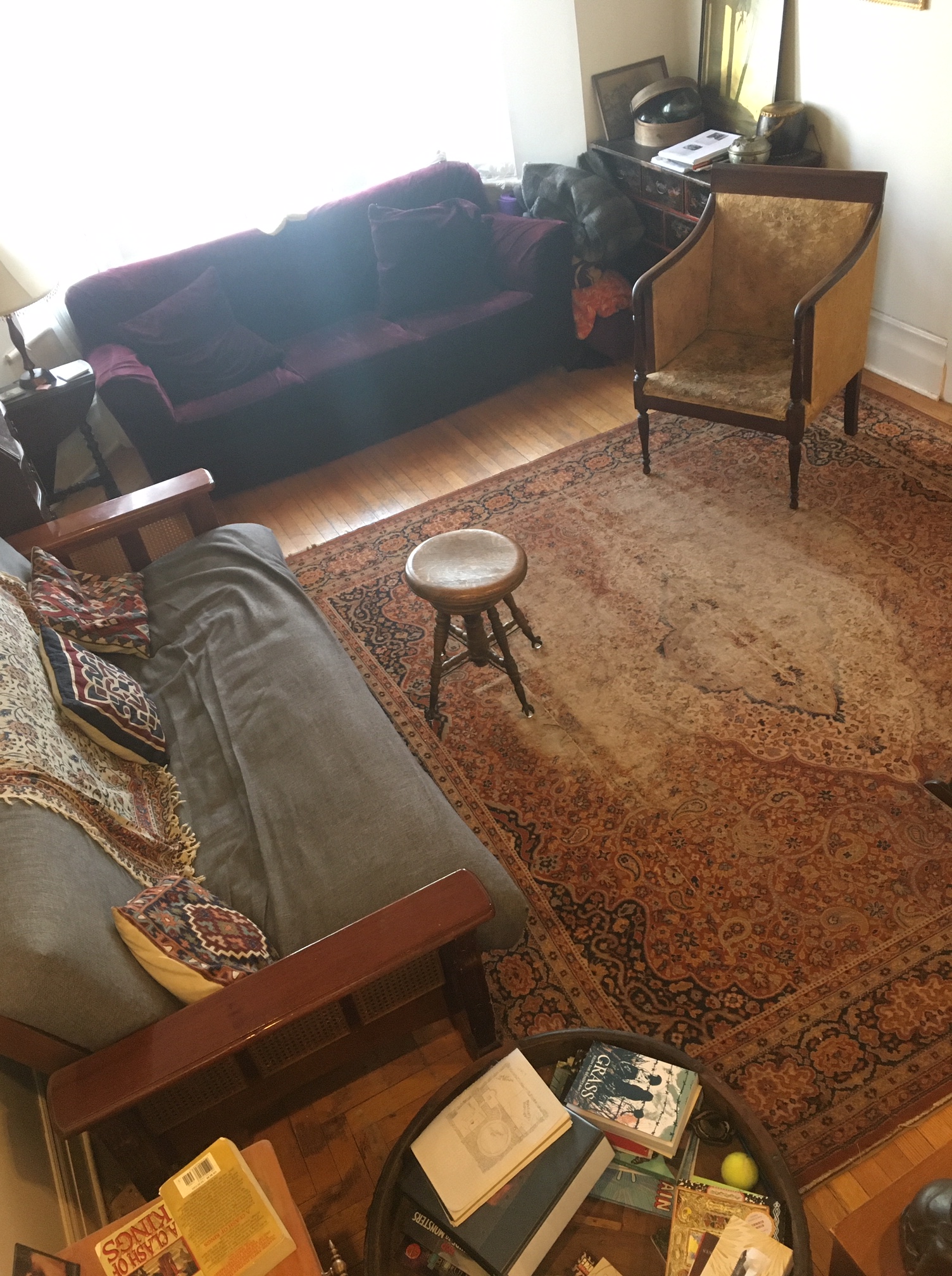
    The term “living room” came into common use after the First World War. Before the living room, there was the front parlour. This room was a formal showpiece, and before the proliferation of funeral homes, they were used to lay out the dead. After the many deaths of the First World War and the Spanish Flu, the front parlour became a haunted space. As early as 1910, the Dutch-born editor of Ladies’ Home Journal published an article titled “A Living Room is Born,” suggesting it was time to revive the staid front parlour; that is, it was time for the room to come back to life. The living room was a rebranding of a space where the dead were once venerated, at a time when they were so many that the house could no longer hold them.

    To read the rest of the story, please support our community and check out Chronicling the Days: Dispatches from a Pandemic

  • The Art of Connecting—By Joel Yanofsky

    The Art of Connecting—By Joel Yanofsky

    In April 2020, we invited writers in Quebec to submit a story of a single day during the strange, uneasy time of coronavirus and pandemic, of social distancing and self isolation, of lockdown and quarantine.

    We’re thrilled to announce that these stories have been gathered in Chronicling the Days: Dispatches from a Pandemic (Guernica Press). To learn more and buy the book, please visit https://www.guernicaeditions.com/title/9781771836579.

    Please also join us on the QWF FB Community page, and let the authors know if their words resonated.

    This self-isolation business is playing right into my hands. From the time I started thinking of myself as a writer, some forty years ago now, I knew my main talent for the job lay in my ability to cut myself off from other people. In fact, it seemed to be the whole point of the endeavour.

    To read the rest of the story, please support our community and check out Chronicling the Days: Dispatches from a Pandemic

  • Homeschooling in a Pandemic—By Greg Santos

    Homeschooling in a Pandemic—By Greg Santos

    In April 2020, we invited writers in Quebec to submit a story of a single day during the strange, uneasy time of coronavirus and pandemic, of social distancing and self isolation, of lockdown and quarantine.

    We’re thrilled to announce that these stories have been gathered in Chronicling the Days: Dispatches from a Pandemic (Guernica Press). To learn more and buy the book, please visit https://www.guernicaeditions.com/title/9781771836579.

    Please also join us on the QWF FB Community page, and let the authors know if their words resonated.

    “You’re used to homeschooling your kids. What’s your advice to other parents who are now in your shoes?”

    In a Zoom meeting recently, I was asked this question by an acquaintance. Taken aback, I found myself struggling for a good answer. I rambled something incoherent about how it’s different now during the global COVID-19 pandemic, but I couldn’t properly articulate my thoughts, which left me terribly frustrated. As I write this, I am still struggling to make sense of all of this.

    To read the rest of the story, please support our community and check out Chronicling the Days: Dispatches from a Pandemic

  • Writing After A Concussion—By Pearl Pirie

    Writing After A Concussion—By Pearl Pirie

    The first year after I had a concussion was a blur. I was dead to the world for three months, going in and out of sleep, exhausted. I had vertigo and difficulties with light, sound, and language. No reading. No computers. No writing. Definitely no multitasking. I had to rest for far more hours than seemed viable and consequently had to suddenly quit a few organizations I led, with no succession plan in place. I closed my small press, or as it turned out, put it on hiatus. I simply had no choice.

    As with a stroke or cancer, a traumatic brain injury can be an opportunity to reexamine one’s life and priorities.

    I had been heading towards burnout, and my concussion forced me to adopt a more balanced life, once I’d recovered enough. Now, when I overdo it, I go on concussion protocol: no screens, no concentration, less activity. The concussion encouraged me to do fewer things better, to slow down, to spend more time in nature and quiet and with friends. To go deeper, not further.

    I stopped attending so many activities. I moved out of the city and started working on editing more, writing deeper. This concussion changed my capacities. I still can’t concentrate for those fourteen-hour editing and writing days like I used to. After one or two hours I need a full break. But I can go deeper because of the slowness and the focus needed to keep on a track.

    You probably had a concussion as a kid. About six out of a thousand people per year get one. After a light bump you may see stars but not black out and feel fine within fifteen minutes. That’s a mild, or Grade 1, concussion. If you’re knocked out and lose memory from the time around the impact, it’s severe, or grade three.

    The kicker is, each time you get a concussion, the next will be worse. I think I’ve had four or five of them, with two at a grade-three level. The one that tipped me over was a Grade 2 concussion.

    I now know of a dozen poets with lasting effects from concussions. Some struggle with physical balance, some with emotional balance, others with energy. Laura Stanfill writes eloquently of how her concussion brought aphasia. A.H. Reaume describes how brain trauma affects her writing. As she makes her way through the brain fog and frustrations of not “getting it,” there are days with spoons and days when she says: “there is no way I can push myself past my capacity even though I desperately want to.” Jane Cawthorne has been compiling interviews which will come out as a book in mid-2021: Impact: The Lives of Women After Concussion.

    The brain is a complicated thing. It follows that traumatic brain injury is as well. Some patients with severe injuries rapidly recover from symptoms, while some with mild injuries have severe, long-term post-concussion symptoms that disrupt daily functioning for weeks or months. When it’s longer, it’s called post-concussion syndrome, which is what I have. (If you’re curious, there’s a scale here.) I’ve always been called out for persistence. I guess sticking to things is on a cellular level.

    My reading rate is slower. I’m impatient for speed, but because life feels more fragile, I have to balance being present with resting enough. I can’t do extended concentration like I used to, and I have to switch up my routine more since extended reading or writing or editing isn’t given carte blanche bodily clearance anymore. So, I compose in my head. Instead of moving ideas visually or digitally, I compose by rolling things around in my mind, editing there first. And by letting things go, instead of making precious and publishable the minutiae. My memory is short, and my working memory is small.

    I try to treat myself as I would a pet. Soft voice, kind acts, clean water, good food. It takes more energy to do things, so I am more conscious of investing or calling it a waste and cutting losses. I prioritize a few people more because I have fewer spoons to go around or to do All The Events. I give myself permission to leave early, to show up late or to not show up, instead of being the first one to come and the last one to go. I socialize mostly though my computer since outings are more taxing. During outings, I take more breaks, pressure myself less. I float and accept catching less than I did.

    Perhaps in combination with anxiety meds, the concussion means I’m better at being methodical and tracking deadlines and calls. Who knows? I may write less, but I get published more. My writing is different, at least. I’m a different person, and so I can resonate with different people. But would I opt to get a concussion? A big no to that.


    IMG_E4449Pearl Pirie’s fourth collection, footlights, comes out in fall 2020 from Radiant Press. Her newest chapbooks are Call Down the Walls (Frog Hollow Press, February 2019) and a haibun collection, Eldon, letters (above/ground, August 2019). Her next chapbook will be Not Quite Dawn, out from Éditions des petits nuages in the spring of 2020. Her next epistolary haibun chapbook, Water loves its bridges: Letters to the dead, is due out in December 2020 from The Alfred Gustav Press, by subscription.

    Photo credits: Pearl Pirie (header banner); Brian Pirie (headshot)

  • Why You Should Apply for a Canada Council Grant Every Year until You Die.—By Sherwin Tjia

    Why You Should Apply for a Canada Council Grant Every Year until You Die.—By Sherwin Tjia

    It is a truth universally acknowledged, that a writer in possession of a good idea, must be in want of a grant. Last year I was on a Canada Council granting jury, and it not only enlightened me as to how the whole process works, it also renewed my faith in the Canada Council in general, and in the granting process in particular.

    Over the years some of my writer friends had gotten the distinct impression that the Canada Council was this edifice of insiders. Those who got grants kept getting them, and those on the juries awarded grants to their writer friends. And this bitter conviction stopped many of them from applying. “I’m not going to win anyway, so why try?” It doesn’t help that by default, a writer’s life is an incessant litany of rejection.

    But after having been on the jury, I’m now convinced we all should apply annually. The truth is that just by applying you help all writers because the Council takes those numbers and brings them to the government to ask for more funding for future years. Even if unsuccessful, those applications demonstrate a clear need.

    Though I’ve applied and been rejected in the past, the biggest eye-opener for me was seeing just how high my chances of getting a grant had always been. Out of the 150 applications my jury read (including fiction, poetry, graphic novels, short stories, literary non-fiction, YA and kid’s books), fully forty writers, give or take, got grants. That’s a win rate of around twenty-six percent, or one in four. No lottery has ever been so generous.

    And that’s the thing. It is a lottery. You can’t control who’s on the jury. If their tastes don’t align with your proposal one year, you’ll just have to apply again the next. I’ve now seen firsthand how jurors agonize over their decisions. We champion the diamonds that are rough, hopeful that grant-sponsored time can polish a great idea. We eloquently counterpoint prevailing opinions. Various members bring unique insight from their respective specialties. And though we were all quite diverse (in terms of geography, language, gender, race, sexual orientation, and writing genres), more often than not I was surprised to discover how much we concurred on our final assessments.

    So take it from a fellow writer who is deeply skeptical and always expecting rejection: the Canada Council has your best interests at heart, and every year runs a lottery that you are uniquely qualified to enter. So enter!

    To help you, I have some advice to offer:

    DO START EARLY. The application is almost its own writing genre. It needs time to simmer. Go through at least several drafts. A friend should read it over. Any initial questions they have should be answered, because it’s likely the jury will harbour those same questions. Similarly, anything confusing should be re-written to be clear.

    DO BE STARTLINGLY ORIGINAL. Easier said than done, of course, but it pays to go far afield with your concept. If you have the misfortune to be the fourth applicant with a post-apocalyptic road trip underpinning your plot, the jury may be inclined to favour the best of the bunch.

    DON’T GET TUNNEL VISION ABOUT PITCHING JUST YOUR STORY. Discuss the larger impact of it on you and on the society it will go on to live in. Why does it matter to you? Is it personal? Will it matter to other people? Are there themes that will resonate in the larger world?

    If rejected, DO CALL THE CANADA COUNCIL. The program officer takes notes during the jury discussion of your project, and they’ll relay these to you. But only if you call them for feedback.

    If rejected, DO RE-APPLY the very next year. You may want to tweak the same application, or apply with a whole new project. But don’t not apply.

    If successful (yay!), APPLY THE VERY NEXT YEAR WITH ANOTHER PROJECT. Now, in the past, if you got a grant, you were prevented from applying again until your final report for that grant was submitted. But in the current system, you can apply every single year, even if you already got a grant and are currently working on something, as long as it’s for a new project, and there’s no overlap in the project dates you’re proposing.

    DO ALWAYS INCLUDE A SAMPLE FROM YOUR PROPOSED PROJECT. Even if you have a more refined short story that you think will show off your writing chops from a couple years back, take the time to also write up a small sample of the actual thing you’re pitching. It helps the jury see it. Juries are unkind to sample-less applications.

    And that’s it! Vow to apply every year. Think of it like voting, but you’re the candidate. It’s your civic duty to your art! The world needs all the odd and diverse projects it can get! Be the strange you want to see in the world.


    SherwinTjia_PLZdontcrop

    Sherwin Tjia is a Montreal-based writer and illustrator. Their latest book PLUMMET is a graphic novel about a woman who wakes up one day to find herself in freefall forever. It was named one of CBC Book’s 20 Best Graphic Novels of 2019. Their Choose-Your-Own-Adventure style book from the POV of a housecat, You Are a Cat!, published in 2011, was the winner of that year’s Expozine Award for best English Book, and has never been out of print. Their collection of 1,300 haikus, The World Is a Heartbreaker, was a finalist for the 2006 A.M. Klein Poetry Award. And their first graphic novel, The Hipless Boy, was a finalist for the Doug Wright Award for Best Emerging Talent, and also nominated for four Ignatz Awards.

    Photo credits: Sherwin Tija (header image & headshot)

  • The Honeymoon Phase—By Ann Cavlovic

    The Honeymoon Phase—By Ann Cavlovic

    Someone with two decades of experience getting critiques of their writing shouldn’t curl into a ball after an editor’s comments, right?

    Then why, after receiving a developmental edit on my first attempt at a novel, did I find myself in such a pit of despair? (Yes, that pit, that ball; I was every cliché imaginable.)

    The simplest explanation involves basic math: a novel is about twenty times the length of a short story, so you have twenty times the problems to fix. On top of this, the stakes for me were especially high: I’d taken a year off work to complete the draft on a small grant, and circumstances left me a single mother, all of which necessitated a weekly budget of $330. Just my son’s weekly piano lessons cost $50.

    After taking this big leap and working so hard, I wanted accolades. Instead, the editor posed neutral questions that my anxious mind could easily un-neutralize: ‘What governed your decision to include character X?’ became ‘Why did you even write this useless asshole?’ She didn’t trust the perceptions of the character whose purpose was to explore the nature of human perception, which sent me into an epistemological head explosion about my own perceptions. Sure, many of us ignore positive feedback and focus on the negative (and I hold a PhD in Catastrophizing). This cognitive distortion comes readily when the things working well are described in one page, and the things that aren’t take up fifteen.

    It wasn’t so much like I felt this editor had seen me naked. It was as if she’d seen me naked upon return from a ten-day backwoods camping trip and offered logical and helpful observations like: ‘Have you considered taking a shower?’ and ‘But first perhaps another go with some toilet paper?

    Naturally, my first inclination was to troll the editor on the internet to find evidence of her incompetence. Instead, I rediscovered her facility for insight, nuance, and skilful prose. Dammit.

    Yet as I followed the advice of friends and allowed myself a break, ideas started popping up in my mind. How to fix this. How I really could cut that. Yes of course that part was misleading. And I really have no idea how to deal with that subplot but perhaps it will become clear after I fix fifty other problems. These were the kind of blind spots my critique circle might have pointed out on a short story too. Maybe, after such a long period of isolation, I was out of the feedback-receiving habit?

    Now my draft manuscript sits on my desk in a neat pile, with dozens of paperclips—all red, I have my standards!—holding together scenes that have literally been cut and collated over months of arduous writing, reworking, and organizing. The day I got back to work, I glanced at my manuscript, and realized the little bubble of joy I’d cradled in my bosom during the brief honeymoon between completion and feedback had popped.

    But it probably had to. When I initiated my de-catastrophization protocol and mulled over places to begin, I saw how the editor’s interventions saved me from spending more energy in fruitless directions. I need that energy, because there is a lot, a whole lot, of work still to be done. Instead of resentment or embarrassment, I’m starting to feel appreciation and even something close to affection for this woman I’ve never even met in person. A stranger who’s seen my work, by necessity, at an earlier stage than I’d ever shared work before. There’s a strange intimacy to this.

    Speaking of intimacy, I met a wonderful man when finalizing the draft (which is, by the way, not ideal timing for a wannabe novelist, but I’ll take it). Months in, we are still in our honeymoon phase and I am enjoying it fully. Surprisingly, I see that phase more positively than ever, whether it’s for a manuscript or a partner. You need it. You need to build up a reserve of good feelings to get you through the work to come.

    Looking at my manuscript now, I realize maybe it was okay how stupidly in love I was. Maybe my delusional vision that my first draft would turn out like a fifth draft wasn’t all bad. Maybe, in part, I needed my delusion to get me through.

    Some relationships break down. Some manuscripts never get published. Don’t even try to tell me it’s the journey, not the destination; to deny the cost of failure is to deny the courage involved in trying. But with both my manuscript and my new relationship, deep down I have a strong sense of potential. So I will again pour my heart into both, with all the attendant hard work and brutal vulnerability.


    Headshot1 - AnnCavlovic - Irvine2017-crop all black

    Ann Cavlovic’s fiction and creative non-fiction have appeared in EventThe FiddleheadThe Globe and Mail, Little Bird Stories, PRISM international, Room, SubTerrain, the anthology This Place a Stranger (Caitlin Press), and elsewhere. She wrote Emissions: A Climate Comedy, which won “Best in Fest” at the 2013 Ottawa Fringe theatre festival. If the heart-pouring works, her novel Count on Me will one day see the light of day. Find her in the Gatineau Hills and at: anncavlovic.com.

    Photo credits: Ann Cavlovic (header image); David Irvine (headshot)

  • The Art of Embarrassing Oneself at Public Readings—By Renée Cohen

    The Art of Embarrassing Oneself at Public Readings—By Renée Cohen

    Giving public readings is crucial to establishing oneself as an emerging writer. After attending a diverse array of Quebec Writers’ Federation (QWF) workshops—from food and travel writing to literary fiction—it became clear that regardless of the writing genre, workshop leaders often proffered those same words of advice. For years, I avoided ‘open mic’ nights. I slid under the table when called upon to read. In my defense, I am not alone in the belief that any form of public speaking is nightmare-inducing—regardless of the circumstances. Introverted, I’d always hoped that becoming a writer would require less speaking and more silent solitude.

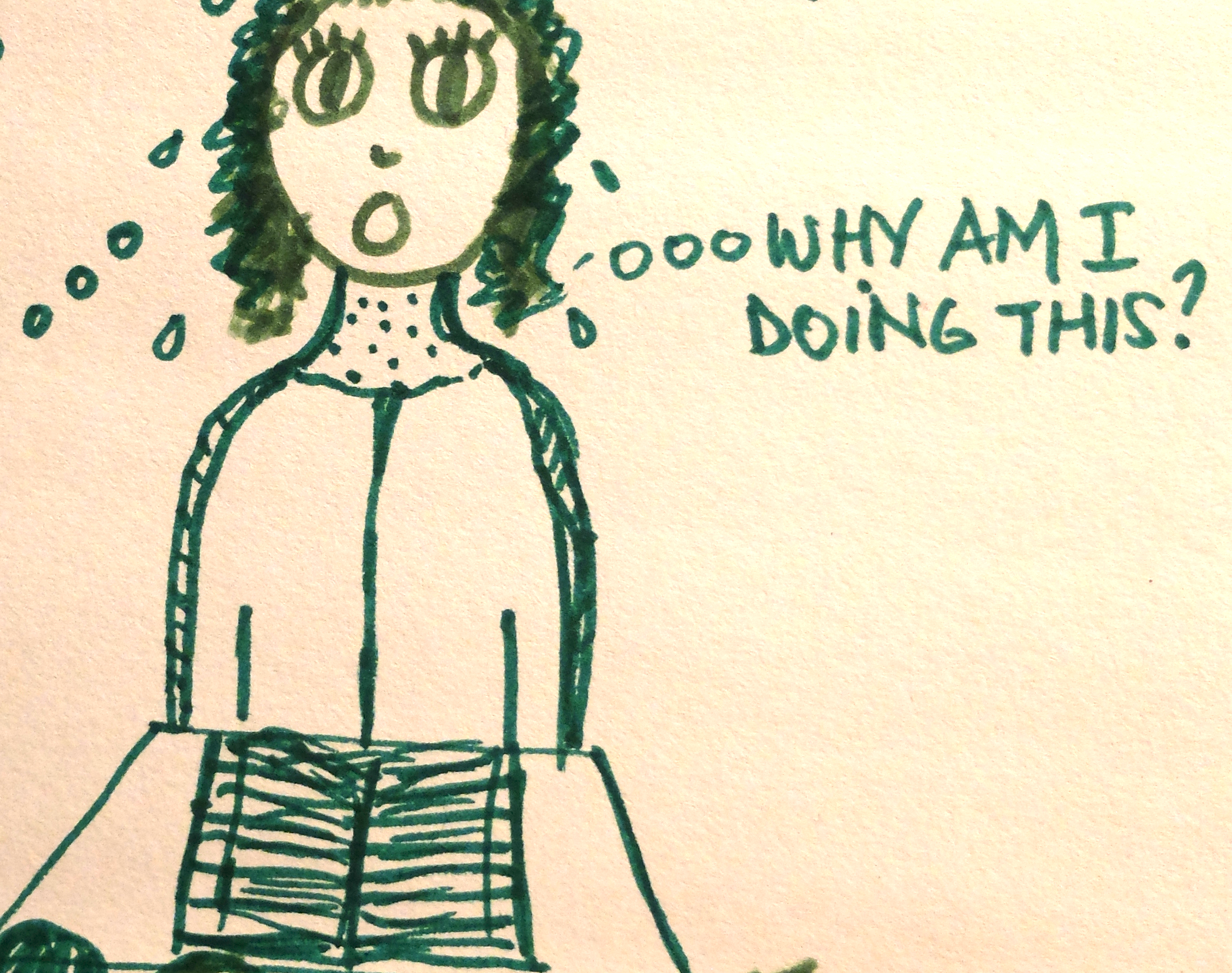
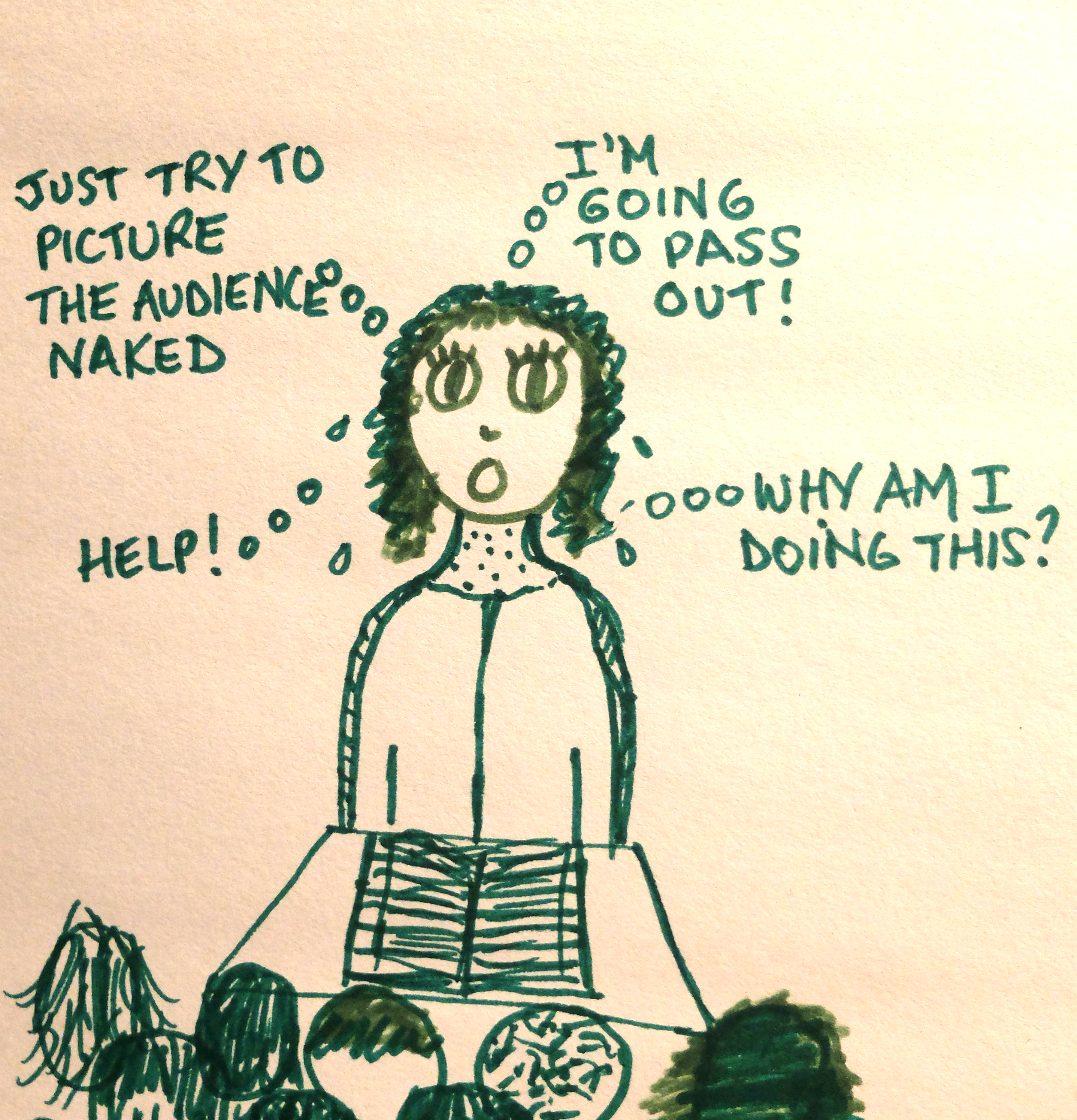
    *Embarrassment and Bloating Cartoon R. CohenUnlike the act of writing, which allows for the deletion of words before they’re read, speaking before a live audience isn’t as forgiving. There’s no delete button one can press to make oneself disappear.

    So, uncharacteristically, when one of my flash fiction pieces was recently published in the My Island, My City chapbook, I accepted the invitation to read it at a gala. Since proceeds from the event would benefit the QWF’s Writers in the Community program, I reasoned that service to the cause was far more important than my own aversion to public speaking.

    As I was about to leave the house on the night of the gala, my face suddenly bloated like a pufferfish, my neck erupted in itchy hives, and my nose bled. Apparently, my anxiety about the reading was manifesting itself physically.

    “How can you be nervous? It’s a flash fiction story that will take you forty-eight seconds to read!” my partner said after I’d gently dissuaded him from joining me. Why was I so nervous? I was honored to be involved in the charitable event!

    Then, when a roadblock prevented my cab driver from turning on de Maisonneuve Boulevard, he stopped the car. “Walk from here!” he firmly suggested. Too anxiety-ridden to protest, I passively agreed. The moment I exited the vehicle, a freak snowstorm hit. Within seconds, my freshly-coiffed hair was drenched.

    Along the closed street, massive pieces of concrete lay strewn about. People loitered, examining the detritus.

    Inspired by the scene, I compiled mental notes for a future work of fiction.

    I then realized that my imagination was partially to blame for my current state of anxiety—If not for my vivid imagination, I wouldn’t be compelled to write. If I didn’t write, I wouldn’t have to worry about giving public readings.

    After wiping a snowflake from my eye, I discovered that my black mascara and eyeliner were not as waterproof as advertised.

    Looking like a wet raccoon, I cut through Westmount Park, which was eerily desolate save for a lone teenaged boy smoking under a snow-covered gazebo.

    I paused briefly to scratch my hives.

    I reflected upon traumatic incidents from my past that contributed to my fear of appearing before an audience: during a figure skating competition in my teens, someone clapped after I completed a movement that was undeserving of applause. I scanned the audience, only to discover the culprit was my father. Distracted by his misplaced burst of applause, I fell. (Needless to say, I didn’t win that competition). From then on, I dissuaded (nay, banned) family members from attending any competitions or events that required me to appear in front of an audience. That longstanding ban has carried over to include my partner and friends.

    When a recipe of mine was included in a cookbook, I was invited to prepare it on live TV during a pledge drive to benefit public television. Nervous during the shoot, I momentarily lost my ability to speak and instead, flapped my arms in a futile attempt to generate words.

    Finally, I arrived at the gala venue. Soaking wet, freezing, hive-covered, my makeup smeared, my face bloated, and blood caking in my nose. While attempting to compose myself in the foyer of the church hall, I was shocked to see one of my friends enter the building. “Surprise!” she squealed upon seeing me. Moments later, another good friend showed up unexpectedly. Both explained that upon seeing my name in the ad, they’d reserved tickets to support me (and the cause)!

    Chatting with them, I gradually felt my fear dissipate. Believing that friends and family were stress-inducing distractions had been a mistake. The opposite was true! Their supportive presence was comforting.

    After my reading, I returned to sit with my friends in the audience, relieved that I hadn’t thoroughly embarrassed myself. Courtesy of the resulting adrenalin rush, I contemplated the advice of my writing mentors. I decided I would bravely endeavor to give public readings in the hopes of becoming an emerging writer.

    My thoughts were interrupted when one of my friends gently tugged on my sleeve.

    “Did you know that your sweater is on inside out?” she giggled.


    Pic. Cohen_Y. PelletierRenée Cohen is a freelance writer for numerous international charitable organizations. Her personal essays, prose, and flash fiction have appeared in Accenti MagazinePrairie Fire, Litro UK, The Globe and Mail, the Montreal Gazette, Reader’s DigestZvona i Nari’s ZiN Daily, Croatia, and in numerous volumes of the Canadian Authors Association anthologies, in the My Island, My City chapbook, and elsewhere. Her artwork has been exhibited in group and solo shows and featured in Montreal Writes Literary Magazine, Headlight 22, 3Elements Review, Spadina Literary Review, Flash Frontier New Zealand, and Sonic Boom Journal (India). She recently won The Fieldstone Review’s Banner Art Competition.

    Photo credits: Renée Cohen (header image); Y. Pelletier (headshot)