Tag: Writer

  • Dear Everyone I’ve Ever Known: Thank You. This Book Is Dedicated to You.—By April Ford

    Dear Everyone I’ve Ever Known: Thank You. This Book Is Dedicated to You.—By April Ford

    I’m two seasons away from the release of my debut novel. This will actually be my third book publication, yet there are elements of the publishing process that still intimidate me. Two I believe I’ve mastered by now are how to dedicate a book, and how to thank people who’ve helped me along the way—“mastered,” that is, until I start imagining how Person A might feel when she doesn’t see her name on the “Acknowledgements” page even though she treated me to coffee during a rough patch in my life, or when I finally admit I don’t want to dedicate my debut novel to my ex-husband even though, while we were married, I said I would.

    For all the slow writers out there like myself—and this isn’t counting the time it takes for a book to go through the publishing process—a lot can happen between the first and final drafts. It can be startling to see how these changes manifest on paper, especially if you’ve told someone you’re going to mention them in your book but you change your mind. So while you’re fantasizing about eloquent dedications and thorough acknowledgements (a fun and necessary exercise), why not keep a list to help you remember whom to thank and whom not to thank? There will always be someone’s name you add to the list and then remove. And then add again out of guilt. Seeing this name next to the ones you’re 100 percent certain you want to thank might clear your doubt. Update the list as needed, right up until the day your publisher asks for the final iteration. And do not to show it to anyone before your book is published. This is your list. Writing the book was your experience. You owe no explanation for why you did or didn’t thank someone, in the end.

    Being a writer means skillfully riding the constant waves of people’s ideas about what a writer is, does, and how we do it. For example, a past partner of mine used to urge me to write whenever I felt unhappy. He couldn’t seem to accept that it was the last thing on earth I wanted to do when I was troubled (it’s when I produce my most unsalvageable work), and he seemed truly dissatisfied by the fact that I don’t write every day. I wasn’t adhering to his vision of the writer’s life and how he might play a role in it—later to be thanked. It’s worth considering people’s motivations when you’re crafting dedications and acknowledgements. No matter how thoughtfully you execute those pages, there will always be someone who feels slighted for not receiving public recognition from you. While in your mind, all Person B did was occasionally ask you questions about the book you’d been writing “forever,” in Person B’s view, they supported you by expressing ongoing interest in your work (but mostly talked at length about themselves, their darling children, and their even darlinger Shih-Poo named Ackerly).

    Historically, the dedication page was a siren’s call to potential benefactors. Writers dedicated their works to significant public figures and sometimes even entire cities, with the goal of attracting funding for their future publishing endeavors. Today’s dedication page is more of a forum for displays of affection (“For my spouse and children: You are my life.”) or an opportunity for the author to give readers an intimate glimpse of their personality by acting as a micro-autobiography (“I dedicate this novel to my iguana, because why not?”). When it was time for me to dedicate my short story collection, my then-husband graciously helped me brainstorm (it didn’t make sense to dedicate the book to him, since I had started it years before we met). Together we came up with “for the poor children,” the title of the collection, which sets an ironic, somewhat glib tone—and as it turns out, I’m a somewhat glib person who uses irony to process the world around me.

    The “Acknowledgements” page is a demonstration of good literary citizenship. Here, you thank people by order of importance, starting with your agent (if you have one), editor, designer, publicist. Without these hardworking allies, your book would still be a MS Word file. You want to also mention sources of funding you received while you worked on the manuscript, public readings you gave from your book to be, extracts (poem, story, essay, chapter) that were published elsewhere, and peers who read and critiqued your work. Then you can start on that fantasy list you’ve been keeping! In the case of my forthcoming novel, I’m attempting to make amends for not dedicating it to my ex-husband by thanking him high up on the page, right after my publishing team and before everyone else. Were his feelings hurt when I first told him about my change of heart? Of course. We had a long conversation about it by telephone and this was when I gained a deeper appreciation for the responsibility that comes with writing dedication and acknowledgements pages: they’re meaningful and symbolic not only to the author but also to those mentioned—and to those not mentioned. 

    Nicolas01April Ford is a genderfluid author living in Montreal, Quebec with her rescue family. Her fiction, poetry, and essays have appeared in print and online journals in Canada, the United States, Mexico, Germany, and Scotland. She is the recipient of a Pushcart Prize for her short story “Project Fumarase,” and has held fully-funded residencies at Virginia Center for the Creative Arts and Ucross Foundation. Her books include Death Is a Side-Effect: Poems (Frog Hollow Press, 2019) and the award-winning story collection, The Poor Children (SFWP, 2015). Her debut novel, Carousel, is forthcoming in Spring 2020 with Inanna Publications. www.aprilfordauthor.com

    Photo credits: “Cliche: Have a Heart”by Carol (vanhookc) is licensed under CC BY-SA 2.0 (header image); Bernardo Fernandez, Verdun, Quebec, 2019 (headshot)
  • To Write Well, Learn from the Badminton Court—By Pascale Duguay

    To Write Well, Learn from the Badminton Court—By Pascale Duguay

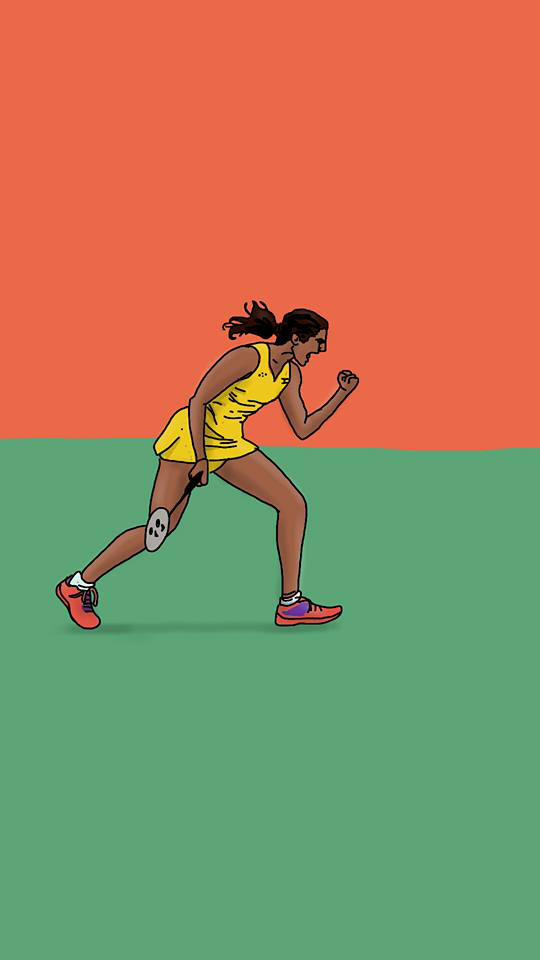
    “Don’t rush your serve,” I called to an enthusiastic senior student during our badminton match.

    “But Miss, I can catch people off guard this way.”

    “Don’t rush your serve,” I insisted.

    “But Miss, I’m ready!”

    “No, you’re not. Your feet are still moving. You’re off balance. Your shot is off. You’re not focused.”

    A glare. An audible sigh.

    I could tell she wanted to tell me to mind my own business and go back to the library where I belonged, but I stood my ground.

    Most of the high school students I see on a daily basis don’t think of me as anything more than their librarian. I totally get that, since I used to be a teen. When I impulsively asked the coach if I could join the kids at practice, I didn’t know if my body would be up to the challenge, but I allayed my fears by telling myself that even if I couldn’t perform at the level of my youth, I could at least share some of the dusty bits of knowledge stored in my brain. Even though I had not played badminton seriously in at least twenty years, I still remembered how to hit a proper serve.

    “Don’t rush your serve,” I repeated again and again throughout our match.

    What my opponent didn’t know was that I needed the reminder as much as she did. In the heat of the moment it’s easy to get carried away, to want to speed things along. Although badminton is a fast sport, it’s not about rushing. It’s about being in control—of yourself, not your opponent. If you can control yourself, you can dictate the pace, the direction, the energy, the flow, and eventually the outcome. And it all starts with your serve.

    That night, as I checked my alarm clock, I was tempted to set it for later than usual to give my aching muscles a couple of hours of extra rest. But that meant I would have to skip my morning rituals. As I pondered the pros and cons, I realized that my writing life also needs a solid foundation. It can’t get off to a good start if I don’t first make sure everything I need is in place. For me, this means starting my day at 5:15 so I can do my morning pages à la Julia Cameron. I use this moment to cleanse my mind as I write down everything that enters my head, from the most mundane (I need to stop by the post office after work), to the most brilliant flashes of genius (I could write an essay about badminton). No matter where my thoughts begin, they inevitably point me to how I can best use my writing time later on.

    As I scribble away, I underline important thoughts and ideas so I can easily find them again when I review my musings. Three full pages later and I feel like a brand new me, ready to face the day and with my mind open to any guidance I might receive from my muse or fellow earthly beings.

    When my three pages are done, I move on to my workout. In a way, it’s the physical equivalent of my morning pages. It helps me stay grounded and strong so that I have the energy I need to write in the evenings.

    Once these two things are taken care of, I can start my day fully in control. I know what I wish to achieve and the path I will take to get there, while feeling confident that I will have the stamina to see it through. Just as preparing for the serve lays the foundation in badminton, my morning rituals stop me from blindly rushing into the day. They help me stay on course so my writing doesn’t get permanently buried under the day’s demands and distractions, but can resurface when the time finally comes for me to grab my writing tools and let the words fly.


    Pascale Duguay

    Pascale Duguay is a freelance writer, high school librarian, and translator (French/English). She resides in the lively bilingual community of Quebec’s Eastern Townships. Pop in for a visit at pascaleduguay.com, where you can sign up for her sporadic but fantastic newsletter on the writing life.

    Photo credits:
    “Olympics 2016 Sindhu”by chaitanyak is licensed under CC BY-NC-SA 3.0
    (header image); Jennifer Brown (headshot)


  • The Circle of Mentorship—By Shelagh Plunkett

    The Circle of Mentorship—By Shelagh Plunkett

    Linda Kay—author, journalist and teacher—died last October. In 2006 she was assigned to mentor me by the Quebec Writers’ Federation, and in the twelve years that followed became a great friend as well as remaining a generous-hearted and gracious advisor. In the months since she died, during the hundreds of times I’ve missed being able to email or call her, I’ve thought often about what I’ve lost without her in my life and what I learned from having her in it. Perhaps most importantly, Linda showed me how essential mentorship is for a writer.

    Linda Kay
    Linda Kay

    Linda’s achievements as a writer and teacher were impressive (including no less than a Pulitzer won as part of a team early in her career), but recording them here would leave nothing more than a superficial sketch that failed to convey who she was. Similarly, outlining the empty space that her death has opened in my life would leave a hollow impression of our friendship. I’m left wanting to convey one of the most important things I learned from Linda: that mentorship is essential for a writer.

    When I moved to Montreal, I joined the QWF to meet writers. I applied to the mentorship program and was introduced to Linda. The first time we met she brought the essay I’d submitted with my application—a short piece about growing up in Guyana, in South America. “Send this in to the CBC Literary contest,” she urged me.

    I’d written it in a flurry of frustration one afternoon. It was the sort of writing I wanted to do but was unlike anything I’d ever tried, because it was not the kind of piece my freelance clients were interested in publishing. I didn’t know if the piece was good or bad, but I’d had fun writing it. Linda was adamant, so I took her advice.

    She was right; the essay won the CBC Literary Award for creative non-fiction. Linda told me my life would change, and it did. With that award to reflect on and with her encouragement, I began to think I could write more than just simple news pieces, arts profiles, or lifestyle columns. I began to think I might have the chops to string a few words together that might have a deeper purpose, that might offer something more to a reader than a few minutes of entertainment. Linda suggested I approach publishers. “They’ll pay attention to you now,” she said. She was right. Penguin signed a contract with me and my memoir of adolescence overseas—born out of the essay I’d written—was published in 2013.

    In the years that followed, Linda continued to inspire me to take the work of writing seriously, because that’s what she did. She applied all her skill, insight, and effort to everything she did, from writing to teaching to friendship; to every assignment, be it a book or a short piece for Costco Connections. Ultimately, what we try to do as writers is communicate. Linda showed me that without giving one’s full passion, focus, and commitment, communication isn’t worth the effort.

    Linda didn’t tell me she was sick until quite close to her death, but in her last months we wrote often and our conversations continued to ramble around writing, family, new and old loves, life. She remained as she’d always been, even in our last correspondence, an email sent less than a week before her death from her hospital bed. Linda wrote that she’d passed on my name and the title of my book to a Guyanese intern she’d met, encouraging the woman to seek out my writing. Right to the end, Linda remained a supporter and mentor.

    It is not an exaggeration to say I would not be a published author, and would not be writing still, if not for Linda. And now, things have circled back for me: I’ve been hired by the QWF to fill the role for someone else that Linda did for me when we first met. As I key these words, I am embarking on three months of mentoring a promising writer in our community. Though I miss Linda immensely and often, I’ve not lost the gifts she was lavish in bestowing. I will turn to my memories of Linda now and into the future, knowing that by doing so I’ll be motivated to achieve much more than I imagine myself capable of. More significantly, her memory will inspire me to pass on to my mentee what Linda gave me as a mentor.


    ShelaghPlunkett_photocredit-NiamhMalcolmShelagh Plunkett is a past winner of the CBC Literary Prize for creative non-fiction. In 2013 her memoir, The Water Here is Never Blue, an extension of her winning essay, was published by Penguin Canada. It was shortlisted for both the QWF Mavis Gallant Prize for Nonfiction and the QWF Concordia University First Book Prize. Shelagh now lives in Montreal, where she is at work on too many projects. Her past hometowns have included Georgetown, Guyana; Kupang, Timor; Vancouver, Victoria, and Toronto; Ricón-de-la-Victoria, Spain; and Salt Spring Island.
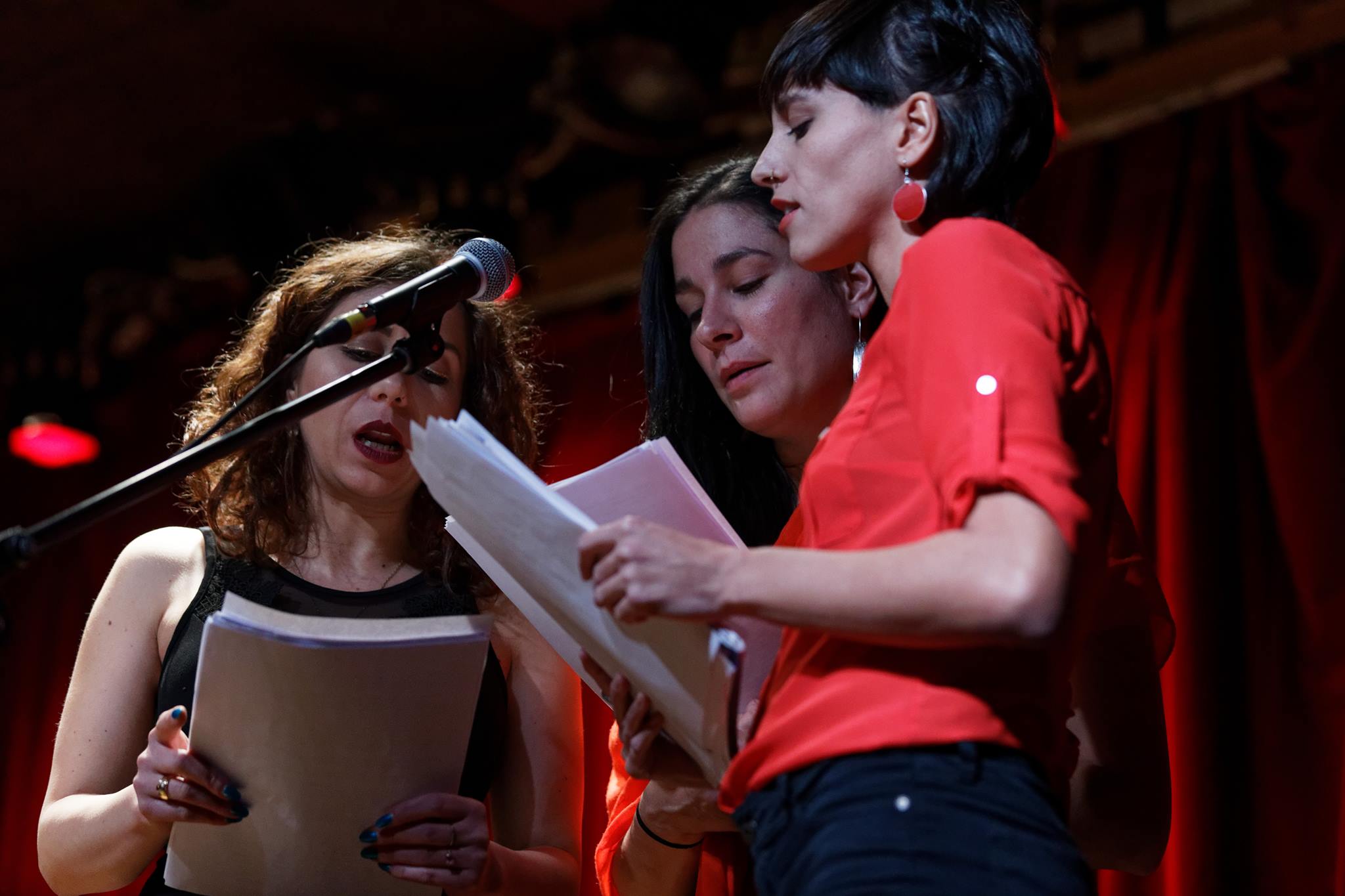
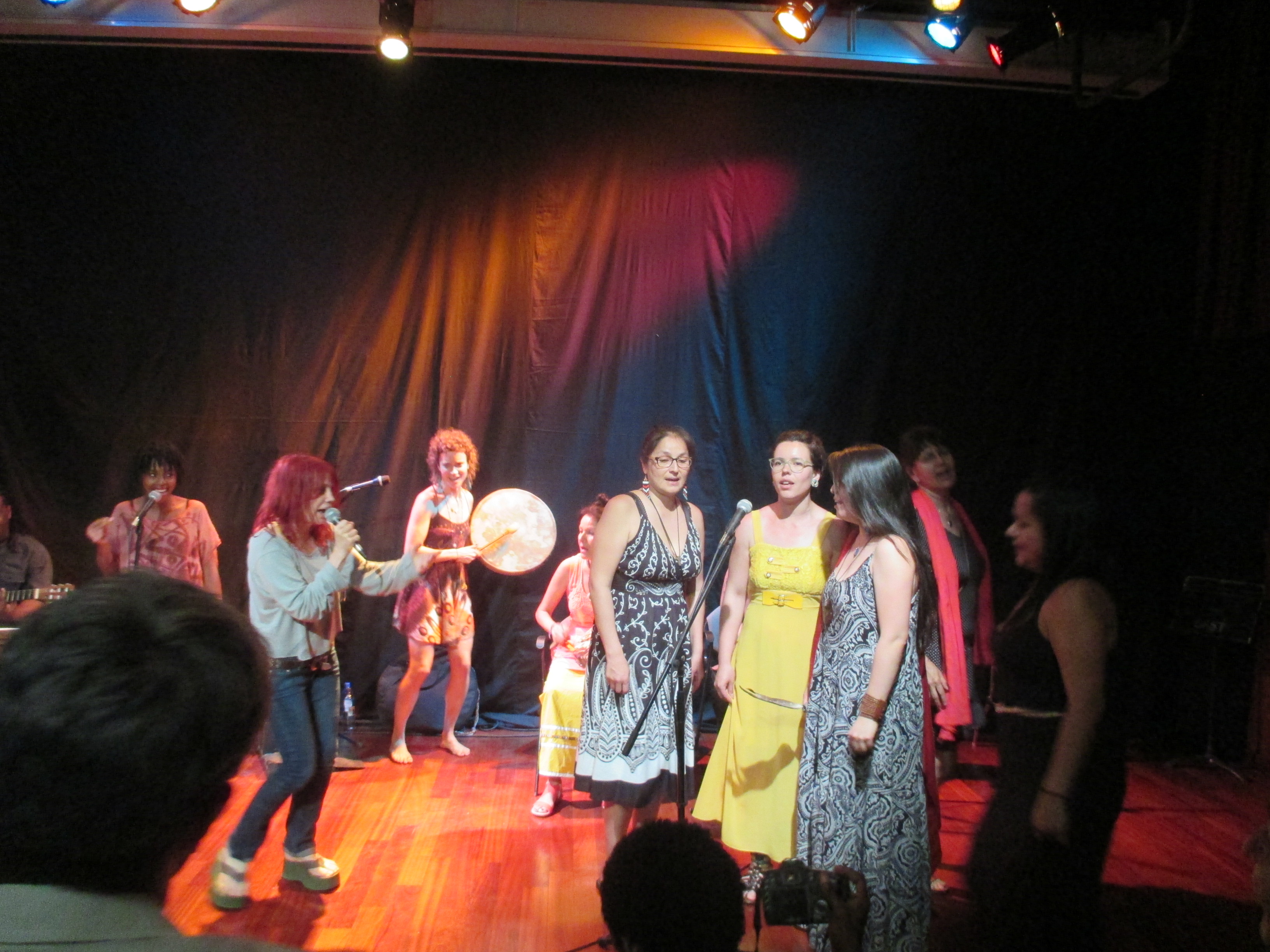
    Photo credits: Flickr (header banner), Courtesy of Emily Kay-Rivest (photo of Linda Kay), Niamh Malcolm (headshot of Shelagh Plunkett)

  • All Languages / Languages All—By Rachel McCrum

    All Languages / Languages All—By Rachel McCrum

    “Les langues sont toutes les mêmes lorsqu’elles tournent ensemble.”

    —Danny Plourde

    “All languages are the same when they’re in tune.”

    —translated by Antonio D’Alfonso

    “Languages all come together when they’re dancing.”

    —same line, translated by Martha Tremblay-Vilao

    LesNuitsAmerindiennes
    Les nuits amérindiennes, Port-au-Prince Haiti, May 2015. Performers include: Chloé Sainte-Marie, Moe Clark, Marie-Andrée Gill, Rita Mestokosho, Natasha Kanapé Fontaine, Naomi Fontaine.

    What’s the point of going to see a poetry show if you can’t understand the text? And yet—there it is. That galvanizing, pure communication of the concerns, the beauty, the specificity of another language. The most joyful expression of it that I’ve seen so far was at an unforgettable night with the inzync Poetry sessions in Stellenbosch, South Africa. At least five of South Africa’s eleven official languages were represented onstage, with whispered translations offered by audience members to their neighbours, and whoops of recognition along the way.

    I wanted more.

    Port-au-Prince, May 2015

    I’m nearly the sole Anglophone, and definitely the only Northern Irish, at Les nuits amérindiennes, a festival of First Nations poets and artists in Port-au-Prince, Haiti, curated by the inimitable Rodney Saint-Éloi of Montreal-based publishing house Mémoire d’encrier. The Indigenous poets from Quebec include Joséphine Bacon, Guy Siou Durand, Tomson Highway, Virginia Pésémapéo Bordeleau, Louis-Karl Picard, Natasha Kanapé Fontaine, Moe Clark, Marie-Andrée Gill, and Naomi Fontaine. I’ve been sent by the Edinburgh International Book Festival to meet with Joséphine, Natasha, and Naomi for a collaborative project. This is my introduction to Canadian, to québécois, to Indigenous literature. I have no idea what’s going on, and I can barely understand anyone (my Belfast schoolgirl French being wholly inadequate in the circumstances). But at the shows, I’m electrified by the performance and the politics, the unself-consciousness, the self-awareness, the clear-eyed passion, the trickster craftiness—and well-honed craft—of the various artists.

    Nobody really understands why I’m there either, although it’s not that important—this isn’t about me. But I’m not that good at sitting on the sidelines and I’m desperate to communicate, somehow. At the second late-night session at Café Yanvalou, I sidle up to Rodney and ask, haltingly, if I can take a turn at the microphone. The words will be in English, but it’s the only thing I can think of to do. I sweat through a couple of poems, with halting introductions in French. I talk about my mother, and the sea. It works. I cannot speak, but I can extend words. The connection is made. These will become lifelong friends (and in one case, the love of my life, and the beginning of my journey to Montreal).

    Edinburgh, December 2016

    I am finishing up six years in Edinburgh, Scotland, which has mostly been consumed and absorbed with poetry, performance, promoting events, teaching workshops. It’s been a fantastic life. I have been incredibly lucky, starting from the gritty basics of open mic nights and running shows, and ending up being able to make a living, a good living, from all this. I love my community, I love my work, I love, more than anything, what happens when people get on a stage with their words, and speak them to an audience. And I’m leaving it.

    Even I’m not entirely sure why, except that there is love on the other side of the Atlantic. And there is a chance, a real chance to follow this thread of poetry and of performance, and try to understand how, if one cannot follow the sense of the words in an art form that bases its craft on the finer points of language, one can still be so affected by multilingual performances. In Quebec, my native language—which I have spent the last few years learning how to wield as a poet—becomes one among many.

    Montreal, November 2018

    I’m at Langues liées // Linked Tongues in La Sala Rossa, Boulevard Saint Laurent, Montreal. It’s the opening event of the Mile End Poets’ Festival, and there are ten poets on stage. There are ten languages on the stage. Aside from French and English, there is Arabic, Creole, Korean, Innu-aimun, Italian, Occitan, Persian, Portuguese, Spanish, and Wolof. These are mother tongues, and father tongues; languages of politics, of home, of love.

    Languages talk of their own concerns, at once specific and universal. Martha Tremblay-Vilão sings saudade, the Portuguese longing for a past or a home that no longer exists. Hossein Sharang talks of Iran, of democracy, of the impossibility of a country of eighty-two million terrorists. David Bouchet asks—in Wolof, with the aid of cue cards (and his fellow poets): “Where are you, who are you, how are you?” Marcela Huerta performs the stiltedness, then fluidity, of learning English as the daughter of Chilean refugees.

    The audience doesn’t understand everything that is being said, but there are ripples of comprehension when a new language is presented. There is a table of Arabic speakers, another of Portuguese. Maëlle Dupon’s mother is in the audience to hear her perform in Occitan; another supporter, a Haitian friend of Maëlle’s, is blown away when his ears catch the Creole of Chloé Savoie-Bernard.

    In La Sala Rossa, the last impressions are of joy. Of something ventured and something gained. Of respect. Everyone on that stage can do something that no one else can. They’ve worked for this show, they’ve risked, they’ve listened to one another, translated, called out and responded. And we’re here, and we will listen.


    RachelMcCrum_headshot

    Rachel McCrum is a poet, performer, and promoter—and also the Membership & Communications Co-ordinator of the Quebec Writers’ Federation.* She is originally from Northern Ireland, and has performed and taught poetry in Greece, South Africa, Haiti, Canada, and around the UK. She lived in Edinburgh, Scotland, from 2010 to 2016, where she was the inaugural BBC Scotland Poet-in-Residence, a recipient of an RLS Fellowship, and the co-host of cult spoken word cabaret Rally & Broad. Her first book, The First Blast To Awaken Women Degenerate, was published in 2017. She has lived in Montreal since January 2017, where she co-directs (with Ian Ferrier) the Mile End Poets’ Festival and curates the bilingual poetry performance series, Les Cabarets Bâtards.

    *As an employee of the QWF, Rachel has waived the fee for this article.

    Photo credits: Michael Kovacs (header image, showing Maëlle Dupon, Uasheshkun Bacon, and Martha Tremblay-Vilão reading in Occitan, Innu-aimun, and Portuguese at Langues liées // Linked Tongues); Rachel McCrum (top image); Ryan McGoverne (headshot)

  • Us Impostors—By Caroline Vu

    Us Impostors—By Caroline Vu

    Header image: Letters sent to Caroline Vu by her Vietnamese friends in the 1970s.

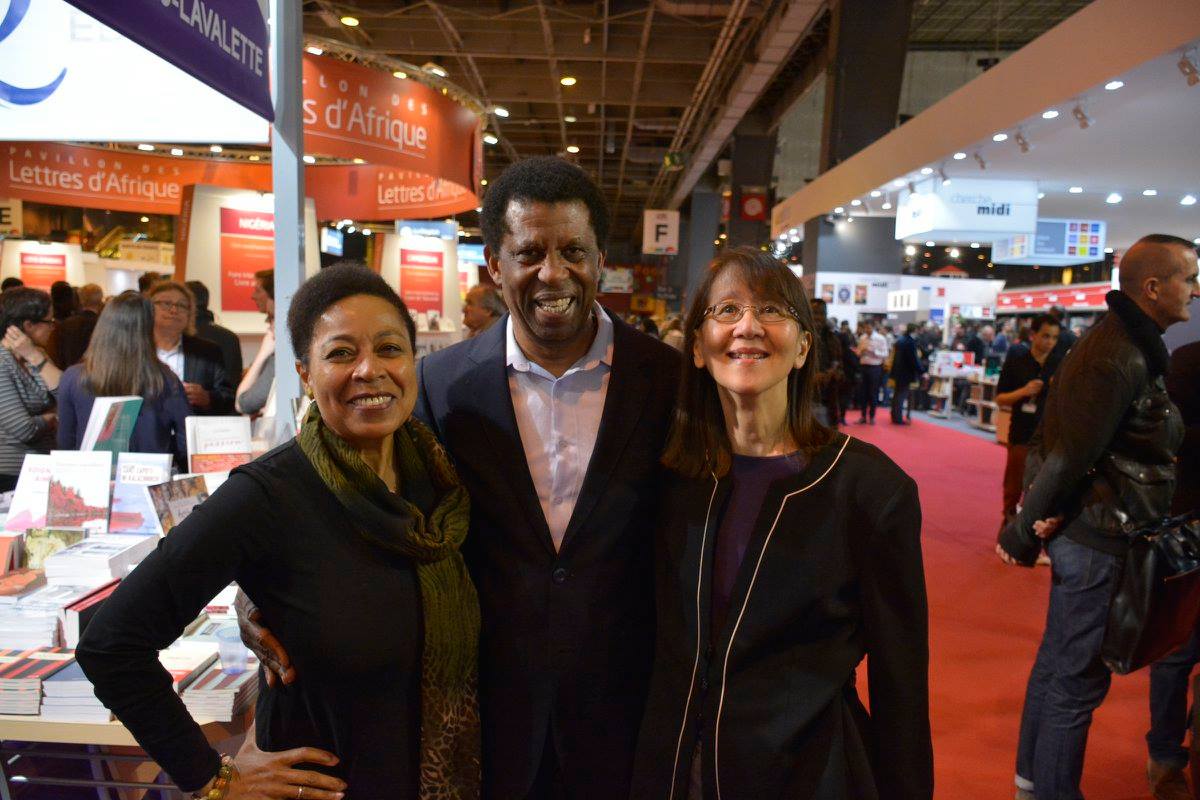
    By some incredible stroke of good luck, I was invited last spring to Étonnants Voyageurs, France’s prestigious international literary festival. On top of a speaker fee, I would be reimbursed for my hotel, food and transportation.  To my surprise, I was to appear on the same panel as the famous Dany Laferrière. I wondered if some FrenchLit assistant organizer hadn’t mistaken me for Kim Thuy.

    “Dany Laferrière of l’Académie française fame! What will I say next to him? I’ll look like a dummy. Maybe I shouldn’t go…” I told my friend Lisa.

    “Nahhh, go,” Lisa said.

    “But… I’ll sound so stupid in my half-baked French! I hate public speaking,” I protested.

    “Yeah, you’ll appear simplistic next to the pros. So what? Nobody will remember your mumbling the next day. But Facebook photos of you with Dany? That’s gold. They’ll live forever on the internet. Smoke and mirrors, that’s what counts…”

    “You’re clever,” I said.

    “I didn’t do an MBA for nothing,” Lisa replied.

    I took my friend’s advice, said ‘yes’ to the invitation and went home to practice my French. Immediately I felt like a professional impostor.

    dany laferriere - paris salon du livre
    Alecia McKenzie, Dany Laferrière, and Caroline Vu at the 2017 Livre Paris, a year before the festival in Saint-Malo.

    Étonnants Voyageurs, held each spring in the beautiful seaside town of Saint-Malo, is a festival to behold. Book lovers come from all over France and French-speaking countries to hear their favourite authors. In town, I had a large room overlooking the Atlantic. I was invited to champagne lunches. I met interesting writers from Canada and France. The sun shone throughout our stay. Yet I was restless—couldn’t sleep at night, was nervous during the day. I dreaded public speaking so much, I even thought about skipping the panels. “Sore throat, lost my voice… laryngitis. Can’t come, sorry…” I could use that as an excuse. Being a doctor, I could even give myself a medical note.

    Of course I didn’t give myself a fake medical note. I did show up for the panels. Dany was accommodating both on stage and behind the scenes. To put me at ease, he made a friendly joke about shy authors. It was one of those rare moments when I actually laughed on stage.

    I don’t remember much of what was asked of me on those panels or how I answered.  Only one question stayed with me. It was a question I have been asked in the past: How did I start writing fiction?

    To this question, some of my co-panellists mentioned being influenced by their father’s extensive library. Or a teacher’s encouragement. Numerous classical authors were named as sources of inspiration. Then the host turned to me: “How did you start writing? Which authors inspired you, Caroline?” Many authors had, but in my nervous state I couldn’t name anyone. I gulped, then decided to stick to the same narrative I’ve told friends.

    I was eleven when I left my native country of Vietnam. It was during the height of the war. Overnight we went from chaotic, war-torn Saigon to a quiet Connecticut town. I should’ve been grateful for the change, but somehow I wasn’t. Not speaking a word of English, knowing nothing of American culture, I was lost. I was at an age when the sense of belonging seemed more important than the dangers of war. And in that small Connecticut school, I simply didn’t belong. So I hung on to the memory of old friendships. Daily I longed for the bond I once had with childhood friends still living in a ravaged Vietnam. My weekly letters to them eventually became exercises in obfuscation. Not wanting to burden them with my laments of loneliness, I made up stories of trading barrettes with popular girls, of throwing Frisbees to blond boys, of excelling in team sports. In reality, I’d spent my free time watching others play. In reality, I’d only heard “Boo!” in gym class since I could never grasp the strange rules of baseball.

    Those letters to old friends were pure fantasy, I said. An eleven-year-old impostor, that was me. That was how I started writing fiction, I told the host. Some members of the audience nodded in sympathy while others smiled. I guess I didn’t do too badly.

    That narrative about writing make-believe letters home is mostly true. I know I exaggerated some parts, but now I’ve forgotten which ones. With time I’ve come to believe wholly in my tale. A little varnish on the truth can’t hurt a good story—I’ve succeeded in convincing myself.

    “Once an impostor, always an impostor,” I told Lisa with shame upon my return home from Saint-Malo.

    “But aren’t all novelists impostors? Always concocting fake stories to lure readers? Always trying to milk some tears or laughter? Don’t worry!” Lisa exclaims.

    “Hmmm…”

    “Great Facebook photos with Dany, by the way! I’ve already shared them on Twitter…”

    Ahhh, MBA-ers, what would we impostors do without them?


    CarolineVu-headshot

    Caroline Vu was born in Vietnam and left her native country at the age of eleven. She moved to Canada after spending two years in the US. Caroline’s first novel, Palawan Story (Deux Voiliers Publishing) won the Canadian Author Association’s Fred Kerner prize in 2016. That novel was also a finalist for the Quebec Writers’ Federation’s Concordia University First Book Prize. Palawan Story was translated into French (Éditions de la Pleine Lune) in 2017 and was a finalist for the 2018 Blue Metropolis Diversity Prize. Her second novel, That Summer in Provincetown (Guernica Editions) has also been translated into French (Éditions de la Pleine Lune). Caroline currently works as a family physician in a community health clinic in Montreal.

    Photo credits: Caroline Vu (header image); Courtesy of Éditions de la Pleine Lune (at Paris Livre); Marc-Antoine Zouéki (headshot)

  • Writing about Not Writing—By Sivan Slapak

    Writing about Not Writing—By Sivan Slapak

    Is a writer who isn’t writing still a writer? And if so, for how long a stretch? These are the questions I’ve been asking myself—actually, tormenting myself with—for the last year or two.

    Even at my most active I’ve never had a writing routine. I wish I could say I’ve always woken up to meet my muse at 9 a.m. each morning. Nevertheless, I’ve somehow managed to amass material over the past few years, with a collection of interwoven short stories as the intended goal.

    When I began crafting some stories about five years ago, I didn’t call myself a writer. The verb was okay: “Writing a bit,” but not the noun. I’ve kept journals since childhood, met in writing groups since my teens. Then came academic papers, grant writing gigs, and so on. So, I’ve been engaged in the act in various ways throughout my life. But “writer”? It seemed pretentious, or premature at best. Like the difference between having an artistic spirit, and creating art.

    Despite some early successes—getting published, shortlisted, even awarded (!)—I found it challenging to accept, and introduce, myself as a writer. (“I just write a bit!”) But with time, I allowed myself to settle into the identity. In some ways this has calmed other questions about my place in the world, when I, like so many of us, feel I’ve made a life of living on the seams. For a writer, that’s not a bad spot to be.

    But what does a writer who hasn’t been writing call herself? (“Lost,” when she’s panicking.) I know we’re supposed to believe that lulls and blocks are part of the creative process (I’ve read The Artist’s Way, too) and that resting and inputting—reading, seeing art, living life without notating it—is an incubation period. And I suppose I do essentially think that. Yet at some point this ‘incubation’ begins to feel more like stagnation, and the idea of ‘writer experiencing a lull’ is harder to buy than ‘not a writer anymore.’ Especially when the pause becomes longer than the writing that preceded it.

    Of course, there are lots of reasons for a writing hiatus. The simple ones are limits of time and energy. For me, I’ll say work: over the years it’s mainly been in the community and arts sectors (to my joy), often as a coordinator or editor. I love these roles and they offer flexibility, but I’ve noticed I easily choose working on others’ projects over my own, even when I don’t have to. Before I had a job, my blocks were caused by the paralyzing anxiety of NOT having enough work, or not having work I like. So, there’s always something. And there’s always the hauling undertow of social media to compound the issue. In any case, like many writers I know, I struggle to prioritize writing time, and the obvious excuses are less complicated than facing other, less conscious motives. Whatever the reasons, the longer I go without writing, the more miserable I feel.

    What about my short story collection? What about being a writer?

    In recent years I’ve hung on, by my fingertips, to the fragile thread of a notion that I’m still a writer. An unproductive one, but still.

    Thankfully, I seem to be slowly emerging from my dry spell, and I’ve been looking back on what’s kept me holding on: I have to credit the writing group I’ve been part of for several years. I haven’t submitted in ages, but I’ve stayed in as a reader and tried to be an active presence in our little community. Their support has buoyed me.

    I also took two QWF workshops. I didn’t produce new work, but it gave me a chance to revisit some pieces and say, “Hey, this isn’t horrible!” (And have peers say similarly encouraging things.)

    This year I began writing daily morning pages, which put a pen back in my hand and is as close to a routine as I get. In the winter, riled up about a political issue, I wrote an op ed, which was published. Soon after, so was an old story I’d dusted off. I attended a ‘Shut Up and Write’ session in a QWF writer’s house. And just recently I met the criteria to have my “Literary Writer” profile approved by the Canada Council for the Arts. Bureaucratic recognition though it is, I felt grateful to receive it.

    So, there have been steps, some small and some more significant, in the realm of writerly activity. Not (yet) my completed short story collection. Or even another short story. But something, maybe more than I thought. Enough movement to feel reassured that while I’ve been fretting over stagnation versus incubation, my writer-self has kept busy.


    profile 2017 leslie schachter

    Sivan Slapak is a writer working in the arts and culture sector of Montreal. Her short stories have won and been shortlisted for fiction awards, and appeared in publications such as The New Quarterly, Montréal SeraiJONAHmagazine, and in an anthology published by Véhicule Press. Sivan lived abroad for many years and is fascinated by the encounters that take place when distinct communities meet, a theme she enjoys exploring in her writing, and in her life—and in the short story collection she hopes to complete soon.

    Photo credits: Sivan Slapak (header image); Leslie Schachter (headshot)

  • What If Your Computer Listened to You?—By Mariam S. Pal

    What If Your Computer Listened to You?—By Mariam S. Pal

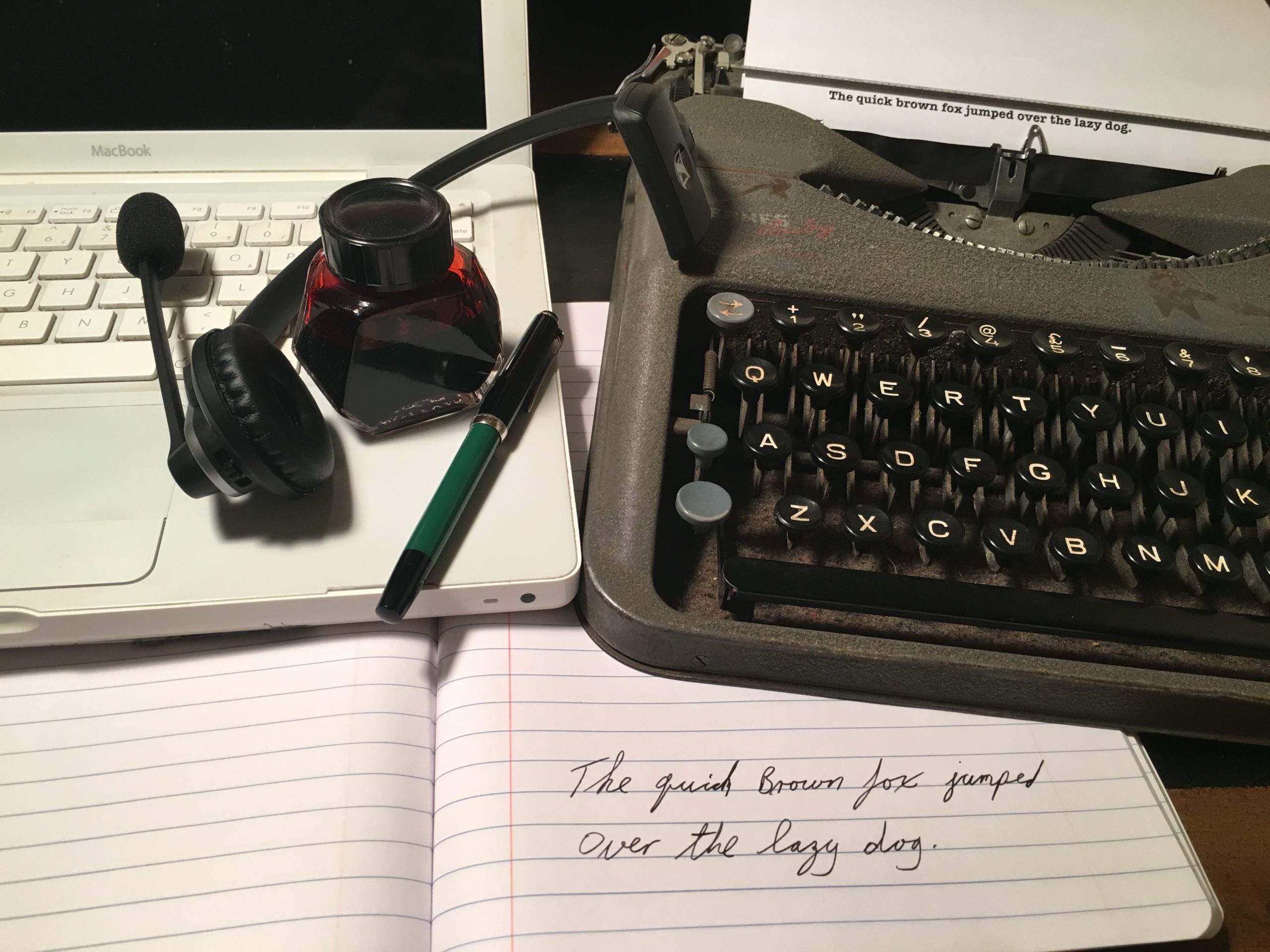
    “New line numeral one period space cap that the quick brown fox jumped over the lazy dog bold lazy dog exclamation mark.” My telephone rings. “Go to sleep,” I say to my computer, and the cute little green mic on its screen turns blue and shuts off. I answer my phone: “Hello?”

    It’s a typical day in my sunny second-floor home office. Headset on, I look like a faraway call-centre worker whose thankless task is to explain why your suitcase is in Montevideo. But I’m not calming cranky customers; I’m writing by dictation. I turned off my mic before answering the phone because otherwise, my conversation would have ended up as text on my screen.

    When I write, I don’t scrawl with a pen or pencil, hunt and peck on a keyboard, or even bang away on a typewriter. I slide on a headset, say “Wake up,” and start yakking at my computer. My voice recognition software converts speech to email messages, text in Word, and more. Line by line, paragraph by paragraph, my writing silently scrolls onto the screen every few seconds. I’ve been working like this for about fifteen years; chronic repetitive movement injuries forced me to look into alternatives to typing.

    I use Dragon Naturally Speaking, one of several voice recognition programs available to writers. It costs about the same as a couple of trips to the physiotherapist. If prescribed by a physician, voice recognition software is a tax-deductible medical expense. Google Docs, Windows 10, and Apple have similar features for free. All are based on the same technology.

    Leaning back in my swivel chair, feet up on my desk, I feel like Don Draper in Mad Men, dictating a letter. Unlike Don Draper, I don’t have a secretary, so I need to tell my computer where to add commas and what to capitalize. The first sentence of this essay, in “dictate-speak,” is what I would need to say in order to have the following text appear on my screen:

    1. The quick brown fox jumped over the lazy dog!

    Verbal commands allow me to switch the mic off or on, add punctuation, capitalize or underline. Don’t like the last sentence? Say, “Scratch that!” It’s erased. Want to change a word? Say, “Correct that!” then select one of several numbered options or type in your change.

    When trained for the user’s voice, my dictation software is 95 percent accurate. It’s important to use a good quality headset and to enunciate clearly. This makes it easier for the program to understand you.

    All this technology is great but it can drive you nuts. Despite repeatedly adding “Amritsar,” a city in India, to the dictation vocabulary, I still find “Emirates are” merrily spelled out on my screen. Argh! In my experience, homonyms are handled better: “four” and “fore” are rarely confused.

    Dictating changed my writing process. Once I got used to talking to my computer, I realized that I wrote for longer stretches of time. I was physically comfortable and relaxed. Writing was definitely easier and faster. Liberating my hands freed my mind to think more creatively. Like most of us, I speak faster than I type or write by hand. The words poured out of my mouth onto the screen. It was thrilling. I could finally get the ideas, descriptions, and dialogues swirling in my head onto the page and Dragon kept up with me. Once my words were on the screen I rewrote and refined them.

    At first, some of my dictated text sounded like emails or text messages. I used too many contractions and my sentences were either too long or too short. Colons, semicolons, and other punctuation from written English were noticeably absent. Eventually, I got better at verbalizing in a written style. I’ve developed a habit of working from an outline composed of key words or points. This keeps my dictation focused.

    If typing is painful, then it might be time to look into voice recognition. I caution that dictation is not the solution for everybody. If you write mainly in cafés or libraries, you probably don’t want the world to hear your masterpiece. Also, your microphone will pick up other voices, which will end up as gibberish on the page. Bilingual writers should know that voice recognition programs can only distinguish one language at a time. If you’re writing about going to a “5 à 7” or a dépanneur, you’ll have to enter these words manually.

    I love writing by dictation but sometimes low-tech is best. Simple corrections to dictated text are easiest typed in manually. And when I send a personal note or write the occasional cheque, I go no-tech and enjoy the tactile pleasure of writing: with a fountain pen, filled with ink from a glass bottle.


    fullsizerender 2

    Mariam S. Pal’s essays have been published in the Montreal Gazette, the Ottawa Citizen, The Globe and Mail, Le DevoirThe Times of India and The Hindu. She is completing a memoir about being Pakistani-Canadian. A recently published excerpt is available at http://south85journal.com/issues/spring-summer-2018/non-fiction/behind-the-walls. Mariam has an M.A. in Economics and B.C.L./LL.B. degrees in law, both from McGill University. She is semi-retired. Mariam and her headset live in NDG.

    Photo credits: Mariam S. Pal (header banner); Eli Krantzberg (headshot)

  • Amazing Grace: A Literary Friendship—By S. Nadja Zajdman

    Amazing Grace: A Literary Friendship—By S. Nadja Zajdman

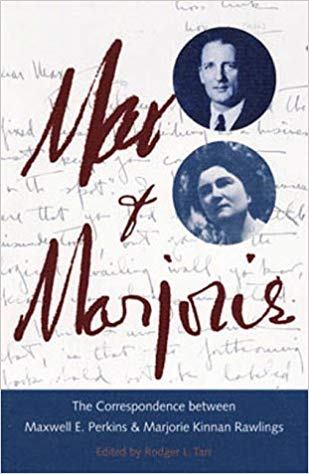
    I was sitting by the gas-lit fireplace in my local library when a book on the table caught my eye. It was the collected correspondence of the novelist Marjorie Rawlings and her editor, Maxwell Perkins. As I read their letters I could hear their long-stilled voices speaking to each other, and to me, across the expanse of decades. I tried to check out the book, but was told it was a reject from a book sale, and if I wanted it I would have to buy it. So I did.

    At home, I looked up Maxwell Perkins on the Internet. A link led me to Perkins’ granddaughter, the novelist Ruth King Porter, who lived in rural Vermont. Ruth was giving away her novels, asking nothing in return but that readers post reviews on her website. I sent for Ruth’s books, and a correspondence began. Soon, we wanted to meet in person. I scheduled a visit to Ruth in spring, then her mother’s dying began. I rescheduled to autumn, then my mother’s dying began.

    Instantly I cancelled travel plans and let go of my already-purchased bus ticket, but a friend with a car offered to take me on a shorter day trip to Vermont. Encouraged by my mother, I accepted.

    “We are two middle-aged women, both wearing glasses.” I wrote to Ruth. “My friend is a blonde with dark roots. I still think of myself as brunette, but there is more salt than pepper in my hair, now.” Ruth wrote that she would be waiting for me under the clock tower of Montpelier’s City Hall. I knew what Ruth looked like from the photographs on her website.

    PerkinsRawlingsBookCoverWe rode into Montpelier on a gloriously warm day at high noon. I saw Ruth sitting on a bench under the clock tower, scribbling in a notebook. Main Street was packed with tourists, and we couldn’t stop the car in front of City Hall. We found a parking space down the street. My friend waited in the car, while I ran down the block. “Ruth?” The woman on the bench looked up, and then leapt up.
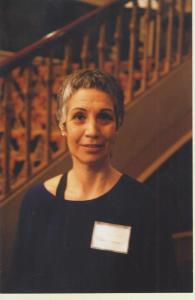
    Ruth was a pre-hippie Back-to-the-Lander, in her early seventies when I first met her. At our first encounter, she wore a white work shirt, faded blue jeans, and a black money belt slung over her shoulder. She walked like someone who rode horses.

    “Where’s your friend?” Ruth called through the crowd of tourists blocking the sidewalk.

    “She’s waiting in the car!” I called back. I led Ruth to the car and the friend in it. Ruth led us both on a tour of the golden-domed state capital building. “I hope we don’t run into my son.” Ruth twinkled. “He’d be embarrassed by the way I’m dressed. My son Louis works as an aide to the governor.” When the tour was over Ruth led the way in her battered old car out of Montpelier and higher into the Green Mountains, where another world awaited.

    Ruth’s husband Bill and a second son, Robbie, rode their tractors out of the woods to greet us on the porch of a rambling farmhouse. Nearby, three large dogs stiffened in alert: Ellie and Flora danced in attendance to the top dog, Chief. Ruth’s daughter Molly, an artist who lived, Thoreau-like, in a cabin she built with her hands, bounded up a hill to join us. The open and friendly faces of Ruth’s family smiled at me kindly. I’m sure they were aware of my situation, though no one referred to it. Taut, lean, Alabama-born Bill wiped the grime off his hands and stepped forward to shake mine. I felt as though I’d stepped into an illustration by Norman Rockwell.

    As an early darkness fell my companion and I crossed back over the border, returning to Montreal and my mother’s apartment. “Hello sweetheart.” My dying mother smiled tenderly. “How did it go with the lady in Vermont?”

    What could I say? I felt guilty at having left her, even for a few hours. I didn’t feel like relaying the details of an excursion to Vermont.

    Six months later I returned to Montpelier by bus, alone. Once more, Ruth met me under the clock tower. For a few days I curled under Ruth’s wing, sunning on her roof, sleeping in Max Perkins’ bed, waking to birdsong and skimming the staggering array of autographed out-of-print books dedicated by grateful authors to their engaged and caring editor. “Grieving is hard work,” Ruth would say in greeting when, after a nap, I descended a steep staircase into her dark country kitchen. As we stood side by side in the verdant meadow which was her front yard, Ruth added, as much in amazement as in sadness, “A year ago this time, both our mothers were alive.”

    Ruth King Porter is an American blueblood whose antecedents hark back to a woman who held a door open for George Washington. I am the Canadian-born daughter of refugees. My mother, a woman who survived three invasions and the Warsaw Ghetto, later in life became prominent in Holocaust education. Many people find my mother’s story repellent and turn away from any mention of it, whereas Ruth and her husband Bill were fascinated. Ruth did for me what I had done for my mother; she listened. And she encouraged me to tell my mother’s story.

    Six months after that, I was back on the farm. Ruth and Bill acknowledged what would have been my mother’s birthday by lighting large candles in a spectacularly tangled chandelier made entirely of logs. Through the wall-sized picture window we watched the cold autumn rain and wind lash the last leaves off a forest full of trees. As we ate hot squash and a pot full of peas grown in Ruth’s garden, the lit log chandelier shone, the tree-bark-shaded lamps glowed, and the wood stove burned.

    I have been back to Ruth and Bill’s farm several times since. In between visits Ruth does for me what her grandfather did for Ernest Hemingway, F. Scott Fitzgerald, Thomas Wolfe, and Marjorie Rawlings: she writes to me and elicits writing from me, reads and critiques my material, encourages, cajoles, indicates where and when she believes I have veered off-track, and gently nudges me back. Clutching the psychic lifeline tossed to me by the descendant of a legendary literary editor, I live and work alone and in growing peace in my suburban Montreal apartment, producing a memoir of my mother. My mother knew that my writing would sustain me after she was gone. Ruth Porter’s mentorship sustained me during the darkest days of my life.


    S Nadja Zajdman_HeadshotS. Nadja Zajdman is a Canadian author. Her short stories and non-fiction pieces have been featured in newspapers, magazines, literary journals and anthologies across North America, in the U.K., Australia, and New Zealand. In 2012 Zajdman published the related short story collection Bent Branches, which spans four continents and seventy years in the life of a family. Recently Zajdman completed a second short story collection, as well as the above-mentioned memoir of her mother, the noted Holocaust activist and educator Renata Skotnicka-Zajdman, who passed away at the end of 2013.

    Photo credit: MaxPixel (header banner)

  • Coming to My Senses: The Healing Properties of Fiction—By April Ford

    Coming to My Senses: The Healing Properties of Fiction—By April Ford

    It was the start of my second year in the undergraduate creative writing program at Concordia University, and I was feeling refreshed. Ready to take my craft by the horns. I had spent the summer purging myself of all the problems my first-year fiction instructor had pointed out in my work: my habit of making characters fall in love in springtime and out of love in a post-New Year, Montreal-style winter; naming all secondary male characters “Adam,” and imbuing these Adams with vaguely biblical qualities; etc.

    I had built up stamina over the summer, so imagine my delight when my second-year fiction instructor, an accomplished and quirky visiting writer named Peter Such, told the class we would each write 60 pages of a novel under his mentorship. He dictated no rules or structure, and I churned it all out in the first month. I really wanted to impress him. One day after class, Peter asked me to stay behind. Naturally, I was hoping he would say something positive about my work (I’ve sent your 60 pages to every literary agent in North America!). He did, he said I was exactly where I was supposed to be, and then he posed a question whose answer was so shockingly obvious that I felt embarrassed for not having come to it on my own, especially after my summer of intense writing practice:

    “April, why do none of your characters ever experience taste or smell?”

    The truth is, I haven’t experienced a new flavor or odour since December 12, 1995, the day I ran across an intersection at the same time as a motorist sped through the yellow light. It didn’t end optimally for me, as you can imagine, but after five months in hospital and rehabilitative care, I found my footing and moved on—without the trusted companionship of my gustatory and olfactory senses. And while I had focused, post-accident, on all the real-life ways this loss affected me (I was now susceptible to food that was “off” enough to make me violently ill, for example), I hadn’t begun to tap into the ways my unconsciousness—the writer’s dreamscape—was also being affected.

    “The truth is, I haven’t experienced a new flavor or odour since December 12, 1995, the day I ran across an intersection at the same time as a motorist sped through the yellow light.”

    When we write fiction, we empower our characters with human qualities. Often, this isn’t a difficult task; by impulse so subtle it’s more like instinct, we continuously assign our own sensory experiences to our characters, whether it’s because we haven’t yet learned enough about a developing character to know what his/her/their/its individual experience is like, or because we’ve been so marked by a particular sensation that we’re compelled to write about it until we get it right. In my case, my reaction to Peter’s question was the beginning of my understanding of how experience—and lack thereof—shapes whom and what we create in fiction. “How can I write about a lover’s scent if I can’t smell? Maybe it’s totally foul! How in hell would I know?”

    “By impulse so subtle it’s more like instinct, we continuously assign our own sensory experiences to our characters.”

    I was pissed at my instructor. It wasn’t because I’d been covering up my still relatively new deficit; it was because Peter had, very kindly, presented me with a writing challenge that I had internalized as a handicap. So many of the aftereffects from the car accident were and always would be preventing me from doing certain things (like driving a car, due to my loss of peripheral vision in both eyes), and I had imported that resignation into my writing.

    When I complained about not being able to describe things I hadn’t experienced (and isn’t this every writer’s Achilles’ heel?), Peter said, “Then describe the things you know.” When I claimed that all I knew was boring, he said, “Then make it interesting. It’s your job, after all. This is what being a writer is about.” Finally, I got over myself. Finally, I heard what Peter was saying: My “deficits” were also assets, constant reminders that just because we cannot experience something in this realm, it doesn’t mean we’re off the hook in terms of finding ways for our readers to experience it in that place of dream we go to when we settle in with a book we love. I wrote my first novel that year. It was gaudy and embarrassing the way our earliest works often are, and it’s one of the reasons I’ve kept writing.


    AprilFordApril Ford’s fiction has appeared in Grain, New Madrid, SAND, Atticus Review, and elsewhere. Her story “Project Fumarase” is featured in the 2016 Pushcart Prize anthology. Her debut story collection, The Poor Children, was released worldwide in 2015 by SFWP, and her debut novel, Carousel, is forthcoming in 2019 with Inanna Publications. April has spent time at Virginia Center for the Creative Arts as a Robert Johnson Fellow, and at Ucross Foundation as a Writer in Residence. She lives in Montreal and is Associate Publisher of SFK Press in Atlanta, Georgia. www.aprilfordauthor.com

    Photo credits: Flickr (top banner); Antonella Fratino (headshot)

  • What Playing Piano Taught Me About Writing-by Carly Rosalie Vandergriendt

    What Playing Piano Taught Me About Writing-by Carly Rosalie Vandergriendt

    The movers cost about as much as the piano. When they pulled up in front of our house on a muggy day last August, I understood why. Cars darted around the delivery truck as two men coaxed the swaddled instrument down a ramp and onto a dolly. They worked swiftly. Soon, the piano was being ushered up the walkway to our home. I stepped out of the way.

    “Who plays?” asked the first mover, in a thick eastern European accent. “You or him?” He nodded at my partner, who was standing on our front porch with a mystified look on his face.

    “Both of us,” I said. It was both true and untrue. My partner, a musician, could play the piano. You wouldn’t find him fleshing out a riff on one, though, as he often did on guitar. As for me, I’d played as a child and into my late teens. But the only keys I’d graced as of late were the ones on my MacBook.

    The movers hoisted the piano up our front steps. I hovered while they deliberated removing our front door. My partner hurried away to procure the necessary tools. Then the men decided they wouldn’t remove the door. When my partner reappeared, the piano was crossing the threshold.

    “You play Bach?” the first mover called to me as he disappeared inside the house.

    “Ten years ago I did,” I said. Piano still felt like a first love, cast off with the arrival of adulthood. During my time at university, the digital piano I’d optimistically bought and shuffled from one apartment to another had all but gathered dust. Eventually, I had resigned myself to reality and sold it off.

    Now, I was keenly aware of the privilege of owning a piano, especially in the city, where space, soundproofing, and noise-tolerant neighbours are limited. My partner and I had just moved into an apartment that felt like a real homeanother privilege. Fortuitously, that home also happened to be on the ground floor.

    With the piano stationed in our living room, the movers left as quickly as they’d arrived. I stared at the instrument with both awe and unease. It had been my partner’s idea: something for both of us. Privately, I had reservations. Where would I find the time? Could I even still play? Would this piano, like its abandoned digital cousin, become a symbol of the person I wanted to be, instead of the person I actually was?

    “Would this piano, like its abandoned digital cousin, become a symbol of the person I wanted to be, instead of the person I actually was?”

    I spend a lot of time thinking about the person I want to be. I may call myself a writer, but without a published book, I don’t always feel like one. I may have a string of small-time successes, but those publications are also reminders of the frustrating slowness of the writing process. Patience is a virtue when it takes years to go from an idea to a polished manuscript to a published story.

    “I spend a lot of time thinking about the person I want to be. I may call myself a writer, but without a published book, I don’t always feel like one.”

    The piano arrived during a transition period. The move meant more financial responsibility, and as a freelancer, I quelled my anxiety by taking on a full-time contract in addition to my regular workload. Suddenly, I was juggling clients and rising at an unspeakable hour, hoping to squeeze in some writing. Most of the time, I was barely managing my inbox. I thought constantly about my stalled manuscript, and envisioned its completion date slipping farther and farther into the future.

    Playing music, I soon remembered, was exhilarating. My fingers settled back into the waltzes and études I hadn’t played in years. I had never been a technically oriented player; now, the mistakes I made mattered little, if at all. There was nothing to prove and no one to prove it to. The joy of playing was enough.

    As busy as I was, piano felt like a reprieve instead of an obligation. Sometimes, just seeing the piano—the fact that it took up a quarter of our living room made it hard to miss—was enough to make me stop whatever I was doing, sit down, and play. Why, I wondered, couldn’t writing be that easy?

    “Sometimes, just seeing the piano… was enough to make me stop whatever I was doing, sit down, and play. Why, I wondered, couldn’t writing be that easy?”

    As summer turned into fall and fall into winter, I kept juggling work commitments. Yet, I knew it wouldn’t be like this forever. A few months of industriousness meant I was in a position to be more selective in the months to come.

    Meanwhile, I’d learned a new song on the piano. I hadn’t told myself I would learn anything; I’d simply made a habit of sitting down on the bench. My new musical practice served as a reminder that it is the act itself, not the end result, that counts. As the year wound down, I kept thinking about my manuscript but I stopped agonizing over when it might be finished. All I can do is keep writing when I can. That is enough.


    CRV_HeadshotCarly Rosalie Vandergriendt is a Montreal-based writer and translator whose work has appeared in Prairie Fire, Matrix, The Malahat Review, The Fiddlehead, RoomPRISM International,and elsewhere. Her story “Resurfacing” was recently shortlisted for the Carter V. Cooper Short Fiction Prize. Carly is a recent graduate of the University of British Columbia’s Optional-Residency Master of Fine Arts in Creative Writing program, and is currently working on a short story collection titled Playing the Man. Visit her at carlyrosalie.com or follow her @carlyrosalie.

    Photo credits: Simon-Pierre Lacasse