Tag: writers

  • Homeschooling in a Pandemic—By Greg Santos

    Homeschooling in a Pandemic—By Greg Santos

    In April 2020, we invited writers in Quebec to submit a story of a single day during the strange, uneasy time of coronavirus and pandemic, of social distancing and self isolation, of lockdown and quarantine.

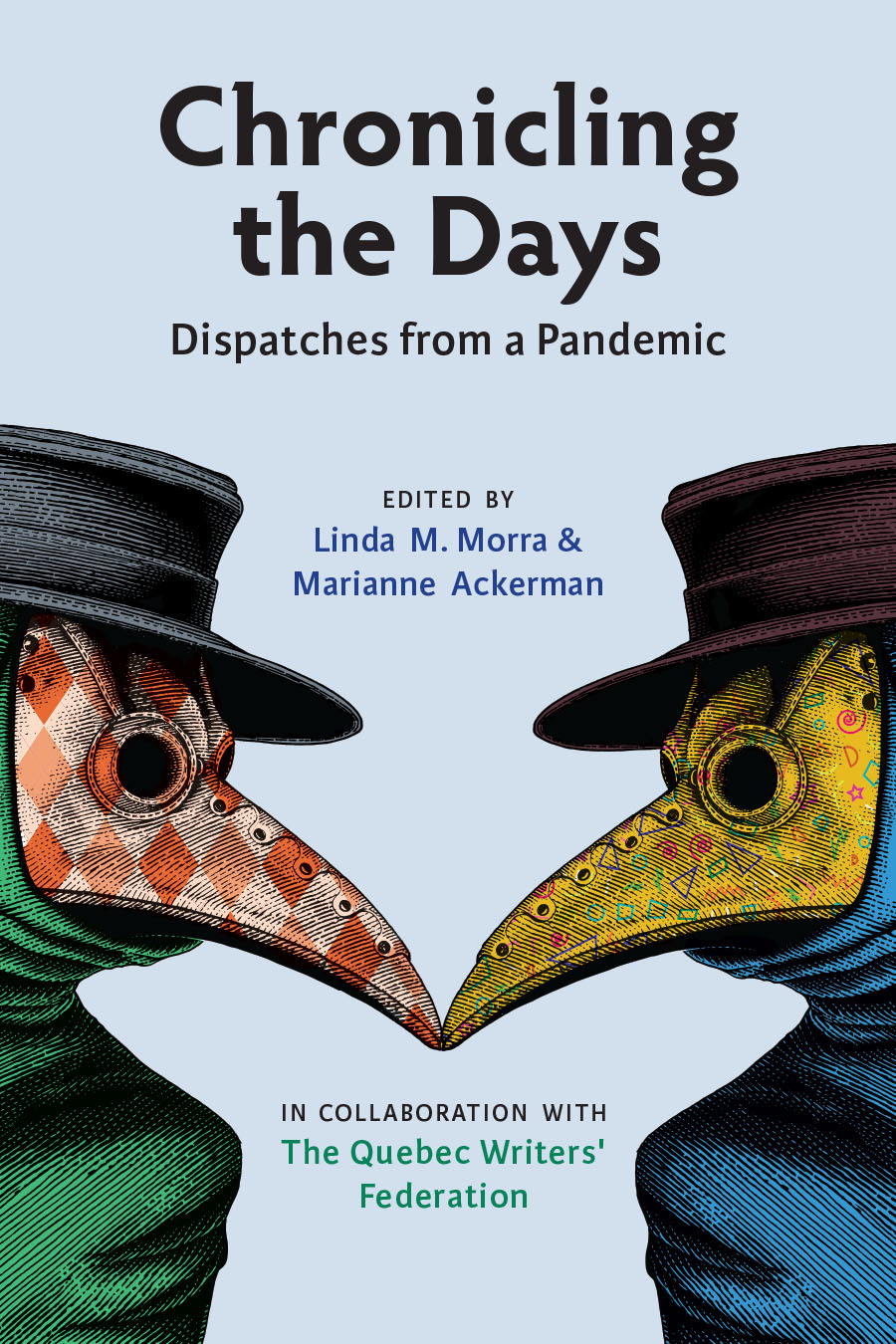
    We’re thrilled to announce that these stories have been gathered in Chronicling the Days: Dispatches from a Pandemic (Guernica Press). To learn more and buy the book, please visit https://www.guernicaeditions.com/title/9781771836579.

    Please also join us on the QWF FB Community page, and let the authors know if their words resonated.

    “You’re used to homeschooling your kids. What’s your advice to other parents who are now in your shoes?”

    In a Zoom meeting recently, I was asked this question by an acquaintance. Taken aback, I found myself struggling for a good answer. I rambled something incoherent about how it’s different now during the global COVID-19 pandemic, but I couldn’t properly articulate my thoughts, which left me terribly frustrated. As I write this, I am still struggling to make sense of all of this.

    To read the rest of the story, please support our community and check out Chronicling the Days: Dispatches from a Pandemic

  • We Can All Be Writers—By Nisha Coleman

    We Can All Be Writers—By Nisha Coleman

    In April 2020, we invited writers in Quebec to submit a story of a single day during the strange, uneasy time of coronavirus and pandemic, of social distancing and self isolation, of lockdown and quarantine.

    We’re thrilled to announce that these stories have been gathered in Chronicling the Days: Dispatches from a Pandemic (Guernica Press). To learn more and buy the book, please visit https://www.guernicaeditions.com/title/9781771836579.

    Please also join us on the QWF FB Community page, and let the authors know if their words resonated.

    I’m a writer but I don’t have much to say right now. I’m a storyteller but I don’t have many stories to tell either. There is an explosion of online content, but I do not feel compelled to contribute. Instead I am watching, listening, noticing.

    Week one of the self-isolation measures, amongst the multitude of COVID-19 memes about toilet paper, face touching, and the quarantining-with-kids-chaos, one in particular caught my attention:

    To read the rest of the story, please support our community and check out Chronicling the Days: Dispatches from a Pandemic


  • Writer’s Block in the Time of Corona—By Carolyn Marie Souaid

    Writer’s Block in the Time of Corona—By Carolyn Marie Souaid

    In April 2020, we invited writers in Quebec to submit a story of a single day during the strange, uneasy time of coronavirus and pandemic, of social distancing and self isolation, of lockdown and quarantine.

    We’re thrilled to announce that these stories have been gathered in Chronicling the Days: Dispatches from a Pandemic (Guernica Press). To learn more and buy the book, please visit https://www.guernicaeditions.com/title/9781771836579.

    Please also join us on the QWF FB Community page, and let the authors know if their words resonated.

    In mid-March, COVID-19 was getting out of hand, according to Premier Legault. There was too much handholding, not enough handwashing. I was sent home on a paid, two-week hiatus while they rejigged my job to allow me to work from the confines of my condo.

    Wait, what?

    To read the rest of the story, please support our community and check out Chronicling the Days: Dispatches from a Pandemic

  • Living and Writing in The Country—By Angela Leuck

    Living and Writing in The Country—By Angela Leuck

    In April 2020, we invited writers in Quebec to submit a story of a single day during the strange, uneasy time of coronavirus and pandemic, of social distancing and self isolation, of lockdown and quarantine.

    We’re thrilled to announce that these stories have been gathered in Chronicling the Days: Dispatches from a Pandemic (Guernica Press). To learn more and buy the book, please visit https://www.guernicaeditions.com/title/9781771836579.

    Please also join us on the QWF FB Community page, and let the authors know if their words resonated.

    “We’re thinking of moving to the country,” I told mystery writer Louise Penny when I bumped into her at the Knowlton Literary Festival in 2010, adding that my husband and I weren’t sure if it was the right thing for our writing careers. Penny was enthusiastic: “Do it,” she said, “while you can!” A few months later, we bought a 200-year-old farmhouse in the tiny hamlet of Hatley.

    To read the rest of the story, please support our community and check out Chronicling the Days: Dispatches from a Pandemic

  • Copyright: What’s the Big Deal?— By Julie Barlow

    Copyright: What’s the Big Deal?— By Julie Barlow

    The Federal government is in the process of revising the Copyright Act. If you don’t think that matters to writers, think again.

    I’m always surprised to see blank stares on writers’ faces when I launch into a speech about copyright. Some of them aren’t clear why copyright really matters. Others aren’t sure what copyright even is. Fair enough—it’s not the sexiest topic in the writing world. But even if you don’t notice it, it’s fundamental to our business.

    Here’s why. I am a non-fiction author of six books and a magazine writer. To earn my living I sell the right to use my work, either to publishers who pay me advances and royalties or to magazines who pay me fees to publish my articles. For most of my twenty-five-year career, this revenue has constituted most of my income.

    Simply put, copyright law is what makes it possible for me to get paid for my work. The Oxford dictionary defines copyright as: “The exclusive and assignable legal right, given to the originator for a fixed number of years, to print, publish, perform, film, or record literary, artistic, or musical material.” That’s me—the originator. The Copyright Act is what legally makes my work mine as soon as I create it, and mine to sell.

    It sounds solid in principle, and I wish it was. Unfortunately, it’s getting harder and harder to enforce my copyright and get paid for it. So I jumped at the opportunity to attend a hearing hosted by the federal government’s Standing Committee on Industry, Science and Technology, held May 8 in downtown Montreal.

    First, let me explain why it’s getting harder to make money from copyright. The reason, in a nutshell, is the Internet and digitization. By making it easier to “publish” and “distribute” creative work, the Internet has made many, many consumers of culture think they should get what’s online for free. The ripple effect in the publishing industry has led to dramatically less revenue for publishers, magazines, and of course writers.

    “By making it easier to “publish” and “distribute” creative work, the Internet has made many, many consumers of culture think they should get what’s online for free.”

    Magazine revenues fell when advertisers turned to online outlets. So magazines are trying to increase their profits by demanding (and the word is not too strong) more copyright from writers, but for the same fee. Whereas the standard when I started publishing in 1995 was to sell first publication rights (giving the magazine the right to publish it once), I now have to sign contracts in which I hand over the right to resell my articles in any form, in any language, anywhere on the planet, sometimes for periods longer than the rest of my life. I used to resell my pieces, sometimes up to five times. Now that’s impossible. Some magazines have even demanded I give them “moral rights” to my work, which means they can alter my work any way they want without my permission – or even take my name off it (I don’t work for those ones).

    The case in book publishing is a little harder to explain. The industry as a whole is suffering from the forces of technology and book advances to authors are falling. When I Google my own work, I discover so many sites offering free (i.e., illegal) PDFs of my books that I can’t keep track of them anymore. And neither can my publisher.

    In 2012, the Conservative government recognized that the Internet and digital economy were changing the dynamics of publishing, so it set out to revise the Copyright Act, originally passed in 1921, to take digital realities into account. But the resulting revisions made it harder for both writers and publishers to earn money. The Act already stipulated situations when consumers don’t have to pay creators. For example, “fair dealing” allows you to share one of my articles with a friend for personal consumption without infringing my copyright. The 2012 revisions broadened fair dealing to include situations like “education.” The problem was, the revised Copyright Act didn’t stipulate how much of the work could be used without infringement. The result? Universities and schools across Canada have been refusing to pay fees for copies of my articles or excerpts from my books. Since 2013, the revenue that Access Copyright collects from universities, schools, and other institutions to distribute to writers has declined by 80 percent.

    As a writer, what do I want the government do to about this? I’m not expecting them to turn back the clock—the Copyright Act has to be adapted to work in the digital world. But most writers would agree that in this already difficult context, we deserve at least as much protection as we had before, not less.

    “As a writer, what do I want the government do to about this?”

    Today, the government appears to recognize the 2012 revision was a misstep. One committee member told me in private that the previous committee let copyright users like universities pretty much dominate the agenda during the last reform, while we creators had little say. So this year the government decided to go back to the drawing board and start by asking for our input.

    At the Standing Committee on Industry, Science and Technology meeting on May 8, about thirty-five creators spoke during the “open mic session.” We each got two minutes to make our case. The vast majority told their own variation on a common tale: over the last 20 years it’s become dramatically more difficult to earn money from our work because it’s harder to get anyone that should pay for the privilege of reading (writers’) or listening to (musicians’) or looking at (photographers’) work to actually pay for it.

    Creators are looking to the government to strengthen the copyright law so it protects our interests. For example, this means minimizing exceptions to fair dealing. I told the committee: “Some people own real estate and make money by selling it. I own copyright and make money by charging magazines and publishers for the right to publish my writing. Why would I be expected to donate my work for free to people who are making money using my work?” (Last time I checked, universities weren’t charities and professors didn’t work for free.)

    “Why would I be expected to donate my work for free to people who are making money using my work?”

    I actually feel a strange kinship with the taxi drivers and hotel owners out there whose livelihood is threatened by digital technology in the form of Uber and Airbnb. The difference, of course, is that the general public seems to get why taxi drivers and hotel owners ask for protection, whereas few understand how infringing on copyright takes money directly out of creators’ pockets.

    This time, I hope the government listens to creators. If they don’t, I’m not sure how we can be expected to make all the stuff people want to copy in the first place.

    I encourage other QWF members and all creators to draw on their own experience and submit a brief to the Standing Committee on Industry, Science and Technology, explaining why copyright is important to creators. Here’s the link.


    JulieBarlow_headshot

    Julie Barlow is a Montreal-based magazine writer and author of books on language and France, including her latest, The Bonjour Effect: The Secret Codes of French Conversation Revealed (St. Martin’s Press) and The Story of French, winner of the 2007 Mavis Gallant Prize for Non-Fiction. She teaches the Quebec Writers’ Federation workshop, Narrative Non-Fiction: Finding the Story Among the Facts. Visit her at nadeaubarlow.com.

    Photo credits: Nick Youngson CC BY-SA 3.0 Alpha Stock Images (header banner); Julia Marois (headshot)

  • What’s the refrain you keep circling back to?—by Jess Zimmerman

    What’s the refrain you keep circling back to?—by Jess Zimmerman

    The last personal essay I wrote started out as a travel guide. I wanted to write about secret spaces in Berlin, just a list of interesting off-the-beaten-path options for tourists—the kind of thing you might find in an in-flight magazine. Instead it turned into a lyrical 3,000-word piece about love and literature. “I didn’t mean this to wind up this way,” I lamented in a writers’ chat room, “but it’s just my personality. Everything I write boils down to ‘remember that time my marriage failed?’”

    “I feel you,” said my friend Angela Chen. “Sometimes I feel like all my essays come back to the thesis ‘I was a very anxious person and now I’m less anxious.’” Amused by the idea that we could express our entire writing careers in one sentence, I put out a call on Twitter: If you’re a writer of personal work, what’s the refrain you keep circling back to?

    The exercise proved to be wildly popular; I got nearly 100 responses. (By comparison, I had a recent tweet about gun control go mini-viral, getting about 1,500 retweets; there were still fewer than half as many replies to that tweet than to this one.) The idea of an obsessive writing theme struck a nerve. Most of us, it seemed, were using our writing to send constant, repetitive signals of personal distress: “I’m grieving,” “I’m sick,” “I’ve been abused.”

    Some examples:

    • “Grief permeates every aspect of my life but somehow I’m still alive.”
    • “Parenting is difficult and tiring, but magical sometimes. My kids are funny. Also, did I mention I’m tired, demoralized, and depressed?”
    • “My brother died. My other brother and I survived by clinging to one another. Then he died too. Despite it all, I wound up okay, and loved, and in a real place. But everyone died.”
    • “I am very ill and being very ill sucks.”
    • “I’ve suffered more sexual violence than I realized, but I’ve discovered x about it and I’m still not okay.”
    • “I want to be a better person, but it’s hard.”
    • “I’m terrified.”
    • “Please like me. Please.”

    “If you’re a writer of personal work, what’s the refrain you keep circling back to?”

    Dozens of people recognized immediately that everything we wrote, if you boiled it down, was an expression of the same hole in our hearts. I imagined us as castaways, trying to signal for help in any way we could: fires on the beach, messages in bottles, Morse code cast blindly into the stratosphere, each one carrying the same SOS. I’m terrified. I’m terrified. .. / .- — / – . .-. .-. .. ..-. .. . -..

    “Most of us, it seemed, were using our writing to send constant, repetitive signals of personal distress.”

    But I also started to notice refrains that stood out from the rest: people who had thought about what their individual obsessions meant for the reader. Maybe they’d taken the assignment more seriously than I had (I hadn’t really meant it as an assignment, after all!), or maybe they were just naturally more giving writers than me, more immediately attuned to the way their work was not only a personal exercise but a vector to bring value to others. Some of the best responses:

    • “I don’t know anything and have never known anything and no one ELSE knows anything and we are all striving after meaning and truth together.”
    • “Wrestling with how the labels we put on ourselves are always inadequate, which I’ve always known cause I’m biracial.”
    • “Shaky individual kindness is all we have because there is no system that will not ultimately betray you.”
    • “If you think closely enough about something, you can begin to understand why it will inevitably one day make you sad.”
    • “I’m plagued by a congenital loneliness and it’s probably some recent ancestor’s fault. But a lot of us are connected by how disconnected we are, and that’s kinda cool.”

    I describe myself sometimes as being obsessed with generosity in writing (other people’s, but also my own). So I was a little embarrassed about how self-centered and parsimonious my refrain was, stacked against some of the ones that spoke to me. An account of my individual history—“remember the time my marriage failed”—gives almost nothing to the reader besides a little more knowledge about me (not a particularly valuable currency). Angela’s SOS call—“I used to be anxious and now I’m less anxious”—was also inward-looking, with no hint of what value it might contain for the reader. Had we both been failing to live up to the principles of generosity?

    Luckily, I’m an avid reader of Angela’s (I even suggested one of her essays as a reading for the workshop I’m teaching for QWF on March 24!), so I know that her tongue-in-cheek description doesn’t say it all. Though the form of her essays is sometimes “I was a very anxious person and now I’m less anxious,” the substance is always something like “we seek certainty because uncertainty makes us anxious, but uncertainty can also be beautiful.” In other words, while her essays are sometimes about her, they’re always really about you. That’s always my goal, too—to say something about you, by way of saying something about me. Maybe I just didn’t finish describing my refrain; maybe it’s something more like “remember that time my marriage failed? Well, it was a distillation of the messed-up messages women get about love.”

    “That’s always my goal, too—to say something about you, by way of saying something about me.”

    When I initially wrote the tweet, I’d only been trying to make a self-deprecating joke about my particular monomanias. What I discovered, instead, was a reminder to take a step back from my work and recognize not only what refrain I kept on playing, but why. Why does my writing tend to tread familiar paths—why does all our writing do this, apparently? And what value can that hold?

    It’s not really a mystery why that tweet resonated; humans in general tend to want to communicate our pain and have it heard, and we keep worrying away at the same old griefs because, frankly, communication is hard and it doesn’t always work the first time, or the first twenty. We’re isolated on our separate rocky shores, so we keep broadcasting the same distress signal over and over, trying to get someone’s attention, trying to make a connection from our desert island across the huge gulf of the sea. The challenge, I think, is to make our signal not an SOS but a lighthouse: not I’m in distress and I need someone to know it, but there’s danger here, I’ve seen it, and I’m telling you before it’s too late. Recognizing the signal you keep sending, and how you send it, may be the first step in refining that signal into something that will help prevent wreck after wreck.

    “The challenge, I think, is to make our signal not an SOS but a lighthouse.”


    Jess_headshotJess Zimmerman is the editor-in-chief of Electric Literature. @j_zimms jesszimmerman.com

    Jess Zimmerman will lead the Quebec Writers’ Federation workshop “Gazing Beyond the Navel: Personal Essay for a Global Audience” in Montreal on March 24. This workshop is NOW FULL. To be added to the waiting list, please email workshops@qwf.org.

    Photo credits: See-ming Lee (header banner), Helen Rosner (headshot)

  • Writing Between Languages—by Veena Gokhale

    Writing Between Languages—by Veena Gokhale

    What do you do when a lot of the reality you portray in your fiction does not take place in English? Easy answer: you sprinkle your prose with words from other languages. As it turns out, this is not without its problems.

    Growing up in India, I learned my first language, Marathi, at home. I was sent to an English school right from kindergarten, where I had also learned Hindi, the language of the state I lived in. In the Indian Constitution, Hindi and English are designated languages of the Central Government. Presently, India has twenty-one other “official” languages. Generally speaking, every time you cross a state boundary you are in another “language territory.”

    English, though not my mother tongue, is nevertheless my “principal” language. I was in my twenties when I came across an essay by a Hong Kong-born writer of Chinese origin who described English as his principal language. I cannot thank him enough for giving me a way of describing the place of English in my life!

    When I became a journalist, I worked for an English-language magazine in India. But I had always loved mixing languages, using non-English words when I spoke in English. As a writer, I exuberantly introduced some Hindi words into my English articles. This was around the time that Salman Rushdie “decolonized the English language,” as he put it, through the innovative use of multiple languages that included sprinkling Hindi and Urdu words throughout the English text of Midnight’s Children, his groundbreaking Booker Prize winner. He did not translate the words.

    “But I had always loved mixing languages, using non-English words when I spoke in English.”

    I, on the other hand, was immediately challenged by my editor when I employed Hindi words. She came from southern India and knew little Hindi. Reluctantly, she allowed me to retain a few words, with the English translation in brackets.

    Fast forward to Canada in 2012. Guernica Editions had accepted my manuscript entitled Bombay Wali and other stories. Characteristically, the book contained some Hindi, Urdu, and Marathi words. I suggested putting an asterisk next to the words and explaining them in footnotes. My editor, Michael Mirolla, rightly protested. Some pages then would have had five asterisks or more! A solution was found by explaining a word here and there in the main text itself and adding a glossary explaining other words and phrases.

    In my forthcoming novel, Land for Fatimah, the protagonist takes a posting in Kamorga, an imaginary east-African country. This time, I introduced a made-up language for Kamorga, and named it Morga. Despite knowing five other languages to some degree, Anjali, the Indo-Canadian protagonist, is struggling with Morga.

    I used words in Morga in much of the dialogue. I italicised the “foreign” words and phrases and put the translations right next to them. For example: Kabari ani? How are you? Hoori. Good. Perhaps this is awkward and breaks the not-to-be meddled-with flow of the text. But to hell with it!

    Why this insistence on using words from other languages? As I explain in a note on language in Land for Fatimah, “I strongly believe in using non-English words and phrases in my fiction to bring home to the reader, directly and tangibly, the fact that s/he is reading about a non-Anglo culture.”

    “Why this insistence on using words from other languages?”

    There is a much-quoted speech by Indian freedom fighter, Bal Gangadhar Tilak: “Swaraj (self rule) is my birthright and I shall have it.” This original quote has gone around translated as “Freedom is my birthright and I shall have it.”

    Why couldn’t they have let the word “swaraj” be? Some might argue that keeping “swaraj” is awkward and unnecessary, and that freedom resonates more than self-rule. But such misquotation can be seen as a form of linguistic colonialism.

    Inspired by Tilak, I have my own writerly warrior cry: multiple languages are my blessed heritage and reality, and I shall flaunt them! Back when I lived in India, I loved switching between English and Hindi in mid-sentence. Now that I live in Montreal, I use French words when speaking English. Old habits die hard!

    I end Land for Fatimah’s note on language with these words: “Long live the diverse languages of the world! They bring us unfathomable riches.”

    I would love feedback on how other writers deal with the use of non-English words in their text and how readers respond when they come across them. Thanks in advance. Merci. Shukriya.


    VG wt flowersVeena Gokhale, an immigrant shape-shifter, started her career as a journalist in Bombay. This tough, tantalizing city inspired Bombay Wali and other stories, published by Guernica Editions in 2013. Veena first came to Canada on a fellowship, then came back again to do a master’s degree. After emigrating to Canada, she worked for non-profits. Land for Fatimah (to be published in 2018) is partly inspired by the two years she spent working in Tanzania. Veena has published fiction and poetry in anthologies and literary magazines and received writing and reading grants. veenago.com

    Photo credit: Shawn Leishman (header banner)

  • How to Get Out of the Slush Pile—by Rachel Thompson

    How to Get Out of the Slush Pile—by Rachel Thompson

    I yawn and keep flicking through my virtual stack of submissions. I need one more piece that will not only fill a few pages in the next issue but also resonate with the writing I have already accepted for the magazine.

    A short story pops up; a few lines in and I’m wondering: is anything going to happen? Flick to the next one, and words start to blur together. Is this the same story, or another one? Why does it sound like everything I’ve already read today? I click, click, click, until I land on one that startles me at the first line. I read on. And on. Now I’m alert, driven to read to the end. I scan the cover letter and see it’s submitted somewhere else at the same time; a competitive voice in my head says, Mine first! I hit the “accept” button.

    Reading, accepting, and rejecting lit mag submissions has taught me so much about writing and publishing.

    For one thing, I’m totally over the idea that if my writing doesn’t make it into an issue of a magazine, it means they think my work is no good. Editors get many, many submissions: far too many for us to print. The people reading these can be tired (see above) and overlook things. We try to give it our best attention, but at our drop-dead deadlines, we have to make quick and cold choices.

    Writing that doesn’t begin at a critical moment upon which everything else hinges, or with an opening line that raises more questions than answers, is unlikely to hold my attention for long. You never quite appreciate in media res until you’ve read hundreds of submissions that languish in the beginning. If you’re writing narrative work, and you don’t open with an action or decision point, you’re going to lose me. Consider the opening line of Rebecca Fisseha’s story, “What Grows”[1]:

    “Once, upon a day of politics trouble, I saw my mother burying her gold in the vegetable and herb garden at the back of our house.”

    After just one sentence, I have so many questions. What is the politics trouble? Who calls it “politics trouble”? Why is the mother burying the gold? Where is this home? When is this trouble happening? When an opening line makes me ask at least three of the five W’s, I feel as if I have struck gold. No wonder I picked her piece for Room issue 38.1.

    More often I read submissions that start by explaining things to me—where we are, when we are, who these people are, etc., etc., when the most compelling narratives make us curious and allow us to savour the discovery of these answers. There’s a simple explanation for why this happens. New writers just don’t have the experience to know how many drafts professional writers go through before publishing. (It’s more than most think, likely by a factor of ten.)

    “You never quite appreciate in media res until you’ve read hundreds of submissions that languish in the beginning.”

    Speaking of explaining, in cover letters I find writers are often tempted to tell me what their writing is about, and why it’s important for me to read it. But I’m going to read it anyway. You don’t need to convince me. And telling me why I should read something I’m already going to read puts me off a bit. Let your work show me what it’s about. Let the cover letter just deliver the facts we ask for.

    Writers often ask me if simultaneous submissions are cast in a negative light. Quite the opposite. It’s more likely to compel me to accept something I like more quickly and it has never had the effect of turning me off of reading something.

    Another thing I’ve learned is that the earlier you submit in a reading period, the likelier your piece will make the cut. Remember how I said earlier I was looking to fill not only a space but to find a piece that would join in a conversation started by the other pieces I’ve already accepted? We truly do sometimes turn down some of the best work because it a) either repeats themes, styles or settings in work we’ve already accepted for the issue, or b) is too long to fit into the space we have left. Because most magazines will read the work in order of receipt, if your piece is in an early stack and we like what you’re doing, there’s a better chance we’ll make other pieces fit around your writing than vice versa.

    “New writers just don’t have the experience to know how many drafts professional writers go through before publishing. (It’s more than most think, likely by a factor of ten.)”

    Start in the middle. Revise, revise again, revise better. Don’t explain in your story or in your cover letter. Tell us you sent it elsewhere. And submit early. My last bit of advice is to submit more often. You’re only going to increase the chance your work is published by sending it out to more places.

    But make sure it’s the right place. If you’re sending to Room, a journal that publishes women and genderqueer writers, and you are in fact a man (this happens a lot)—then I can’t help you.


    rachelthompsonRachel Thompson’s book of poetry, Galaxy (Anvil Press, 2011), won the SFU First Book Competition. Contest judge Gregory Scofield said her poems had “Wonderful and clear imagery as well as a ‘real’ and ‘true’ sense of place, love, longing, family, and the constant struggle and re-negotiation of self and experience.” She’s a current editorial collective member and former Managing Editor at Room. Rachel helps writers level-up their writing lives with practical advice and kind support at LitWriters.co.

    [1] Used with permission.

    Photo credits: Joel Penner (top banner); Vivienne McMaster (headshot)

  • Tuesday, or Was It Wednesday?—by Joshua Levy

    Tuesday, or Was It Wednesday?—by Joshua Levy

    One Tuesday—or was it Wednesday? —I visited my parents.

    Written anything lately? asked my dad, during supper.

    I had. I fetched my laptop from my car and read a short story about my brother’s recent engagement to them while we ate.

    When I was done, my dad said it was very witty, great use of metaphor, but why hadn’t I told the truth, the whole truth, and nothing but the truth, so help me God?

    My dad’s a lawyer.

    But, I said, it really happened. You were there!

    I never said those things, said my mom. And I made butternut squash lasagna that day, not hummus or feta salad.

    I felt accused. You uttered extremely similar things, I said. I can’t remember exact dialogue. But you’re right about the butternut squash lasagna. I’ll change that.

    They looked at me sadly, my parents did.

    I don’t think Menachem was wearing a fanny pack that day, added my dad.

    The point, I said, is that the major facts are all true, if not the minor ones.

    My dad stood up and went to the freezer, bent down behind the kitchen island, and resurfaced holding a tub of Neapolitan ice cream.

    None for me, Ricky, said my mom.

    Josh? asked my dad.

    Sure, I said.

    “My dad said it was very witty, great use of metaphor, but why hadn’t I told the truth, the whole truth, and nothing but the truth, so help me God?”

    He opened a cabinet next to the sink and grabbed two ceramic bowls. Each had a different colourful made-up bird painted on it. Or were they real bird species? My parents had bought them a decade earlier in Nova Scotia, while visiting my sister at university. Mind you, it could have been New Brunswick where they bought the bowls….

    I wasn’t sure. The facts felt like slippery fish in my hands.

    If you’re going to write non-fiction, offered my dad, while running a spoon under hot water, it should be 100 percent true.

    I agree, said my mom. Don’t make anything up.

    But, I said, I’m not. Memories change colours and shapes under different conditions.

    Two scoops or three? asked my dad.

    Different what? asked my mom.

    Two, I said.

    Different what? repeated my mom.

    Conditions. Like the passage of time or evolving perspectives. That stuff.

    My mom said, ah, I don’t buy it.

    A fact’s a fact, Josh, said my dad, handing me an ice cream bowl.

    One, two. I count two scoops in your bowl, declared my mom.

    My dad nodded. That’s a fact, he said.

    I sighed. I didn’t disagree with my parents. Facts are vital and I wanted them all.

    But my story had been about shining a light on unverifiable, deeper truths: family relations, love, loneliness. Whether Menachem wore his fanny pack or not on that particular day was, in my opinion, such a minor fact that researching it could stifle the creative process.

    “Memories change colours and shapes under different conditions.”

    Another Tuesday—or was it Wednesday?—I visited my parents.

    Written anything lately? asked my dad, during supper.

    I had. I fetched my laptop from my car and read a factually bullet-proof story about Visiting Day during my first summer at sleepaway camp to them while we ate:

    On Visiting Day, my parents came with my younger brother, Daniel. They brought me a bag of Archie and Spider-Man comics and some candy. My sister, Samantha, was probably also there, since she was less than a year old at the time.

    The camp director made a speech to all parents and campers. The speech was almost certainly in English, since that was the only language he spoke. I think we then went to the waterfront and paddled in a canoe, but that could be a memory from the following summer.

    I don’t remember if it was a sunny or rainy day, but I do remember the emptiness I felt when Visiting Day ended.

    That’s a terrible story, said my dad.

    Embellish a little, said my mom.


    linkedinJoshua Levy splits his time between Montreal, Canada, and Lisbon, Portugal. He is grateful to the QWF for their support over the years and has participated in eight QWF writing workshops to improve his craft. Joshua is a winner of the 2010 QWF Quebec Writing Competition and was longlisted for the 2007 competition. He has had poetry published in Carte Blanche, told stories live at Blue Metropolis for This Really Happened, and written for QWF Writes. Joshua has been published by the Oxford University Press, Véhicule Press, Maisonneuve, Vallum, The Feathertale Review, The Rumpus, and The Malahat Review. He is a regular storyteller on CBC Radio and recently received a grant from the Canada Council for the Arts to write a memoir.

    Photo credit: Seth Sawyers (top banner); Steve Gerrard (headshot)
  • Why I Loved Editing a Small Canadian Online Magazine, and Why I’m Leaving—by Laurence Miall

    Why I Loved Editing a Small Canadian Online Magazine, and Why I’m Leaving—by Laurence Miall

    Before I ever joined a magazine, or published a novel, for that matter, here’s how I imagined people who had responsibility over publishing texts. They were working in fancy university offices or in stylishly decorated apartments in artsier parts of town than my own, smoking cigarettes and drinking wine, sporadically casting a disdainful eye toward the “slush pile” (in my mind’s eye, the slush pile was either physically manifested, or online, it didn’t make a difference insofar as the disdain goes). And here’s what would happen if ever they came across my submission. They’d read a line, chortle to themselves, and say, “This poor, desperate bastard. Why does he waste our time?” Then all the editors would say in unison, “Let’s publish one of our friends, instead!”

    That’s how I imagined it.

    Maybe some literary journals are nepotism-only zones, I don’t know. I’ve only ever worked for carte blanche. I joined as fiction editor in 2014 and the first issue I worked on was Issue 20. Our most recent issue is #29, so that’s ten issues in total. As of Issue 23, I took on more responsibility for the magazine, taking over from our illustrious founder, Maria Turner, first in partnership with Ben Spencer, then with Gregory McCormick.

    Though the years, I have come to enjoy my vexed relationship with the slush pile. Every time I sit down to read, I want to love the next piece I’m going to discover. One of the very first stories I ever picked was Matthew di Paoli’s “Other Forms of Life,” and I found it so funny and quirky that I immediately started reading it aloud to Monika, my partner. I invited Matthew to read his story at a carte blanche event we were doing at the Blue Metropolis Literary Festival in Montreal, and he couldn’t come, so I read out parts of his story in his place. I loved the texture of someone else’s sentences coming from my lips, and the rhythm—almost like a form of breathing that was not my own.

    So yeah, the slush pile wasn’t like I’d imagined it, not at all. It was sometimes a source of some frustration, but also of great excitement and pleasure.

    Over the years, the comradeship of the entire carte blanche crew, and the support of the Quebec Writers’ Federation, was constant, making me realize that one of the biggest benefits of the literary life is not the writing itself but the community of other writers, editors, publishers, curators, and do-it-all’ers who keep culture humming along and livening up lives that would otherwise be lived in dank, solitary darkness.

    “I loved the texture of someone else’s sentences coming from my lips, and the rhythm—almost like a form of breathing that was not my own.”

    Chalsley Taylor, above all, has made the magazine the beautiful online presence it is today, and so it’s to her I would like to express my biggest THANK YOU. We started this journey at pretty much the same time. It’s no overstatement to say that this magazine would not be in the fine shape it is without her. With Cason Sharp now on the team, I believe carte blanche is going to keep on kicking ass in its cool, classy way. How can it not, with Nicola, Georgia, Bronwyn and the two Gregs bringing their brilliance to each and every issue?

    I am shortly going to be leaving the team in my official capacity as editor. I do so with mixed feelings. Once upon a time, I honestly felt I could tackle any amount of work that was thrown at me. The days seemed elastic. I could stretch them at either end, conjuring up just enough minutes or hours to always get things done. But I don’t feel that way anymore. I am trying to figure out how big each relative part of me is, and how to accommodate all those parts within a finite body. What’s the size of the editor in me, compared to the writer? And more importantly, the loving husband? The communications director? The friend? The son? The cooker and eater of meals, and the drinker of ales, and the sporadic watcher of Liverpool FC, and everything else?

    A few weeks ago, my second oldest friend disappeared from social media. In recent years, we hadn’t established any other form of communication except for Twitter and in-person visits. I had no phone number or email address for him. I started to wonder, nervously, if he was still alive. In 2016, I lost a dear friend to suicide. Another of my friends has struggled with brain cancer. These experiences and many others made me think dark and fearful thoughts.

    Day after day, my friend didn’t reappear. There was an envelope icon lit up in Twitter, indicating a message from him, but the message was an old one, and because his account was deactivated, the message itself had ghosted away. I tried to figure out what was the best course of action. Should I just show up at his house to check on him? No, I told myself. It wasn’t time for that. He’s not dead, I said to myself. He’s just taking a break from Twitter. Who can blame him? Donald Trump is president.

    My friend eventually reappeared, thank God. He found my email address and wrote to me. I was relieved, and felt a little foolish for my quiet panic.

    “I am trying to figure out how big each relative part of me is, and how to accommodate all those parts within a finite body. What’s the size of the editor in me, compared to the writer? And more importantly, the loving husband?”

    Realizing just how agitated I had become gave me yet another confirmation that I need to reappear—to myself. Working sixty- to seventy-hour weeks means you’re obliged to run on adrenaline and anxiety half the time. I get bent out of shape easily. I sometimes get inordinately fearful about small things. It’s time to slow down a little. Time won’t be warped and woven into shapes that better accommodate me. I must accommodate to time.

    Whatever happens, I am going to remain a friend to the carte blanche crew. I became an editor at approximately the same time as I had my first novel accepted for publication, so the two experiences effectively took me from zero to one as a literary person, according to my own weird binary measurement. I am enormously grateful to have had such opportunities.

    I still send stories to magazines sometimes, and I get my share of rejections, but I don’t get resentful about them. I am pretty sure that the people at the magazines are just that: people. Maybe some of them have similar traits to me. Maybe they’re a bit fucked up. Maybe they’re anxious, maybe overworked, maybe worrying about a loved one—like us all.


    miall-authorphoto-1Laurence Miall is a Montreal-based writer and communications expert. His first novel, Blind Spot, was published by NeWest Press in 2014.

    Photo credits: Ben Brooksbrank; Owen Egan (author headshot)

    Apply to be carte blanche’s new editor.