Tag: publishing

  • Ghostwriter by Peter McFarlane

    Ghostwriter by Peter McFarlane

    Working as a ghostwriter is not something you plan for; it is something you stumble into. In my case, it began when an old friend, a political activist who had long spoken about wanting my help in putting a book together, called to say he had found a private source of funding for it. Was I interested in writing it?

    It was a subject I had some a background in so I was able to rough out an outline in a couple of weeks. We got together every couple of months for two-day work sessions and within a year we had a manuscript and a publisher. While I was wrapping up that project, another friend recommended me to someone else who had a story they wanted told, and some funding for it.

    This time the world I would be writing about was one I was unfamiliar with, but I liked the subject of the book and I decided to give it a shot. It was during this project that I began to understand what a privilege it can be to tell someone else’s story. I had written biography before, but this was a strange hybrid: a first-person biography. In a very real sense, you become the person you are writing for, internalizing their thoughts and feelings as you use all of the tools at your disposal to tell their story as if was your own.

    “I began to understand what a privilege it can be to tell someone else’s story.”

    Part of the job is also putting the subject and their life in a larger context. This means researching time and place and weaving their narrative into the world they inhabit. In this, you can allow yourself a measure of literary freedom, secure in the knowledge that the character whose life you are temporarily inhabiting will get a chance to look over your shoulder and make whatever corrections are necessary.

    In this case, the book was for someone who had a brief media fame but for the most part lived under the radar. And it was an admirable life. A man with principles and convictions and an unwavering sense of solidarity, moving through a world that was often unwelcoming and at times outright hostile. But he stood his ground and pushed forward and through the force of character made a success of things. That is how the story played out. An honest man confronting his times without compromising his principles. I was pleased that the first publisher I approached picked it up. The experience confirmed to me the truth of the cliché that everyone has a book in them—at least in the sense that all of our stories are worth telling. And for a writer, telling those stories can be as rewarding as any other literary form.

    “The experience confirmed to me the truth of the cliché that everyone has a book in them—at least in the sense that all of our stories are worth telling.”

    About ghosting in particular, I learned that even what was supposed to be a negative turned out to be a positive. I am speaking about the fact that your work goes unrecognized by the larger public. This might have mattered when I was twenty-five but now that I am over sixty it is a hidden benefit, as I discovered at the launch of my activist friend’s book. It was a relatively big event, with about 200 people packing a hall in Toronto for an on-stage interview. I sat near the back and it was one of the most pleasant literary events I ever attended. I had dinner with my friend before the event and we went out later with others to celebrate. The next day, my friend left for a long but low-budget book tour. I returned to my home in the Laurentians, realizing that I had the best of both worlds: the satisfaction of having written a decent book that was off to find its public and freedom from the obligations that accompany book publishing.

    So when the publisher of the recently completed book asked if I would like him to add my name on the cover, I unhesitatingly declined. When the work is finished, better to be free to move on to the next project while someone else has the chore of flogging it. Ghostwriting a book, I discovered, can be a bit like ghosting a party. When you have had your fill, and your fun, you can slip away without stopping for those awkward good-byes.


    Peter McFarlane has written five books of nonfiction, including two ghostwritten books, as well as more than 100 newspaper and magazine features. He has specialized in Indigenous history and politics and has worked on several CBC radio programmes as a researcher and on-air contributor. He is currently completing another ghostwritten book and a new work of non-fiction.

    Photo: Flickr

  • Finding Perspective: Writing in the Dark at Berton House by Shelagh Plunkett

    Finding Perspective: Writing in the Dark at Berton House by Shelagh Plunkett

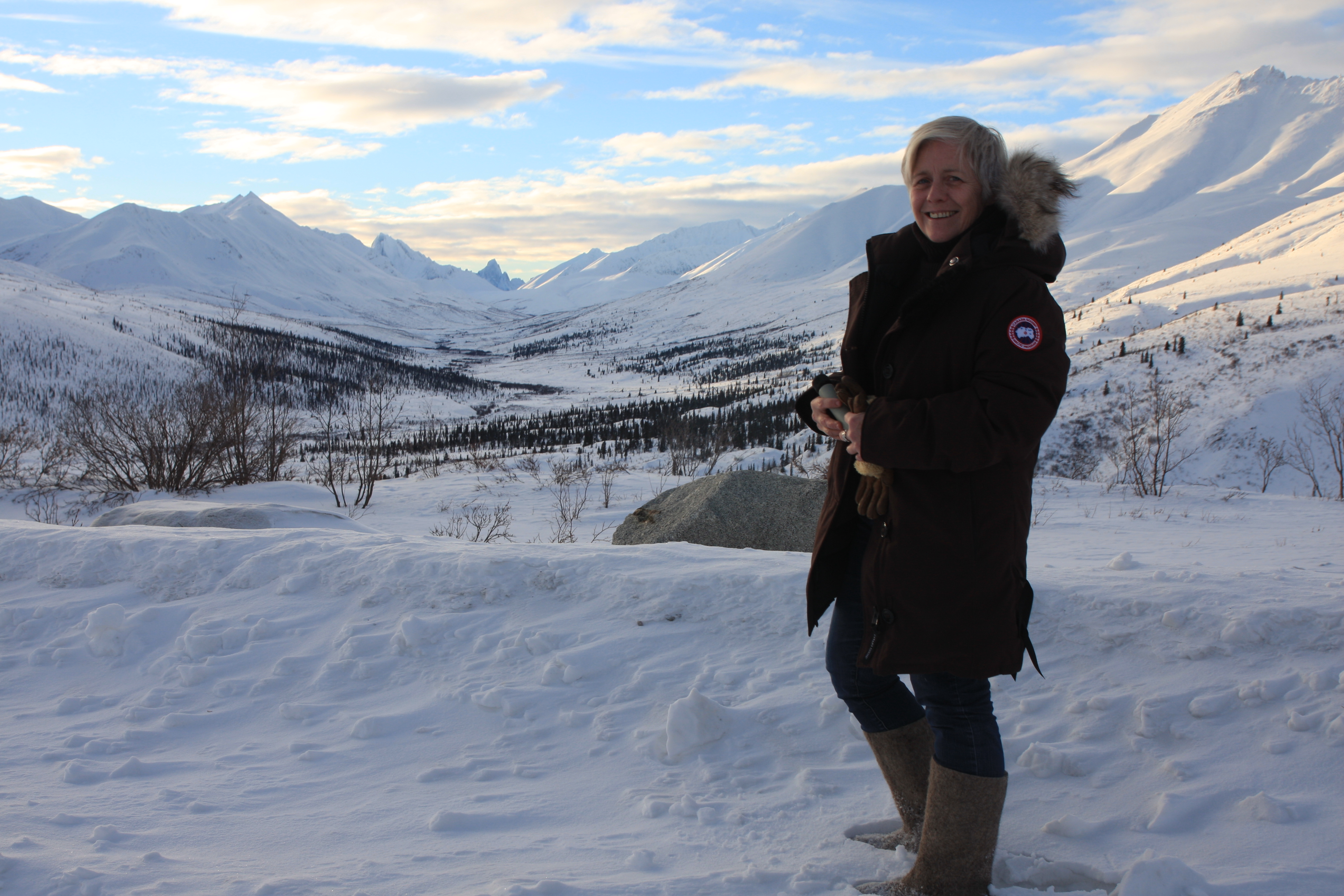
    On the wall above my desk in Montreal is a photograph taken in February at the Arctic Circle. The print is four feet wide by almost three feet high and foreground takes up most of that space. The horizon line is high on the print and marked by the Richardson mountains: white and treeless. It was -34C that day and my eyelashes froze together while I focussed the camera. In the foreground are the faint stains of a recent caribou kill, one hoof hidden amongst highbush cranberry and yellow grass poking out of the hard snow.

    ice lashes

    The perspective is deceiving. Trails of Black Spruce bisect the wide flat plain in middle distance and lead toward the base of the distant rounded mountains. Those peaks look close enough to touch, but they are many kilometres away.

    It is an image that encapsulates much of what I learned during my three-month residency at Berton House in Dawson City, Yukon.

    green over Berton House

    Berton House is owned and operated by the Writers’ Trust of Canada and each year four authors, supported by Canada Council grants, are chosen to spend three-month stints at the house. Residents do not have to teach or lecture, offer manuscript evaluation or coach emerging writers. In fact, they don’t even have to write while staying at the house. CanLit icon Pierre Berton, when gifting his house as a retreat, made that stipulation. He said, “the main purpose is not to let them write, but simply to give them time off from writing if they want it, or time off to think about writing or about the place they’re living in.” In the house are two binders of letters each resident has left for the next. Over the winter I spent a few hours reading what Lawrence Hill, Charlotte Gray, Joan Thomas, and the rest of the residents who’d come before me had to say. Some got a fair bit of work done. Others shut down Dawson’s bars nightly. Everyone left with something new: a stronger sense of their writing, the seed of a manuscript, suitcases of notes and ideas, friendships.

    swirl over 7th ave

    “The main purpose is not to let them write, but simply to give them time off from writing if they want it, or time off to think about writing or about the place they’re living in.”

    I landed in Dawson on December 23. When I stepped off the plane at 10:30 a.m. it was still too dark to see the tiny terminal building fifty feet away. My eyelashes froze—yeah, that happened a lot—and I immediately lost sight of my seatmate, a woman in a velour tracksuit who’d come to Dawson to “experience the Yukon winter.” Betty and Dan Davidson, part of the Berton House team, eventually found me in the crush of people inside the terminal. I was taken on a quick tour of town: “Here’s the curling rink. Do you curl?” I don’t. “Here’s the Anglican Church. Here’s the Baptist Church. Here’s the Catholic Church. Here’s the nondenominational worship house. Are you a churchgoer?” I am not.

    When they dropped me off at the house it was 12:30 p.m. and still too dark to see across the road. I watched the cloud of vapour left by their car’s tailpipe dissipate and sighed as the house settled around me, pipes banging as the heating system fired up. I was the seventy-fourth Berton House writer-in-residence, and I had the place all to myself. I didn’t know anyone living in that remote town. It would be dark for most of my stay (or so I was led to believe) and bitterly cold (or so it had been in the past). Alone in the cold and the dark, I would write reams.

    “I had the place all to myself. I didn’t know anyone living in that remote town.”

    The phone rang. I was invited to a Christmas Eve party and then to a Christmas potluck and then to a Boxing Day gathering and a New Year’s dinner. Did I know about the twice-weekly film festival screenings? Would I like to snowshoe up the Dome? Was I coming to the gallery opening and lecture next week?

    For a town of about 900 winter residents, Dawson was hard to keep up with.

    Initially the invitations arrived with an accompanying “don’t feel obliged, we know you’re here to write.” Initially, I agonized over the daily choices: write or hike, write or read, write or … and ground myself to a standstill over words that weren’t piling up. In my self-inflicted wracking I lost sight of why I write and nearly turned my prized three-month residency into the demise of my writing.

    “I agonized over the daily choices: write or hike, write or read, write or …”

    Raven angels

    But, at some point, I came to my senses and relearned something important. Perhaps it was the night I spent lying on my back on the frozen Yukon River hypnotized by the Northern Lights or while I was listening to Tr’ondëk Hwëch’in storytellers speak on the cultural importance of “story” or maybe when I stepped over the Arctic Circle. At some point I remembered that sometimes that thing which seems so close can’t be reached until one moves away from it.

    Sometimes to write good stories we have to stop trying to write.

    IMG_6713

    When I left Dawson the airport terminal was again packed, but this time I knew everyone. I came home with new friendships, more than one thousand photographs, and twenty-two thousand words towards a new book.


    IMG_5482

    Shelagh Plunkett is an award-winning writer and journalist living in Montreal. Her work has been published in various Canadian and American journals including The WalrusenRoute MagazineGeistThe Vancouver Sun and The Globe and Mail. In 2007 she won the CBC Literary Award for creative non-fiction and her memoir of growing up in Guyana and on Timor, Indonesia, The Water Here is Never Blue, was short listed for the Mavis Gallant Prize for Non-Fiction and the Concordia University First Book Prize. She has just returned south after three months in Dawson City, Yukon as the Writers’ Trust Berton House writer-in-residence and is now in the thick of a new manuscript tentatively titled Caught By All That’s Come Before. Follow Shelagh on Twitter and Instagram @shelaghplunkett. shelaghplunkett.wordpress.com

    Photos: Shelagh Plunkett

  • From the Underground: A Writer’s Life with Zines by Jeff Miller

    From the Underground: A Writer’s Life with Zines by Jeff Miller

    It wasn’t reading the classics that convinced me to become a writer. My gateway drug to the world of letters was zines—cheap, photocopied, self-published magazines filled with their authors’ reflections on the world.

    Over twenty years later I still remember some of the first zines I read in the early 1990s. There was Saucy, a thick zine from Cornwall featuring interviews with bands. There was a bilingual political zine from Hull, titled Moo in English and Meuh in French, where I first read about vegetarianism. And there was Design 816, full of personal essays, which I picked up when the author was visiting Ottawa from Chicago.

    JM image 3
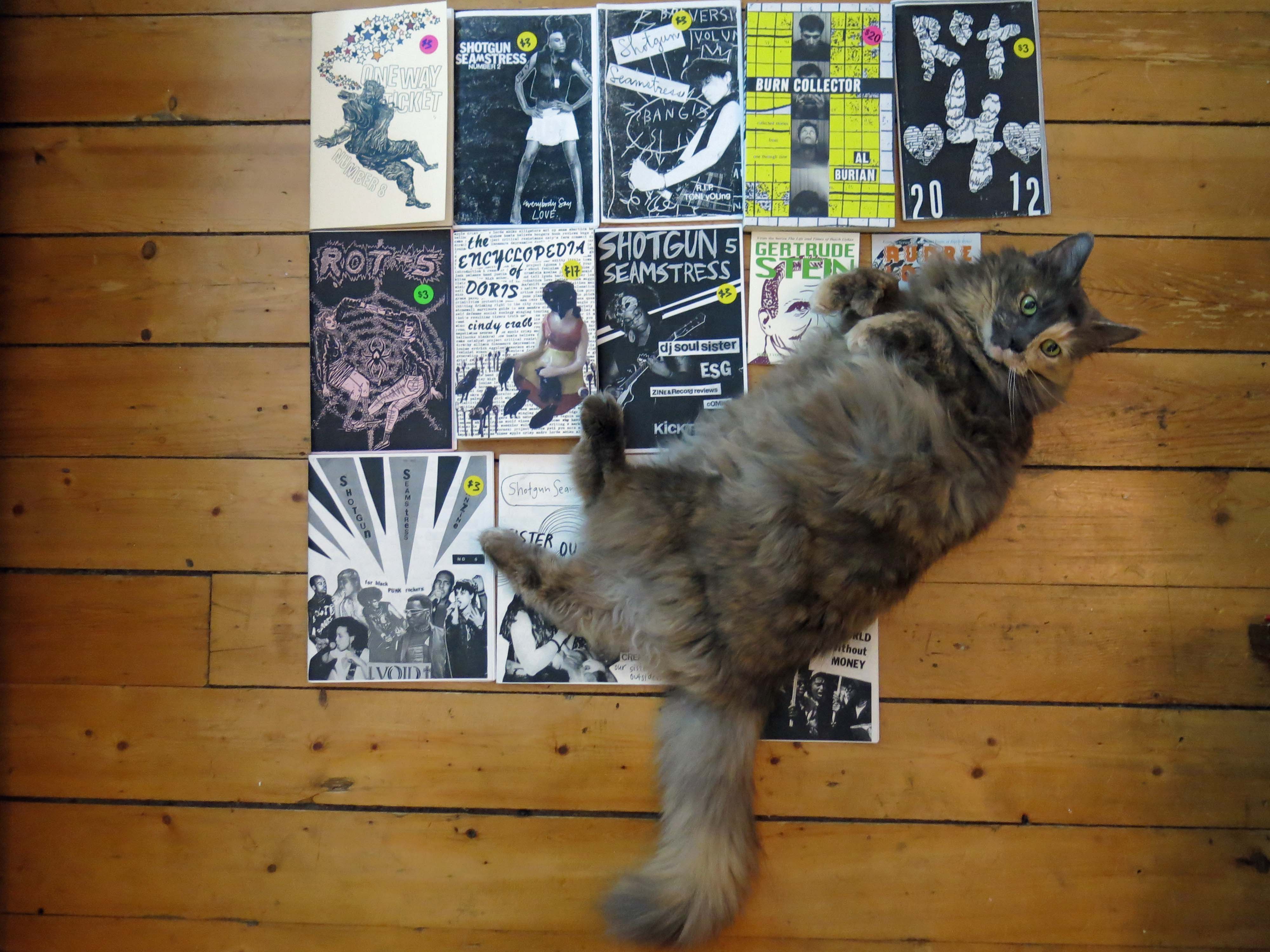
    Cats love zines too!

    From the first moment I encountered them, I became a zine obsessive. My suburban teen years were spent hunting these underground publications, picking them up on my trips to record stores and punk shows downtown. I sent large chunks of my allowance, a dollar or two at a time, to post office boxes across North America, ordering zines with titles like Dishwasher, Fuzzy Heads Are Better, Tyger Voyage, and Spunk. Needless to say, this was long before the Internet became ubiquitous.

    Coming home after school, I often found the mailbox at my parents’ house filled with literary treasures in envelopes from faraway postmarks. The zines I read covered many topics: political polemics, music, food, train-hopping, feminism, secret histories, and intimate personal narratives from the underground. I devoured them all, but I was particularly drawn to those telling true stories from the author’s life. In the pages of Cometbus, Doris, Scam, and I’m Johnny and I Don’t Give a Fuck I found compelling narrative voices that I deeply related to. Reading them felt like getting a letter from a close friend. I had tapped into a vibrant community of punk writers who crafted great stories and then cut and pasted their work together, photocopied it, and released it with no thought of gaining attention from the world of mainstream literature. These were my first literary heroes. In a time before our current memoir boom, they wrote honest and true stories full of grit and heart.

    “I had tapped into a vibrant community of punk writers who crafted great stories and then cut and pasted their work together, photocopied it, and released it with no thought of gaining attention from the world of mainstream literature.”

    I instantly wanted to make a zine and the democratic nature of the form made me feel that I could do it. Reading other zines gave me a model for how I might write my own stories and get them out into the world. I also voraciously read contemporary novels as a teenager, but unlike those books­­—perfect works with no typos or evidence of the human hand that made them—zines convinced me that I, too, could be a writer. The status of zines as unofficial publications in a time of media conglomeration made the prospect of publishing one even more entrancing. Zines were secret, precious, hard to obtain. This, along with their tactility, made them almost magical objects, even as I tattered them with frequent re-reading.

    Since its first issue in 1996, my zine Ghost Pine has been made up of true stories about my life. When I was younger I wrote about hitchhiking, long Greyhound bus rides, and visiting the cities where my many zine pen pals lived across North America. But as I got older and moved around less, I still wrote about my life in short creative non-fiction pieces, discussing things like my relationships with my grandparents, late night conversations with friends, and recollections of my high school social justice club. In all my stories for the zine I tried for honesty and hoped to improve my writing with each new issue. Over the years I have sold more than 10,000 copies. In 2010, a collection of the best stories from Ghost Pine was published by Invisible Publishing.

    JM image 2
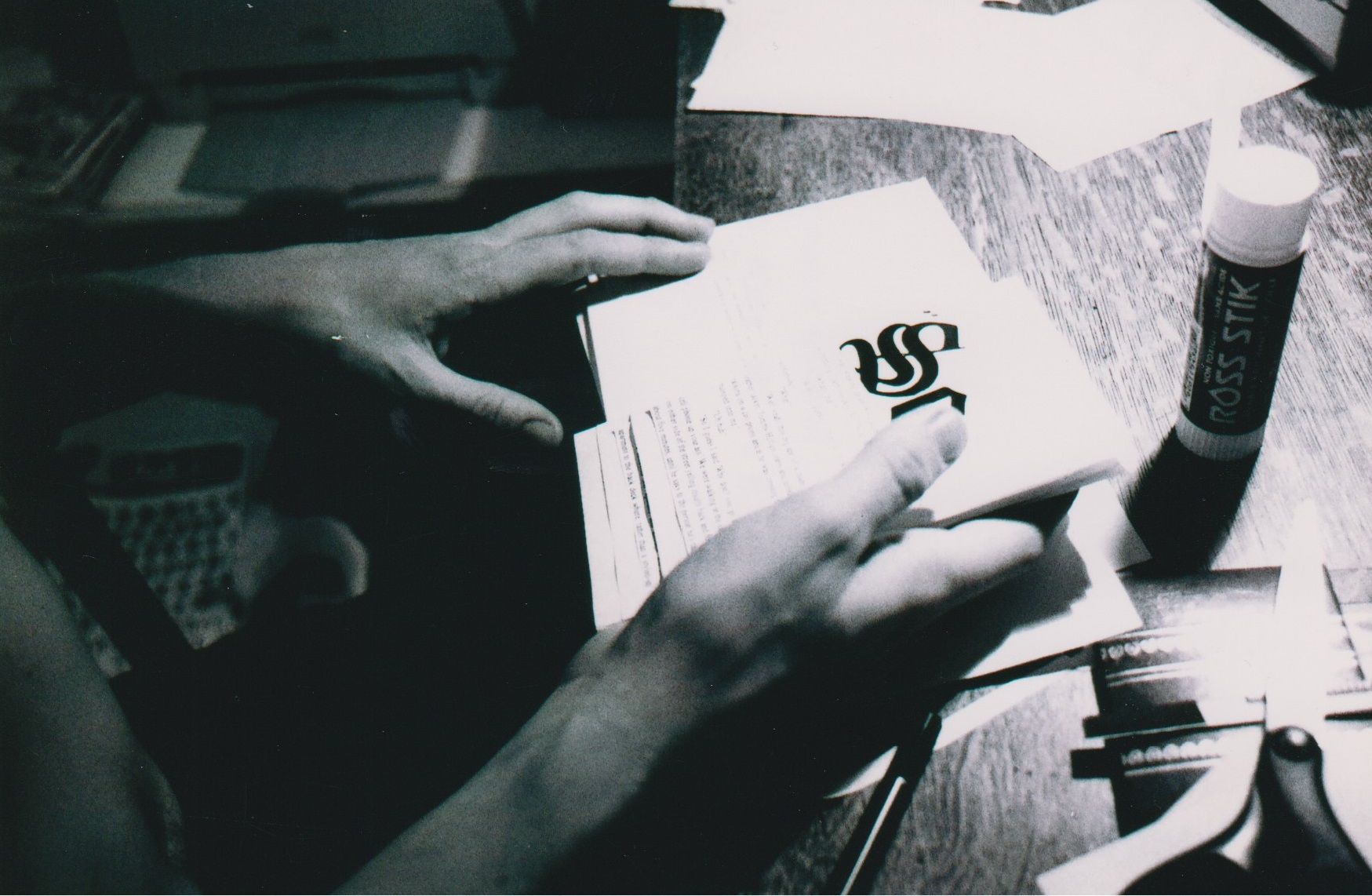
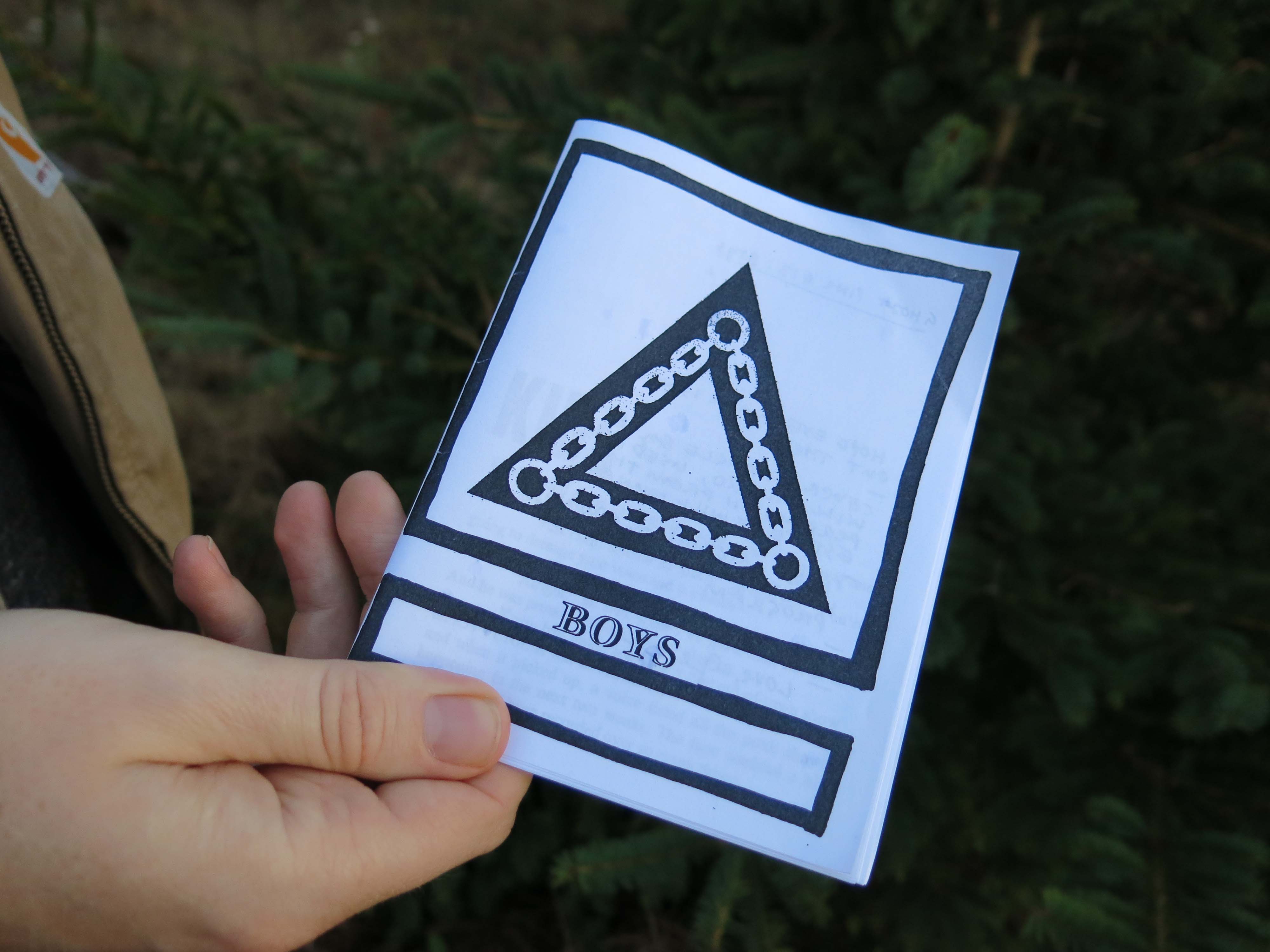
    Ghost Pine #13 (2014). Featured photo at top of article: Assembling Ghost Pine #8 (2004).

    Ghost Pine’s publication schedule has slowed from annual to once every few years as my writing practice has grown and diversified into the “overground” with formal publications, cultural journalism, creation grants and a Master’s degree. Nevertheless, the work I did on my zine over the last twenty years remains at the heart of who I am as a writer. There might be an assumption that one graduates from making zines to publishing books and other “real” writing, but I’ve put out two new issues of Ghost Pine since the book came out.

    Twenty years and fourteen issues later there is still a thrill to making a new zine. Writing and editing the stories, then doing my antiquated cut-and-paste layout (every year I make a resolution to learn how to lay it out on the computer and then don’t) and going to the copy shop to print, cut, and staple it together. I sell them at zine fairs and mail copies to my pen pals and to the people who order them online from as far away as Kuala Lumpur and Florianopolis, Brazil, often getting their zines in return.

    Slipping them into their envelopes, I’m reminded that this subcultural community that nurtured me as a young writer continues to thrive and produce amazing writing from voices that might otherwise have remained silent without this low-cost and low-pressure art form. The endurance of this feisty corner of the wider world of writing is extremely gratifying. Long live zines.


    JM headshot

    Jeff Miller has written the zine Ghost Pine since 1996. In 2010, the best stories from the zine were published as Ghost Pine: All Stories True (Invisible Publishing). His creative non-fiction and cultural journalism also appear in a number of anthologies and periodicals. He will be a CALQ Writer-in-Residence at the Banff Centre in February-March 2016.

    ghostpine.wordpress.com

    Photos: Sara Spike

  • Bye Bye Darlings: The Editing Gauntlet by Alice Zorn

    Bye Bye Darlings: The Editing Gauntlet by Alice Zorn

    Farine Five Roses
    Alice Zorn’s new novel, Five Roses, is named after the FARINE FIVE ROSES sign that marks the southwest horizon of Montreal and Pointe St-Charles, where the novel is set. Photo: Alice Zorn


    You’ve finished your novel manuscript and you even – finally! – get a publisher. It took ten years. You have Neanderthal muscles across your brow from frowning at the computer screen. But now you’re home-free. Bingo!

    Then you get the first slew of comments from your editor. She’s the objective eye who sees what the book can be, but isn’t yet. Does it begin in the best possible place? Is there too much exposition? Does it have structural integrity? What about the ending? She tells you all the darlings you cherished while you were writing don’t belong unless they serve the book. The clever turns of phrase, the crisp dialogue, the research that shows off your erudition, the quirky events that really happened. Your clean manuscript pages are tattooed with strokes and question marks. Some editors slash with red pen. I’m so glad mine used pencil.

    With my first novel, Arrhythmia, I was advised to lop two main characters, cut ninety pages and replace them with new writing. I couldn’t believe it. Hadn’t the publisher already accepted the book? My editor was firm. I had to learn how to rethink developments in the novel as narrative choices. I reminded myself that my editor, like me, only wanted what was best for the book. After all, she brought the manuscript to the acquisitions table, arguing that – out of all the other manuscripts being vetted – mine should be published.

    I rewrote those ninety pages because I realized the change was structurally necessary to the novel. And I rewrote them, yes. My editor didn’t tell me what to write, only that the direction I’d originally taken wasn’t the best option. However, I did not lop those two characters. I made them stronger and more integral to the novel. Writing the novel was hard, but editing it might well have been the more profound learning-about-writing experience.

    “Writing the novel was hard, but editing it might well have been the more profound learning-about-writing experience.”

    My second novel, Five Roses, will be published by Dundurn Press in 2016. I’m at the copy editing stage now. This is the finicky time when syntax, word choice and punctuation come into question. I open the document and scroll through 320 pages with red commas added, words underlined and lassoed to dialogue bubbles. Individual words are highlighted in yellow. A character is cycling along a city street, alert to the nervous rush hour traffic, as she thinks about the police sending out an alert to catch a criminal. I swear at myself for not having noticed. I must have read this page twenty times already! But my brain was in a groove. And as I’ve repeatedly witnessed, my brain is willful in its fondness for repetitions, internal rhymes and alliteration.Now, too, is when I discover that grammatical niceties aren’t as ingrained as I assumed they should be after five decades as a voracious reader. Shouldn’t I simply know all these distinctions by now? Seems not.

    And so I learn that there’s a difference between hanged and hung when it refers to a human body that is being put to death. I hung a picture on the wall. The executioner hanged a man. However, a human body that was already dead hung from a hook. I need to know that for this novel, since a character was hanged.

    6777082592_d2ba71334d

    I had to teach myself the farther/further dance after having worked with a copy editor who changed all my farthers to furthers. He thought further sounded more posh. Fine, I thought. He’s the copy editor. Maybe it’s one of those UK vs US things. For a couple of years I banned all farthers from my writing. Then I had a story returned from a copy editor who had changed some of my furthers to farthers. That was more curious. I finally pulled a tome of grammar off the shelf and discovered there’s a rule. Farther is for physical distance. Further is the abstract concept. You might think that I would already have known this, but I didn’t. And I’m not the only one. I continue to see farther and further misused in books published by reputable houses. (If you want a trick to remember which to use when, think far > farther. Thank you to Carol Weber for this tip.)

    You aren’t the best judge of your work, because you’re too close to the writing.You need an editor. Not your partner nor your best friend, who won’t want to hurt your feelings, but an experienced and discerning professional who will help you realize the full potential of the book.

    I’m now at the last read-through before Five Roses goes to the design people. I’ve rewritten the manuscript three times since I thought it was finished in 2013. Cutting, puzzling, moving pages around. Lots of darlings sent marching to the recycling bin. At each stage of editing, the book becomes more of an entity that lives separate from me. Which is what it will have to be when it’s sent off into the world.


    for QWFAlice Zorn’s book of short fiction, Ruins & Relics, was a finalist for the 2009 Quebec Writers’ Federation McAuslan First Book Prize. In 2011 she published a novel, Arrhythmia, with NeWest Press. She has twice placed first in Prairie Fire’s Fiction Contest. Her second novel, Five Roses, will be published with Dundurn Press in July, 2016. She lives in Montreal and can be found at http://alicezorn.blogspot.ca

  • Running a Small Press in 2015 by Guillaume Morissette

    Running a Small Press in 2015 by Guillaume Morissette

    Located in Montreal, Canada, Metatron is a small, independent press that publishes contemporary literature and works by new and rising authors. Almost all of its authors are under thirty years old, and their works reflect concerns such as love and relationships in the age of social media, existential angst, reconciling the spiritual with the digital and MySpace-era nostalgia, among others. Along with Ashley Opheim, who founded the press, I currently serve as co-editor of Metatron. We’re both writers with good intentions but limited time, and we have no concrete experience running a business. Metatron Press started with no safety net, investors or carefully thought-out business plan. Yet so far, everything is going great. When I joined Metatron in 2014, the press had already published six titles and received positive media coverage.

    I met Ashley in 2011, through Concordia University’s Creative Writing program. Our literary tastes overlapped, so we became friends and began working together on countless projects. We organized several well-attended readings in Montreal, a little miracle as we had virtually no budget. Later, in the fall of 2013, Ashley applied for a small grant from Emploi Québec’s Jeunes Volontaires program. At the time, I was living in Toronto, so I could only follow her progress through the grant application system from a distance. Though I knew she might receive money in the end, it didn’t feel like a game show, where you spin a wheel and win thousands of dollars and maybe a cruise, but more like something procedural and mysterious, as if she was defending herself in a court of law, trying to argue that she deserved retribution.

    The grant wasn’t an overwhelming amount of money, but it was enough for Ashley to start experimenting with different ideas. She made good use of this initial flexibility. It helped Metatron exit the grant stage and become a self-funded, independent entity. When I moved back to Montreal in 2014, it seemed perfectly natural for me to start helping Ashley with Metatron

    A few lessons from Metatron’s journey so far:

    1) Leverage pre-existing chemistry. My friendship with Ashley (pictured below) is a huge asset for Metatron, I feel, as we can pitch ideas to each other quickly, delegate tasks knowing the other will get things done and generally feel good when working together on projects. The sub-text of mutual respect and trust in our communications can only be earned through years of working together, and sometimes failing together. And countless other friends (and friends of friends) have helped Metatron. Ridiculously talented (and busy) local graphic designers Freyja & Zamudio, for example, took the time to create two high-quality book covers for the press. Metatron has also received a lot of support from Montreal artists like Claire Milbrath, Rachel Shaw and Rebecca Storm, and bookstores like Drawn & Quarterly. These contributions, big or small, are all invaluable. I am often surprised by how eager our friends are to pitch in.

    Ashley Opheim

    2) Work fast. One advantage of running a small indie press is that we’re usually able to fast-track the typical production cycle of a book. Instead of a book coming out a year or more after the initial publishing agreement is signed, it can come out a few months after work begins. This can give the final product an increased sense of urgency, though it also means there will be less time to let the work “rest” and to return to it later with fresh eyes.

    3) Build your community. Metatron doesn’t present itself as a literary press that takes itself very seriously, but rather as something artistic powered by positive energy and good intentions. It doesn’t only publish books and booklets – it also promotes the work of local writers, artists and musicians on its blog, fostering good vibes and a sense of community. This, I feel, gives the press a distinct flavour. In addition to being thought-provoking, literature can be entertaining, welcoming and serve as the basis for a strong community.

    Metatron pin

    4) Keep things small. Metatron’s finances often feel like an aquarium to me, like a delicate ecosystem. All profits made by the press are pumped right back into reprinting current titles or publishing future ones. To keep costs down, it’s been helpful to focus on smaller print runs, and to keep distribution entirely in-house. Moreover, some of Metatron’s titles are booklets rather than books. The booklets are a little bigger than your average chapbook, but more compact than a full-length, perfect-bound book. I really like this format, as it allows us to work with a lot of new and rising authors who haven’t been published in print before. Since booklets are also cheaper to produce and ship, they can also be sold for less.

    5) Have no idea what you’re doing. And finally: it’s okay to try new things, or figure them out as you go. In Spring 2015, Metatron will publish the full-length, perfect-bound debut of Toronto-based writer Sophia Katz, a big release for us. If we have to change our methods to produce and ship more copies, we’re confident that we’ll be able to figure out a way to adapt. Metatron has also announced the inaugural 2015 Metatron Prize for contemporary writers. The winner will receive $150, a publication deal with Metatron and a selection of past Metatron titles. Before announcing the contest, it seemed impossible for us to estimate how many submissions we would be receiving for something like this, so we simply decided to go for it and see what happened. In the end, we were blown away by the quality, quantity and diversity of manuscripts that we received, and we are now hoping to do the prize on a yearly basis. 

    Though not all of Metatron’s experiments will pay off, they should all prove valuable in some way, and it seems likely that this willingness to be playful and try out new ideas will remain an important part of the press’s identity.

    Metatron Books


    Guillaume MorissetteGuillaume Morissette is the author of New Tab (Vehicule Press, 2014), which was shortlisted for the Paragraphe Hugh MacLennan Prize for Fiction. You can find him on Twitter at @anxietyissue

  • Nature’s Way of Getting Books Written by Raquel Rivera

     A couple of years ago I was cycling around the ex-garbage dump that is the St-Michel Environmental Complex in Montreal North, collecting details for a scene in my novel.

    I pedaled across the street from the Complex’s Cirque du Soleil headquarters, and peered through the windows of the National Circus School. Inside was a highly padded gym-like space, full of pulleys and ropes – and some very fit teenagers. Not wanting to be taken for a peeping-creep, I dashed around to the front reception and asked if they offered tours.

    I attended the school’s open house the following week, hoping to gather useful tidbits to feather my scene’s nest. As it happens, I was also stepping into my next crazy-making topic of all-consuming passion: a creative non-fiction book for children, featuring the lives of students at the National Circus School. My next Great Idea.

    I surprised myself as I blustered my way into the institution through emails, meetings and follow-up proposals. They had a responsibility to share their story with the world, I insisted. The guilt-trip finally seemed to convince the school’s extremely busy (and intimidating) directors. They were swayed by my conviction: this was a Great Idea.

    Everyone will want to read about these young superheroes, facing down risk and their own limits every day. They’ll be charmed by the gaspésien who left home to pursue juggling. They’ll be impressed by that skinny little twelve-year-old who boards at the school, so he can train twenty hours a week in addition to his full academic schedule. Readers will gasp as the eighth-grader makes her first tightwire jump; they’ll wince as the cruel wire tries to bisect her feet. Ultimately, just like me, readers will be fascinated by an inside peek at the tremendous efforts these young people make so that their performances can look easy to the rest of us.

    Topsy-turvy
    Topsy-turvy: You don’t need to turn yourself inside-out trying to sell a beloved manuscript – it just feels that way sometimes.

    As I began my visits and interviews, “Why not?” seemed to be the motto of the school. It’s what they tell one another in response to every new and impossible notion. (Stand on your partner’s shoulders, jump into a back flip and land back on – why not? Now do it en pointe, in ballet toe-shoes – why not?)

    “Why not?” It’s what the aerial instructor said when I asked if someone like me (old and untrained) might learn rope. I signed up for aerial classes at my local community centre and, week after demoralizing week, was the sole student unable to pull herself off the ground. Yet somehow, when it was finally over, I signed up with a private trainer at a circus studio and carried on. If nothing else, my acrobatics training would make me better equipped to relay The Great Idea to a waiting world. Publishers would scramble for my original material, appreciating its historic value and the uplifting message that we may achieve the impossible, whatever that means to each of us. This Great Idea was a winner – a shoo-in.

    Now I’m thinking, passionate belief like this is just nature’s way of getting books written. I wish it got them published, too.

    But that’s the other part of the writing life: when I gain new perspective on The Great Idea. Over lunch, one editor speculated on the cost of producing my full-colour, fully illustrated Idea. Responses came in from more editors: “The circus school certainly seems like an interesting place,” (but no thanks). “I loved your proposal, but that wasn’t enough to convince the powers that be.” Passion died, and determination stepped up, struggling against quaking doubt. Would anyone want my Great Idea? Would it receive the blessings of timing and dumb luck that brought past manuscripts to print? Or had my portion of blessings run out?

    At this stage, keeping faith is huge: you have to believe that one day all this thinking and writing will be a real book. This requires that my ears and my mind stay open – and that I conserve effort, to avoid burnout. I listen to feedback; I try to be flexible because The Great Idea deserves to be among readers. But there’s any number of great ideas floating around out there, looking for a publisher. (Which is actually a comfort, when I’m feeling more mature.)

    throw2catchduotissu
    Julie gives Natalia a hand during warm-ups for RESET, the latest show by acrobatic troupe THROW2CATCH

    Maybe this pause in progress (I won’t call it a halt) is a necessary stage in the forging process. Maybe it will shape up my Idea and make it stronger. I remind myself of the reason these circus kids inspire me so – they push their limits, they never give up.

    After the latest rejection, I transformed disappointment, frustration and the urge to throw a hissy fit into a new series of emails. I sought publishing leads, editors’ names, introductions to agents – anything to get The Idea some notice. And it worked. I still don’t have a book contract, but I have more leads to pursue, and the support and interest of fellow writers. It’s enough; for now, it’s everything.


    raquelrivera_smRaquel Rivera is the author of three books for children, and the aspiring author of four more. Her author website is at www.imho-reviews.com/raquel. Photo credits: Raquel Rivera

  • Why I Teach Brand-New CanLit by Natalee Caple


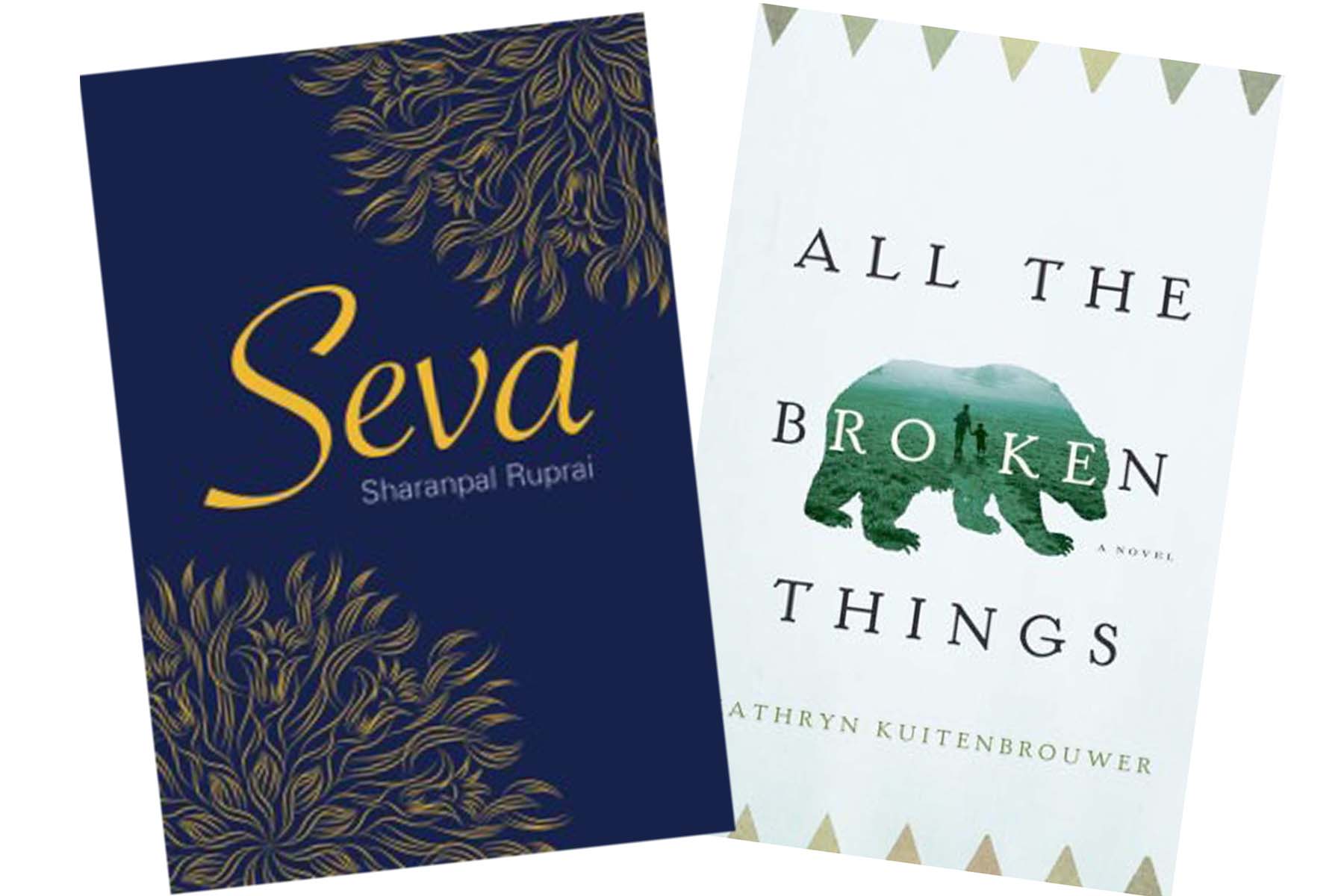
    This year, Natalee will teach Sharanpal Ruprai’s “Seva” and Kathryn Kuitenbrouwer’s “All The Broken Things.”

    I have my dream job. I write, review and teach Canadian literature and creative writing. When I think about why I am so happy teaching new CanLit I recall when, a few years back, my friend, writer Andrew Pyper, asked me in an interview what had changed for me as I evolved from an aspiring writer to an established author.

    The truth is everything has changed. In the beginning my desire to write was about me. It was about trying to see who I could be, what I might be good at and where I might find a community to belong to. Now, being a writer, being a parent and being a professor are all part of participating fully in the culture that sustains me. I feel that there is no better way to demonstrate how varied and valuable I think Canadian culture is than to devote my life to producing, promoting and teaching CanLit.

    Now, being a writer, being a parent and being a professor are all part of participating fully in the culture that sustains me.

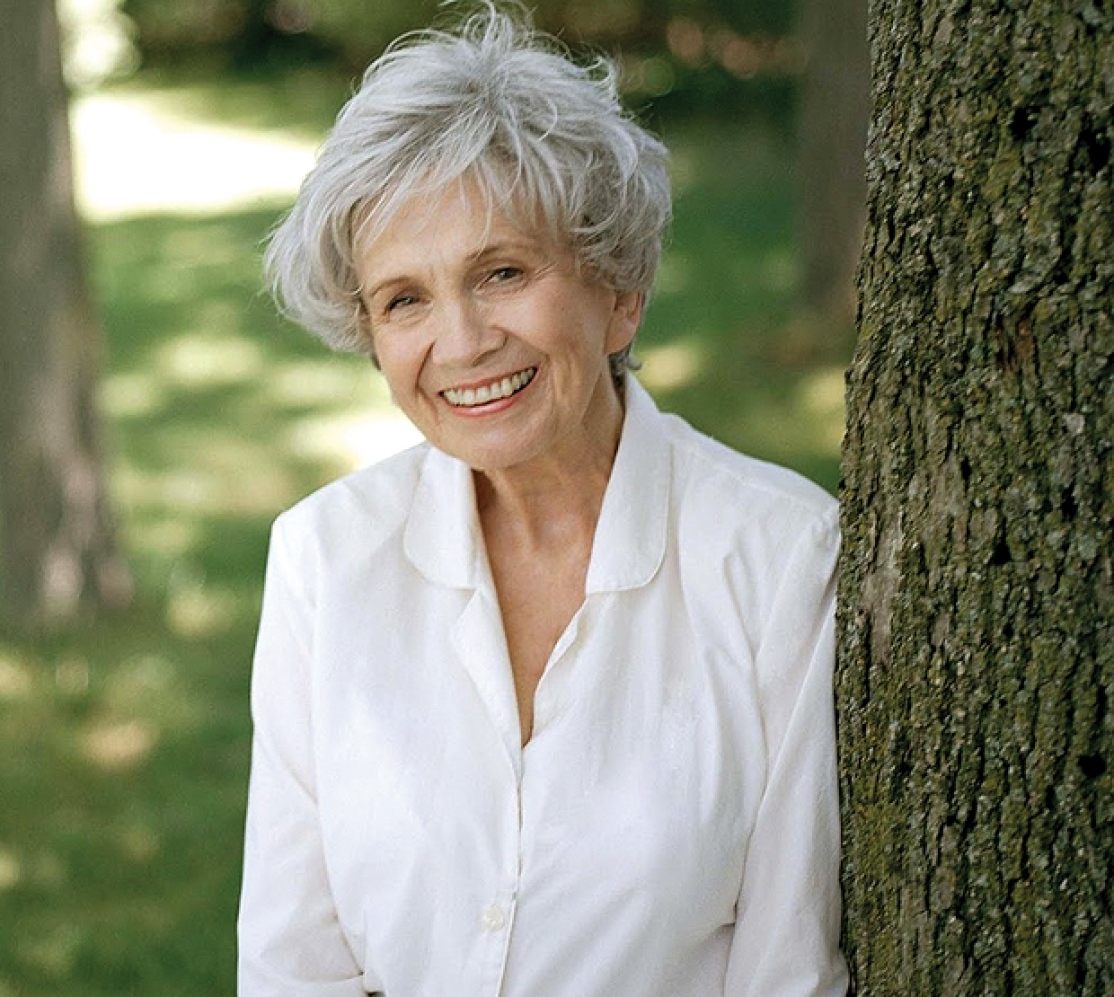
    Because it is so important to me that students see the books they read as part of something familiar and real, something that they are already impacting and being impacted by, I often use brand new books. I also teach some of the canon: Atwood, Ondaatje, Munro. After all, these are writers who have helped to raise awareness of Canada as a significant site for cultural production (teaching Alice Munro the week she won the Nobel Prize was incredibly moving). But I also teach books that are literally printed days before classes begin.

    …teaching Alice Munro the week she won the Nobel Prize was incredibly moving.

    Designing my syllabus a few weeks ago, I realized that there are only two major drawbacks to this style of teaching. The first is that I am constantly redesigning my courses, which means new lectures, new assignments and research on what is coming out. The second is that I feel a lot of anxiety about the books arriving on time. But in spite of the extra work and anxiety, there are so many benefits to teaching contemporary literature within the context of the now. Here is a list of some of them.

    • The books are never out of print.
    • Pre-ordering books helps to let the publisher and the bookstore know that the titles are desired.
    • The material is often quite relevant to students’ daily lives. This allows students to identify better with the settings, characters and scenarios.
    • Authors are accessible, alive and often available to Skype into the classroom so that students can ask them questions directly.
    • Student presentations are much better. Instead of Googling a biography and retyping a handful of academic quotes they have to read the whole book (they do complain about this).
    • Student essays are much better. Their close reading skills really improve because that is all they have to rely on.
    • Student confidence in their own readings improves. Because they don’t have to compete with the scholarly opinions of experts they learn that it is okay to rely on and develop faith in their own readings. This causes them to engage more deeply and so…
    • Students get better marks. When they see this they start to appreciate the work they did.
    • Students become more willing to take risks in thinking.
    • Plagiarism is greatly reduced. In fact, because a brand new book is so unlikely to have essays on it in circulation, to plagiarize really means paying someone to create an essay. Far fewer students are willing to take this extra step as it requires more planning and seems somehow more actively dishonest.
    • Canadian culture is reinforced as real and ongoing, lively, diverse and present.
    • Book sales show up in a timely fashion for authors. Titles get circulating at a time when it is most beneficial. We all know that numbers have become incredibly important to the sale of future books and that there is some self-fulfilling prophesy there.
    • I get to stay engaged with my peers in the writing community. I am giving them my support and staying on top of my field.
    • I get to read all the books I wanted to anyway and call it work! Did I say that it is my dream job?

    For the teachers out there: why do you – or don’t you – teach new CanLit?


    Natalee Caple’s latest novel, In Calamity’s Wake, was published by HarperCollins in Canada and by Bloomsbury in the US. She is a professor of English, teaching Canadian literature and Creative Writing at Brock University. www.nataleecaple.com