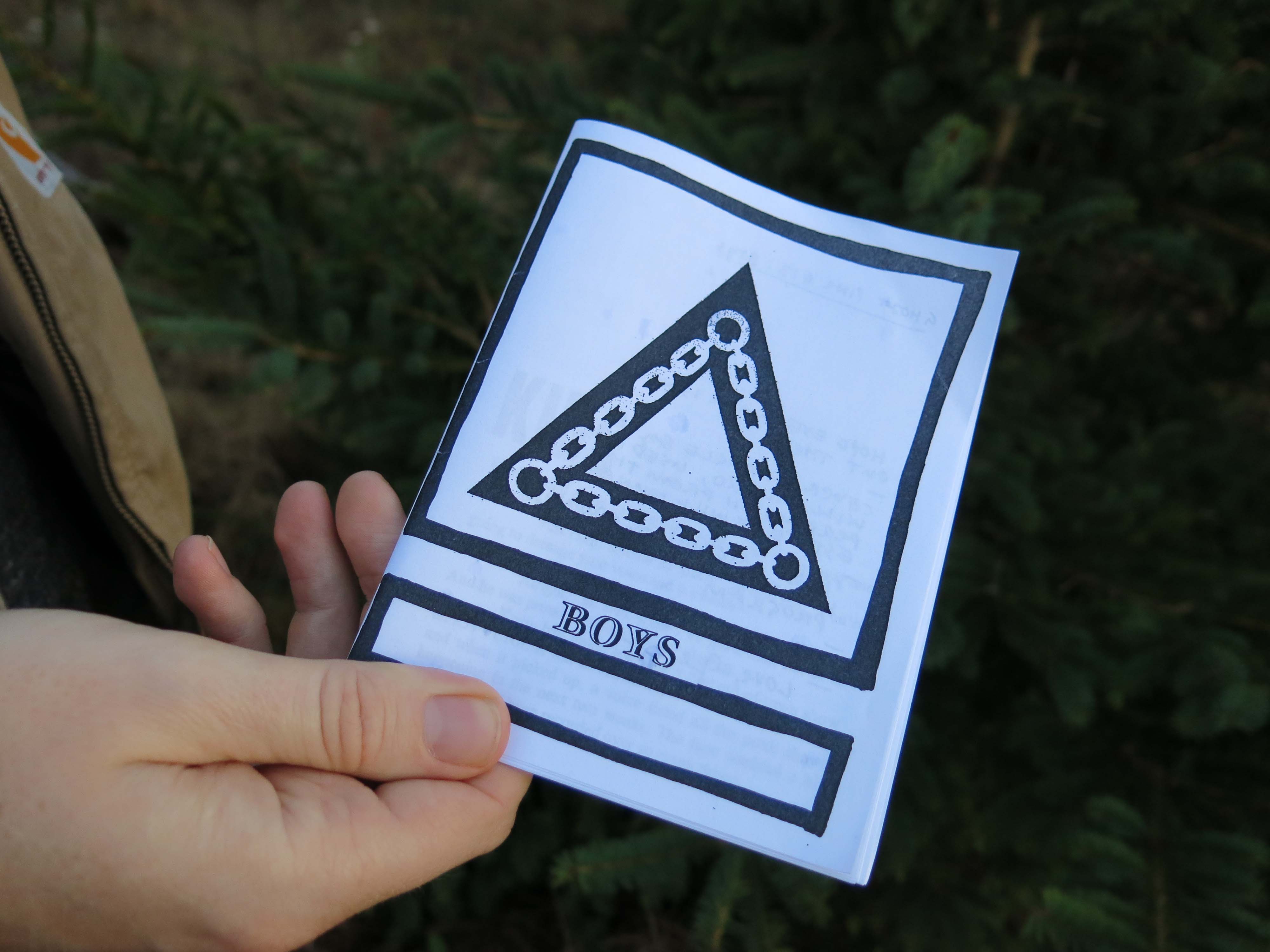
Tag: writing

  • Death is Why I Write by Kate Henderson

    Death is Why I Write by Kate Henderson

    When my grandfather died, it was as if his thoughts were transferred to me. All those years he said I had itchy feet, I’d thought he was criticizing the fact that I changed jobs every year or suggesting I’d had too many boyfriends. But no, he just wanted to see me settle down while he was still alive. I wrote a story about him, and found myself for the first time in a place where it didn’t feel like I was being told what to do or trying to please anyone. Death cuts through the clutter.

    From then on I had to write.

    Now both my parents have died. If it weren’t for my day job, I’d be writing all the time. I wake up early to clutch at details before they are erased by waves on sand. I recall how my mother smiled for a camera, the way my father used to swear through clenched teeth. Small gestures are all that’s left, isolated incidents, and the broad strokes of their lives.

    I used to think that writing about real people was a phase. But then it seemed frivolous to invent characters when they were sitting right in front of me, rich and fully developed. When they stopped living, well, I realized I couldn’t possibly improve upon the compelling arc of a life. My work is to distill. I gravitate to the restraint of truth.

    “If it weren’t for my day job, I’d be writing all the time. I wake up early to clutch at details before they are erased by waves on sand.”

    My mother tried to be a housewife, but she was never comfortable with domesticity. The four of us knew she loved us because she tried so hard. One year, she joined the women who formed a phone chain to keep the price of vegetables down at the local Dominion store. While she talked, she doodled on scraps of paper, creating labyrinths of shapes that eventually took on a life of their own. We all remember the time the face of Batman emerged from the page.

    My mother landed a job reading the news on television. It was how she supported us after divorcing my father. Like Neil Armstrong, Betty Friedan, and John Lennon, she taught us anything was possible. Early morning shifts and dressing for the public ate up a lot of time. It wasn’t until after we’d left home that she went back to school for the degree she’d always wanted and started writing stories and plays.

    I knew my mother would die eventually; there had even been a couple of false alarms. But when the time came, I treated it with the nonchalance I suspect children require to carry on. I have to be at a meeting, I said to her that morning. Can you wait? Yeah, I can wait, she answered, her tone shifting, sounding as if she had waited before. Surely I added I love you—it was how we said goodbye on the phone.

    “It wasn’t until after we’d left home that she went back to school for the degree she’d always wanted and started writing stories and plays.”

    The morning after she died, I woke with the sensation that I’d been left to contemplate fathers. My mother never really got over my father, even though it was she who’d left him all those years earlier. Or was it that she never got over missing her own father? I’ve learned that while adults maneuver around broken connections, children absorb the intensity of missing into their flesh.

    All those years, my mother loved my father. Even after she found out about the affair. Even after another husband. In conversations with us, she had started to refer to him as if they’d kept in touch, each knowing how the other had changed. As if he didn’t have another wife.

    When my father died, my mother’s vision, already clouded, deteriorated. It became harder and harder for her to breathe. It was as if without him in the world, an important part of her was no longer accessible. The last entry in her journal, dated a couple of weeks before her death, recorded a dream where my father had kissed her, just like in the old days. “Wow,” she had written. “I’d forgotten how good that felt.”

    The desire to capture my mother’s essence after she disappeared is more profound than anything I’ve ever felt. I write to sit with her, remember textures, and relieve the missing for a while. I write to piece together meaning. Death is her closing chapter. Writing allows me to sift through the pages of our life together, looking for clues.

    Headshot 2-2.jpgKate Henderson lives and writes in Montreal. She recently published a story about her thesis advisor, who died too soon, and is currently working on a memoir about her mother.

    Photo credits: Lisa Henderson (Batman doodle, drawn by Lynn Henderson); Vanessa di Gregorio (headshot)

  • Ghostwriter by Peter McFarlane

    Ghostwriter by Peter McFarlane

    Working as a ghostwriter is not something you plan for; it is something you stumble into. In my case, it began when an old friend, a political activist who had long spoken about wanting my help in putting a book together, called to say he had found a private source of funding for it. Was I interested in writing it?

    It was a subject I had some a background in so I was able to rough out an outline in a couple of weeks. We got together every couple of months for two-day work sessions and within a year we had a manuscript and a publisher. While I was wrapping up that project, another friend recommended me to someone else who had a story they wanted told, and some funding for it.

    This time the world I would be writing about was one I was unfamiliar with, but I liked the subject of the book and I decided to give it a shot. It was during this project that I began to understand what a privilege it can be to tell someone else’s story. I had written biography before, but this was a strange hybrid: a first-person biography. In a very real sense, you become the person you are writing for, internalizing their thoughts and feelings as you use all of the tools at your disposal to tell their story as if was your own.

    “I began to understand what a privilege it can be to tell someone else’s story.”

    Part of the job is also putting the subject and their life in a larger context. This means researching time and place and weaving their narrative into the world they inhabit. In this, you can allow yourself a measure of literary freedom, secure in the knowledge that the character whose life you are temporarily inhabiting will get a chance to look over your shoulder and make whatever corrections are necessary.

    In this case, the book was for someone who had a brief media fame but for the most part lived under the radar. And it was an admirable life. A man with principles and convictions and an unwavering sense of solidarity, moving through a world that was often unwelcoming and at times outright hostile. But he stood his ground and pushed forward and through the force of character made a success of things. That is how the story played out. An honest man confronting his times without compromising his principles. I was pleased that the first publisher I approached picked it up. The experience confirmed to me the truth of the cliché that everyone has a book in them—at least in the sense that all of our stories are worth telling. And for a writer, telling those stories can be as rewarding as any other literary form.

    “The experience confirmed to me the truth of the cliché that everyone has a book in them—at least in the sense that all of our stories are worth telling.”

    About ghosting in particular, I learned that even what was supposed to be a negative turned out to be a positive. I am speaking about the fact that your work goes unrecognized by the larger public. This might have mattered when I was twenty-five but now that I am over sixty it is a hidden benefit, as I discovered at the launch of my activist friend’s book. It was a relatively big event, with about 200 people packing a hall in Toronto for an on-stage interview. I sat near the back and it was one of the most pleasant literary events I ever attended. I had dinner with my friend before the event and we went out later with others to celebrate. The next day, my friend left for a long but low-budget book tour. I returned to my home in the Laurentians, realizing that I had the best of both worlds: the satisfaction of having written a decent book that was off to find its public and freedom from the obligations that accompany book publishing.

    So when the publisher of the recently completed book asked if I would like him to add my name on the cover, I unhesitatingly declined. When the work is finished, better to be free to move on to the next project while someone else has the chore of flogging it. Ghostwriting a book, I discovered, can be a bit like ghosting a party. When you have had your fill, and your fun, you can slip away without stopping for those awkward good-byes.


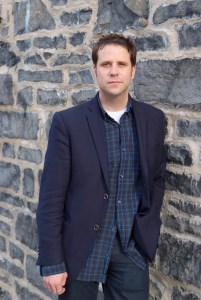
    Peter McFarlane has written five books of nonfiction, including two ghostwritten books, as well as more than 100 newspaper and magazine features. He has specialized in Indigenous history and politics and has worked on several CBC radio programmes as a researcher and on-air contributor. He is currently completing another ghostwritten book and a new work of non-fiction.

    Photo: Flickr

  • Don’t Blink by Marianne Ackerman

    Don’t Blink by Marianne Ackerman

    Choosing a book title and cover is a lot like naming a baby. Quite a few people tend to weigh in, so the process can be a serious source of anxiety. Yet somehow, once you settle, the choice seems obvious.

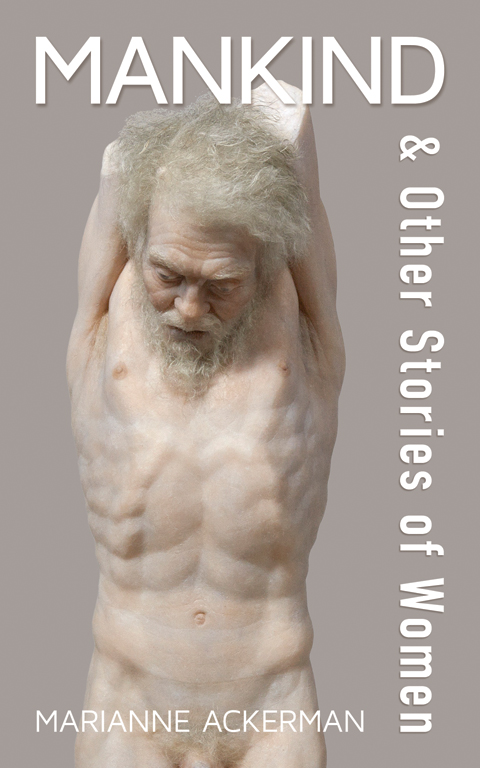
    In the case of my new short story collection, Mankind and Other Stories of Women, the title was spontaneous. The title story, “Mankind,” first saw the light of day last Christmas as a monologue directed by Harry Standjofski, performed by the wonderful Leni Parker at Centaur Theatre’s annual Urban Tales event. For Leni’s character, a lonely woman enduring Christmas Eve with her box of wine and chocolate, the word mankind is a euphemism for the scent of a man. It’s very much a woman’s story. So are the other nine, hence the title. I made a conscious effort to focus on women this time after my last collection, Holy Fools + 2 Stories (Guernica 2014), was full of male characters—puzzling, since I thought I’d won the struggle over the animus-domination of my imagination ages ago.

    The cover was not obvious. On a brief trip to Calgary in April, I discovered an amazing sculptor at the Trépanier Baer Gallery. Walking through the door, I was hit by the super elongated shape of a very thin, nearly naked corpse behind glass: Evan Penny’s Homage to Holbein, an eerie rendering in silicone and real hair of a Christ-like figure, almost fourteen feet long and chillingly life-like. My first thought was, this work belongs at the entrance to a church. It’s a religious experience.

    Days later, the images were still strong. Perusing the gallery website, I settled on Marsyas (Model), a twenty-four-inch high sculpture of a male torso, inspired by a Greek statue, which was part of the exhibition. Covers are traditionally the publisher’s domain, with input from the author. But I’ve known my publisher Mike Mirolla for a long time. I know he’s a dark soul. He loved the image immediately. Thus began the dance by which a raw visual idea and text become one.

    I could not explain why that image worked with my stories, which tend to be airy, urban, sometimes playful, and, some people say, funny. Maybe the figure’s vulnerability, resistance or air of fatalism speak to the tragic thread found in all comedy. As I revised the manuscript for publication, I found myself working him into the first story, “Mina,” which is about a friendship of rivalry and complicity between two women, their creative struggle, and one crazy night.

    mankind-final-cover

    “As I revised the manuscript for publication, I found myself working him into the first story…”

    After the normal back and forth, designer David Moratto’s concept was finalized. I slapped the cover up on Facebook, eagerly announcing my forthcoming fall book. It was mid-winter. The response was pretty well total negativity. Some of my dearest friends, smart people, said it was awful, scary, repellent. Nobody would touch this book!

    I was not prepared. I threw myself on the bed, lamenting once again my weakness for getting over-involved in practically everything. Now I’d have to face Mike and David with bad news, not to mention the gallerist, Yves Trépanier, and the artist, whose work I love.

    Mike did not share my panic attack, but held back. Yves did not. “Don’t listen to them! It’s a strong cover,” he barked via email. “You were right the first time. Don’t blink.”

    “The response was pretty well total negativity. Some of my dearest friends, smart people, said it was awful, scary, repellent. Nobody would touch this book!”

    Next to my control freakishness, impulsiveness is probably my greatest flaw. Here was somebody I respected telling me to trust my impulse. I looked at the cover again. At the other options I was trying to like. I asked Yves what his wife thought. He assured me she loved it. So I decided to take his advice, remain faithful to my first impulse. Well, except for a last-minute tussle over (ahem) how much “cleavage” should appear below my name. I did not want readers to be distracted by a dangling sack of flesh.

    Now that a stack of books is sitting on the dining room table, I can’t imagine a better cover than Evan Penny’s classy, classical all-too-human torso. I have no idea what readers will think, how it will affect their desire to pick up this book. But the baby isn’t mine any more. It is thoroughly herself.


    Mankind and Other Stories of Women will be launched along with three other local titles from Guernica Editions at Montreal’s Atwater Library (1200 Atwater Ave.) on Thursday, September 29, 6 p.m. The event is co-sponsored by the QWF. Click here for more information on the launch.

    ma-for-qwf-piece-sept-7

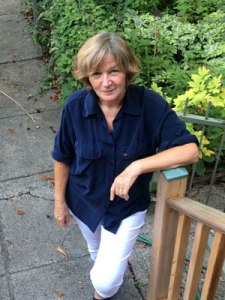
    Marianne Ackerman writes plays and novels. marianneackerman.com

    Photo credits: Photo of Evan Penny’s Marsyas Model (2016) courtesy of Evan Penny, and Kevin Baer – TrépanierBaer Gallery; Lesley McCubbin (headshot)

  • Literary Influences: E. L. Doctorow’s Lives of the Poets by John Goldbach

    Literary Influences: E. L. Doctorow’s Lives of the Poets by John Goldbach

    The first time I read E. L. Doctorow’s wonderful Lives of the Poets: A Novella and Six Stories (1984) was in early 2001, after picking up a used hardcover copy at City Lights Bookshop in London, Ontario, at 356 Richmond St. Not City Lights Bookstore, the famed bookstore in San Francisco, California, at 261 Columbus Ave—City Lights Bookshop (the one in London ON) is one of my favourite used bookstores ever, a small but dense and rich oasis of books and comics and records, etc.

    A few years later, after reading Slavoj Žižek’s Iraq: The Borrowed Kettle (2004), I reread Lives of the Poets. Much to my surprise, Žižek references Doctorow’s collection in his second book about 9/11 and its aftermath (namely, the illogic of the Bush administration’s reasons for invading Iraq). I was surprised to learn Žižek uses Doctorow’s collection as a sort of model. Žižek writes,

    The hidden literary model for this book is what I consider E. L. Doctorow’s masterpiece, the supreme exercise in literary post-modernism, far superior to his bestselling Ragtime, or Billy Bathgate: his Lives of the Poets: Six Stories and a Novella—six totally heterogeneous short stories (a son is set to the task of concealing his father’s death; a drowned child is callously handled by rescuers; a lonely schoolteacher is shot by a hunter; a boy witnesses his mother’s act of infidelity; a car explosion kills a foreign schoolgirl) accompanied by a novella which conveys the confused impressions of the day-to-day life of a writer in contemporary New York who, as we soon guess, is the author of the six stories. The charm of the book is that we can reconstruct the process of the artistic working-through of the raw material of this day-to-day life.

    As soon as I’d finished Iraq: The Borrowed Kettle, I reread Lives of the Poets, my engagement with the book deepening.

    I’ve read the Doctorow collection twice since then. About a decade later, in 2015, I used it as an oblique model for organizing a book of my own fiction, It Is an Honest Ghost, which consists of six stories and a novella (Hic et Ubique). There was something about how Doctorow’s stories stood alone—were “totally heterogeneous,” in Žižek’s words—but nevertheless informed one another, that I found haunting.

    My new collection was originally made up of eight stories and a novella but for myriad reasons I cut two stories, not the least of those reasons being for the sake of uniformity, a loose strange symmetry—a uniformity and symmetry impressed upon my mind by Doctorow.

    And then I read Lives of the Poets for a fourth time in July 2016, while working on this short appreciation. Lives of the Poets remains politically perspicacious, deeply insightful, and contemporary.

    Here’s Doctorow on US immigration, and mass migrations in general. The writer, the narrator of the novella, emerges from the NYC subway, and observes the new waves of immigrants to the city. He writes,

    Dear God, let them migrate, let my country be the last best hope. But let us make some distinctions here: The Irish, the Italians, the Jews of Eastern Europe, came here because they wanted a new life. They worked for the money to bring over their families. They said good riddance to the old country and were glad to be gone. They did not come here because of something we had done to them. The new immigrants are here because we have made their lands unlivable. They have come here to save themselves from us.

    Lives of the Poets continues to shed light on the present for me. Out of Doctorow’s impressive and celebrated oeuvre, it’s often overlooked. But it remains an insightful and inspiring collection, chock-a-block with strange echoes and resonances.


    KateHutchinson19webJohn Goldbach is the author of The Devil and the Detective (Coach Books, 2013), a novel, which was an Amazon Best Book of 2013; Selected Blackouts (Insomniac Press, 2009), a story collection; and, most recently, It Is an Honest Ghost (Coach House Books, 2016), a collection of six short stories and a novella (Hic et Ubique).
    Works Cited: Žižek, Slavoj. Iraq: the Borrowed Kettle. New York: Verso, 2004, p. 7.

    Photo: Kate Hutchinson (headshot)

  • I Didn’t Want to Write This Book by Elise Moser

    I Didn’t Want to Write This Book by Elise Moser

    I didn’t want to write this book.

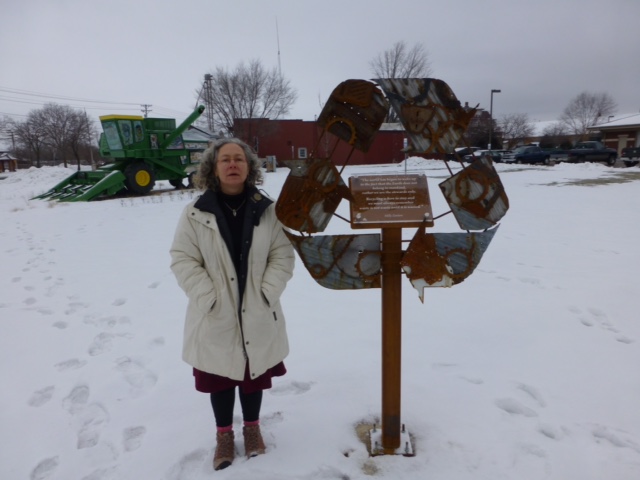
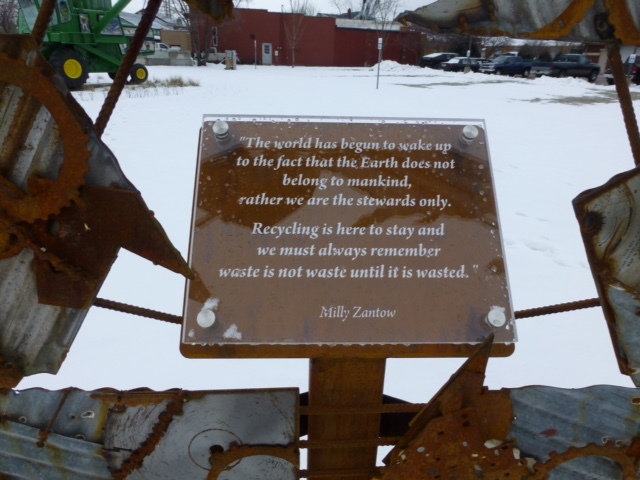
    I first heard Milly Zantow’s story in Sauk City, the small Wisconsin town where my sweetheart lives. Someone from the local historical society mentioned that the woman who invented the recycling symbol was from there.

    A woman did that!

    A woman from Sauk City!

    I figured everyone else in town must know this astounding fact. But no.

    I Googled her. I found a wonderful short video in which she explained how she kick-started plastics recycling in 1978, although the experts told her it couldn’t be done. I thought kids should know a woman did this.

    I tried to get someone else to do it.

    I ran into a Wisconsin publisher I knew and told her the story. “I don’t have an author to write it,” she said.

    I couldn’t do it. I’m a fiction writer. And I write for adults and teens, not kids.

    I talked about Milly to everyone I met, at dinners and parties and bookstores.

    Everyone agreed it was an amazing story, but no one wanted to take it on.

    Eventually I decided I’d better do it myself. I already knew the narrative; it would only take me a few months. Then I could get back to writing fiction.

    It took me three years. (That’s what happens when a fiction writer veers off into the wilds of non-fiction.)

    Milly bench med res

    I wrote a draft, but there were a few pesky details to clarify. I didn’t know if Milly was alive. I couldn’t find an obituary, but I couldn’t find contact info, either. I spent a week hunched over microfilm at the library, reading back issues of our small-town paper, the Sauk Prairie Star. I found a letter from Milly thanking the public for their support of the International Crane Foundation. There was a letter from Vietnamese boat people thanking Milly and her husband for sponsoring them so they could leave their overcrowded Arkansas refugee camp for a new life in Wisconsin. I found articles about the landfill where Milly sat one day and watched the trucks dump garbage—“plastic, plastic, every kind of plastic.” My mental picture of Milly was getting richer, but my story was also getting more confusing.

    “That’s what happens when a fiction writer veers off into the wilds of non-fiction.”

    Some articles said the landfill was full; others claimed toxins were leaching into the water table. The woman from the historical society had said that Milly invented the triangular recycling symbol, but Wikipedia said it was a guy from California. In the videotaped interview, Milly mentioned putting the numbers 1-7 inside the triangles on plastic goods, but gave no specifics. Who thought of the idea?

    Elise Milly Memorial
    Elise Moser

    I began to realize just how slippery facts were, and how the passage of time greased them further. People made mistakes, misunderstood things, left out the complicated parts. I’d written about this kind of thing in fiction, but it felt very different when I was trying to track down real facts and tell the real story of a real person—someone whose friends and neighbours might read it. I was used to being in control of the narrative (sort of). It’s so much easier to make stuff up!

    “I began to realize just how slippery facts were, and how the passage of time greased them further.”

    But research has its own satisfactions. I found someone who had worked with Milly thirty-five years ago, someone who knew that the landfill was leaching toxins and that it was too full. She also gave me a (totally unexpected and very useful) feminist perspective on the history of garbage and recycling.

    I knew that if Milly were alive she’d be very elderly. I couldn’t wait any longer to find her. In April 2014 I flew to Wisconsin.

    If necessary, I was prepared to cold-call all the Zantows in the phone book. But first I went to the local nursing home to visit a friend who was recuperating from a serious accident. Walking the corridor, I happened to glance over, and there I saw it: Mildred Zantow. I knocked, and she graciously invited me in to talk, even though she had just been given the news that her brain cancer had gotten worse.

    I asked her my questions, but as she answered, I began to realize that the things that were important to her about her experiences were not necessarily the things I thought I needed to know for my account. Her story was not the same as my narrative.

    “I knocked, and she graciously invited me in to talk, even though she had just been given the news that her brain cancer had gotten worse.”

    The following year I had the privilege of interviewing two of Milly’s sons. I mentioned that I’d met her in the nursing home, and they asked me when. I told them, and there on the screened porch in Sauk, Jim and Todd looked at each other.

    “That was probably her last lucid day,” Jim said.

    Milly plaque

    Since I started this book, things I’d confirmed have changed. In three years, technologies for recycling or replacing plastics have advanced. The environmental impact of plastic pollution has intensified, as has research on the subject. The information available on the history of recycling has improved; more than once during the process of editing I had to change wording or go back and re-research to be sure that what the book said was as true as we could know it to be.

    Now that the book is printed, I’ve been telling people about it. The sporting goods manager at the local hardware store/agricultural machinery dealership, where there is a little book display next to the hunting supplies, remembers Milly. “Thank you for doing this,” he said.

    Ironically, it’s easier to write fiction that is true, and that will always be true, than it is to write non-fiction. Fiction only has to express a truth; it can do that by any means, whereas non-fiction is expected to tell the literal, verifiable truth about the material world, and as we all know, there is nothing constant in the material world but change.

    Another thing that’s changed: I’m so glad I wrote this book!


    Author Photo 1

    Elise Moser is the happy author of What Milly Did: The Remarkable Pioneer of Plastics Recycling (2016), Lily and Taylor (2013), both from Groundwood Books, and Because I Have Loved and Hidden It (2009), published by Cormorant Books. She has published short stories, edited anthologies, and led short story workshops and mentored for the QWF. She serves on the board of PEN Canada and is an associate editor with Linda Leith Publishing.

    Photo credits: Fred Lauing (headshot; photo of Elise Moser next to the Milly memorial), Elise Moser (the other two)

  • QWF Writes featured on WordPress Discover

    QWF Writes featured on WordPress Discover

    QWF Writes is featured in WordPress’s Discover blog.

    WordPress selected their favourite articles from the QWF Writes archive to share with readers.

    They also took the time to ask QWF Writes editor Crystal Chan a few questions about writing and reading in Quebec.

    Do you want to learn more about the QWF Writes essay series? Read the piece here.


    Screen Shot 2016-07-11 at 2.52.54 PM

  • Finding Perspective: Writing in the Dark at Berton House by Shelagh Plunkett

    Finding Perspective: Writing in the Dark at Berton House by Shelagh Plunkett

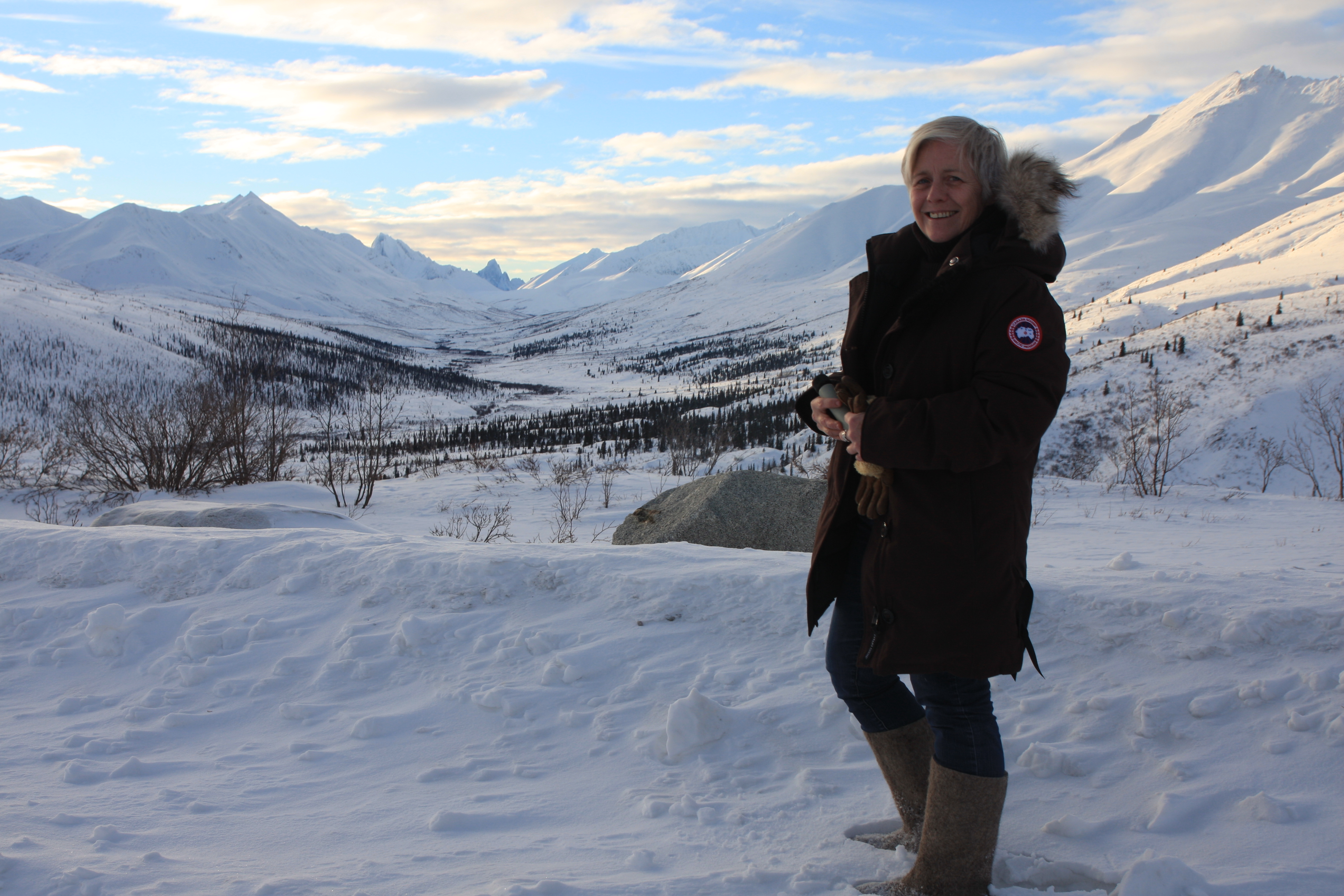
    On the wall above my desk in Montreal is a photograph taken in February at the Arctic Circle. The print is four feet wide by almost three feet high and foreground takes up most of that space. The horizon line is high on the print and marked by the Richardson mountains: white and treeless. It was -34C that day and my eyelashes froze together while I focussed the camera. In the foreground are the faint stains of a recent caribou kill, one hoof hidden amongst highbush cranberry and yellow grass poking out of the hard snow.

    ice lashes

    The perspective is deceiving. Trails of Black Spruce bisect the wide flat plain in middle distance and lead toward the base of the distant rounded mountains. Those peaks look close enough to touch, but they are many kilometres away.

    It is an image that encapsulates much of what I learned during my three-month residency at Berton House in Dawson City, Yukon.

    green over Berton House

    Berton House is owned and operated by the Writers’ Trust of Canada and each year four authors, supported by Canada Council grants, are chosen to spend three-month stints at the house. Residents do not have to teach or lecture, offer manuscript evaluation or coach emerging writers. In fact, they don’t even have to write while staying at the house. CanLit icon Pierre Berton, when gifting his house as a retreat, made that stipulation. He said, “the main purpose is not to let them write, but simply to give them time off from writing if they want it, or time off to think about writing or about the place they’re living in.” In the house are two binders of letters each resident has left for the next. Over the winter I spent a few hours reading what Lawrence Hill, Charlotte Gray, Joan Thomas, and the rest of the residents who’d come before me had to say. Some got a fair bit of work done. Others shut down Dawson’s bars nightly. Everyone left with something new: a stronger sense of their writing, the seed of a manuscript, suitcases of notes and ideas, friendships.

    swirl over 7th ave

    “The main purpose is not to let them write, but simply to give them time off from writing if they want it, or time off to think about writing or about the place they’re living in.”

    I landed in Dawson on December 23. When I stepped off the plane at 10:30 a.m. it was still too dark to see the tiny terminal building fifty feet away. My eyelashes froze—yeah, that happened a lot—and I immediately lost sight of my seatmate, a woman in a velour tracksuit who’d come to Dawson to “experience the Yukon winter.” Betty and Dan Davidson, part of the Berton House team, eventually found me in the crush of people inside the terminal. I was taken on a quick tour of town: “Here’s the curling rink. Do you curl?” I don’t. “Here’s the Anglican Church. Here’s the Baptist Church. Here’s the Catholic Church. Here’s the nondenominational worship house. Are you a churchgoer?” I am not.

    When they dropped me off at the house it was 12:30 p.m. and still too dark to see across the road. I watched the cloud of vapour left by their car’s tailpipe dissipate and sighed as the house settled around me, pipes banging as the heating system fired up. I was the seventy-fourth Berton House writer-in-residence, and I had the place all to myself. I didn’t know anyone living in that remote town. It would be dark for most of my stay (or so I was led to believe) and bitterly cold (or so it had been in the past). Alone in the cold and the dark, I would write reams.

    “I had the place all to myself. I didn’t know anyone living in that remote town.”

    The phone rang. I was invited to a Christmas Eve party and then to a Christmas potluck and then to a Boxing Day gathering and a New Year’s dinner. Did I know about the twice-weekly film festival screenings? Would I like to snowshoe up the Dome? Was I coming to the gallery opening and lecture next week?

    For a town of about 900 winter residents, Dawson was hard to keep up with.

    Initially the invitations arrived with an accompanying “don’t feel obliged, we know you’re here to write.” Initially, I agonized over the daily choices: write or hike, write or read, write or … and ground myself to a standstill over words that weren’t piling up. In my self-inflicted wracking I lost sight of why I write and nearly turned my prized three-month residency into the demise of my writing.

    “I agonized over the daily choices: write or hike, write or read, write or …”

    Raven angels

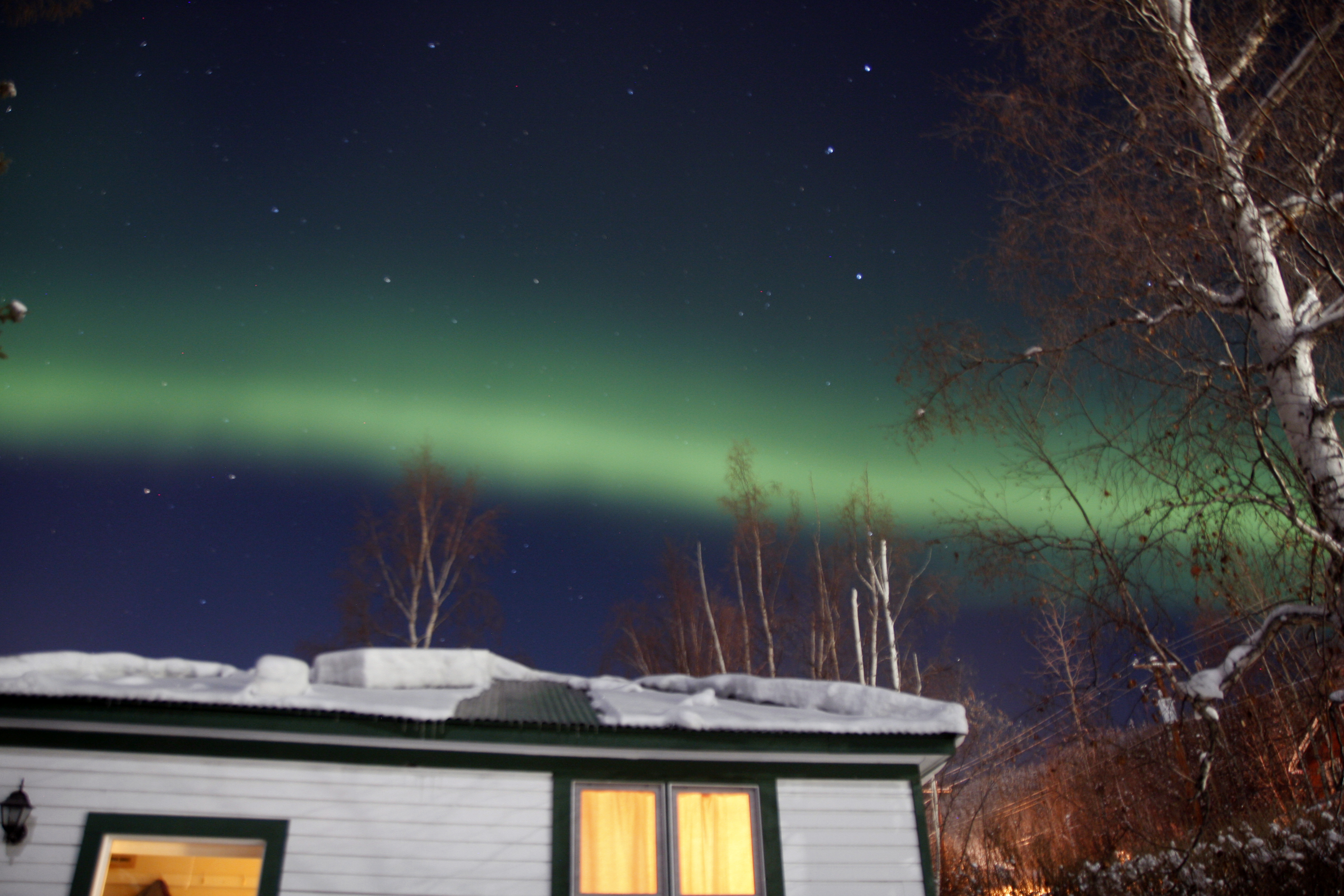
    But, at some point, I came to my senses and relearned something important. Perhaps it was the night I spent lying on my back on the frozen Yukon River hypnotized by the Northern Lights or while I was listening to Tr’ondëk Hwëch’in storytellers speak on the cultural importance of “story” or maybe when I stepped over the Arctic Circle. At some point I remembered that sometimes that thing which seems so close can’t be reached until one moves away from it.

    Sometimes to write good stories we have to stop trying to write.

    IMG_6713

    When I left Dawson the airport terminal was again packed, but this time I knew everyone. I came home with new friendships, more than one thousand photographs, and twenty-two thousand words towards a new book.


    IMG_5482

    Shelagh Plunkett is an award-winning writer and journalist living in Montreal. Her work has been published in various Canadian and American journals including The WalrusenRoute MagazineGeistThe Vancouver Sun and The Globe and Mail. In 2007 she won the CBC Literary Award for creative non-fiction and her memoir of growing up in Guyana and on Timor, Indonesia, The Water Here is Never Blue, was short listed for the Mavis Gallant Prize for Non-Fiction and the Concordia University First Book Prize. She has just returned south after three months in Dawson City, Yukon as the Writers’ Trust Berton House writer-in-residence and is now in the thick of a new manuscript tentatively titled Caught By All That’s Come Before. Follow Shelagh on Twitter and Instagram @shelaghplunkett. shelaghplunkett.wordpress.com

    Photos: Shelagh Plunkett

  • Healing, One Story at a Time by Licia Canton

    Healing, One Story at a Time by Licia Canton

    In 2012, a driver pulled up behind me while I was putting a box in the trunk of my car. He crushed my legs between the two bumpers. I was bedridden for four months, and then I started physiotherapy. Within a year I was able to do 95 percent of the activities I had done before the accident. People would ask me how my legs were doing and I would smile and tell them I was doing well. I was, physically—but I didn’t tell them that I wasn’t able to write.

    I wasn’t able to write for clients, organize events or attend networking functions. I didn’t think any of it was worth it. I had lost my drive. In fact, I had lost my desire to do anything at all. A few weeks after the accident, I had looked at the positive side of things: I had decided to finish my second book of stories; I was going to write on my laptop while in bed. But that never happened.

    My insurance agent suggested that I see a therapist. I would only be able to move forward by dealing with the trauma. I decided to try it, and I discovered that writing itself was what would cure my writing block. It’s called narrative therapy, and it changed my perspective on life.

    Vera, my therapist, asked me to do exercises in automatic writing. I had to just put words on the page without thinking about what I was writing. Then she said that I had to write about the accident in order to regain my confidence. At first, this seemed like an impossible task. If I could write, why would I be there? I could talk about the accident during therapy, but I couldn’t write about it. I didn’t want to write about it.

    Eventually, I wrote a story about a writer who was unable to write about a traumatic experience. It took me many months to be able to do that. I could not sit for longer than five minutes at a time. I worked at it early in the morning when everyone was still asleep, when I was least likely to be interrupted—and when no one would see me crying.

    As part of the therapy, I was obliged to read that first story “Because of Leonard Cohen” at every therapy session until I could read it without crying. That accomplishment was priceless. Then, the therapist asked me to read the story at a public venue as I would have done with any of my other stories. But I couldn’t fathom the thought of sharing my very personal writing in public. I come from a background where broken bones get fixed and as for the rest, we simply move on. Everyone knew that I had been in an accident. Very few people knew about the ensuing depression. It was not a topic of discussion.

    “I could not sit for longer than five minutes at a time. I worked at it early in the morning when everyone was still asleep, when I was least likely to be interrupted—and when no one would see me crying.”

    I first read “Because of Leonard Cohen” abroad, at a short story conference where very few people knew me. The story was later published in the international short story anthology Unbraiding the Short Story, edited by Maurice A. Lee. Then, I wrote more, and more. I wrote and published other pieces inspired by my accident, “In Front of the Bell Centre” and “The Woman in the Red Coat.” And I still haven’t finished writing all of the stories that I need to, and want to, write. I have a Table of Contents with the titles of all the stories that I am working on, all part of my narrative therapy. With the completion of each new story, the process is the same. I ask for feedback from several writer friends. I read it repeatedly in private until I feel completely comfortable with it. I read it to my husband and children. Then, I read it in public either before or after it is published. Now, I preface the readings by saying that the story came out of narrative therapy.

    Vera told me about Raymond Queneau’s Exercices de style (1947), a collection of ninety-nine retellings of the same story, each in a different style. Although I am no longer in therapy, I continue working on my own version of Queneau’s book: multiple literary variations of my accident and its aftermath. Just as I was not thrilled about physiotherapy and osteopathy, I am not exactly fond of this literary project—mostly because I have had to postpone other writing projects. On a positive note, however, narrative therapy has encouraged me to go beyond my comfort zone by doing other activities connected to writing that I would not have done a few years ago: guest blogging, giving workshops, mentoring other writers, writing/speaking about depression and narrative therapy, and actively seeking venues to read the writing that has come out of narrative therapy.

    I still cry every time I tackle a new story, but I always feel a great satisfaction when I share it in public. It is part of the process that moves me towards complete healing, as is this piece that you’re reading right now. In fact, I prepared my pitch for this column two years ago. I just wasn’t ready to share my experience then.


    headshotLicia Canton is the author of the short story collection Almond Wine and Fertility (2008), published in Italy as Vino alla mandorla e fertilità (2015). She is also a literary translator and founding editor-in-chief of Accenti Magazine. She has published personal and critical essays and edited nine books. She mentors emerging writers, journalists, and editors. She holds a Ph.D. from Université de Montréal and a Master’s from McGill University. See her profile in LinkedIn or the Hire A Writer directory.
    Photos: Flickr (top); Ohayon (headshot)

  • Saying Yes by Monique Polak

    Saying Yes by Monique Polak

    I am bad at saying no. As part of a better-late-in-life-than-never self-improvement exercise, I try to turn down extra work—especially the non-paying variety. (more…)

  • From the Underground: A Writer’s Life with Zines by Jeff Miller

    From the Underground: A Writer’s Life with Zines by Jeff Miller

    It wasn’t reading the classics that convinced me to become a writer. My gateway drug to the world of letters was zines—cheap, photocopied, self-published magazines filled with their authors’ reflections on the world.

    Over twenty years later I still remember some of the first zines I read in the early 1990s. There was Saucy, a thick zine from Cornwall featuring interviews with bands. There was a bilingual political zine from Hull, titled Moo in English and Meuh in French, where I first read about vegetarianism. And there was Design 816, full of personal essays, which I picked up when the author was visiting Ottawa from Chicago.

    JM image 3
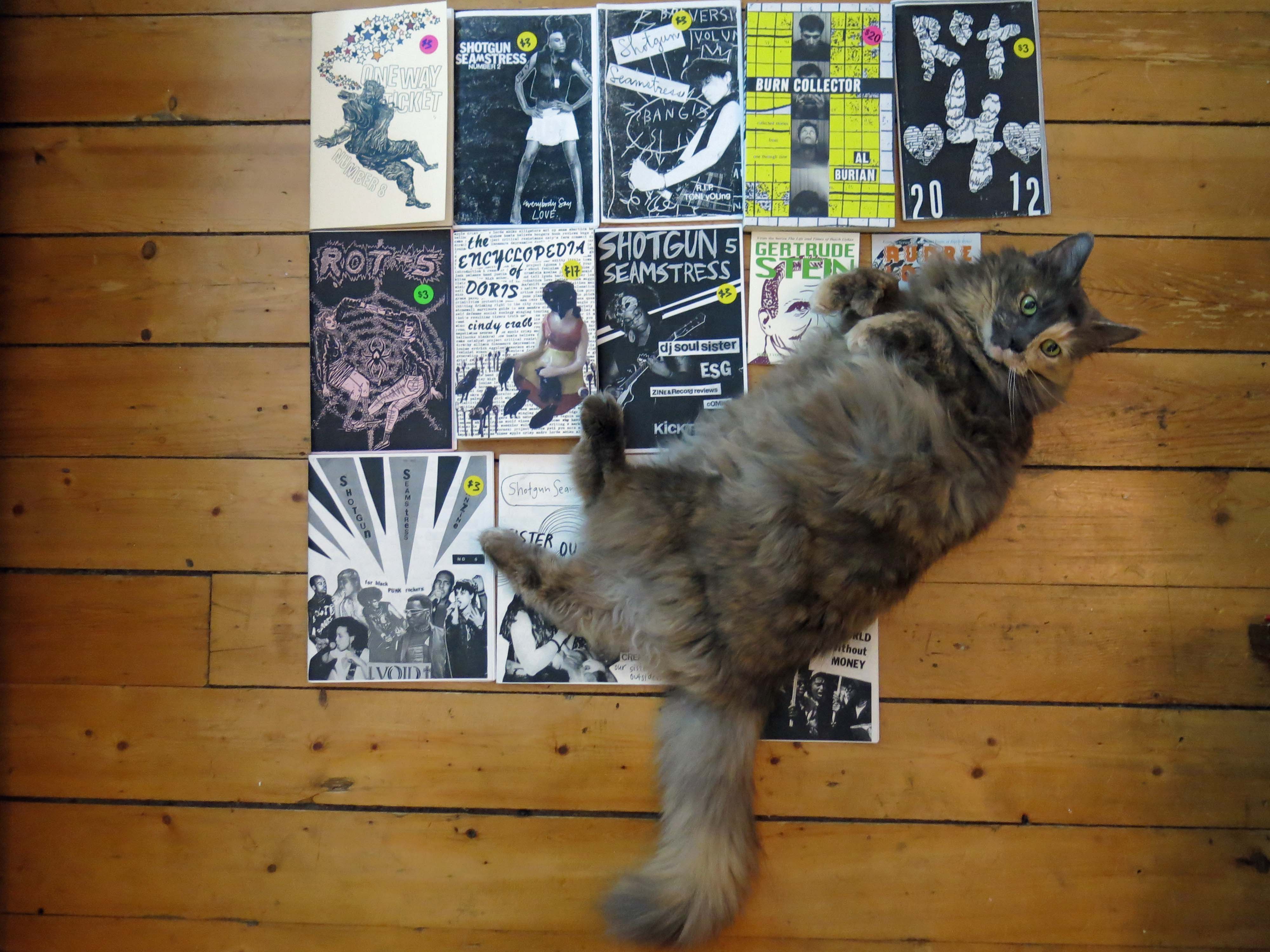
    Cats love zines too!

    From the first moment I encountered them, I became a zine obsessive. My suburban teen years were spent hunting these underground publications, picking them up on my trips to record stores and punk shows downtown. I sent large chunks of my allowance, a dollar or two at a time, to post office boxes across North America, ordering zines with titles like Dishwasher, Fuzzy Heads Are Better, Tyger Voyage, and Spunk. Needless to say, this was long before the Internet became ubiquitous.

    Coming home after school, I often found the mailbox at my parents’ house filled with literary treasures in envelopes from faraway postmarks. The zines I read covered many topics: political polemics, music, food, train-hopping, feminism, secret histories, and intimate personal narratives from the underground. I devoured them all, but I was particularly drawn to those telling true stories from the author’s life. In the pages of Cometbus, Doris, Scam, and I’m Johnny and I Don’t Give a Fuck I found compelling narrative voices that I deeply related to. Reading them felt like getting a letter from a close friend. I had tapped into a vibrant community of punk writers who crafted great stories and then cut and pasted their work together, photocopied it, and released it with no thought of gaining attention from the world of mainstream literature. These were my first literary heroes. In a time before our current memoir boom, they wrote honest and true stories full of grit and heart.

    “I had tapped into a vibrant community of punk writers who crafted great stories and then cut and pasted their work together, photocopied it, and released it with no thought of gaining attention from the world of mainstream literature.”

    I instantly wanted to make a zine and the democratic nature of the form made me feel that I could do it. Reading other zines gave me a model for how I might write my own stories and get them out into the world. I also voraciously read contemporary novels as a teenager, but unlike those books­­—perfect works with no typos or evidence of the human hand that made them—zines convinced me that I, too, could be a writer. The status of zines as unofficial publications in a time of media conglomeration made the prospect of publishing one even more entrancing. Zines were secret, precious, hard to obtain. This, along with their tactility, made them almost magical objects, even as I tattered them with frequent re-reading.

    Since its first issue in 1996, my zine Ghost Pine has been made up of true stories about my life. When I was younger I wrote about hitchhiking, long Greyhound bus rides, and visiting the cities where my many zine pen pals lived across North America. But as I got older and moved around less, I still wrote about my life in short creative non-fiction pieces, discussing things like my relationships with my grandparents, late night conversations with friends, and recollections of my high school social justice club. In all my stories for the zine I tried for honesty and hoped to improve my writing with each new issue. Over the years I have sold more than 10,000 copies. In 2010, a collection of the best stories from Ghost Pine was published by Invisible Publishing.

    JM image 2
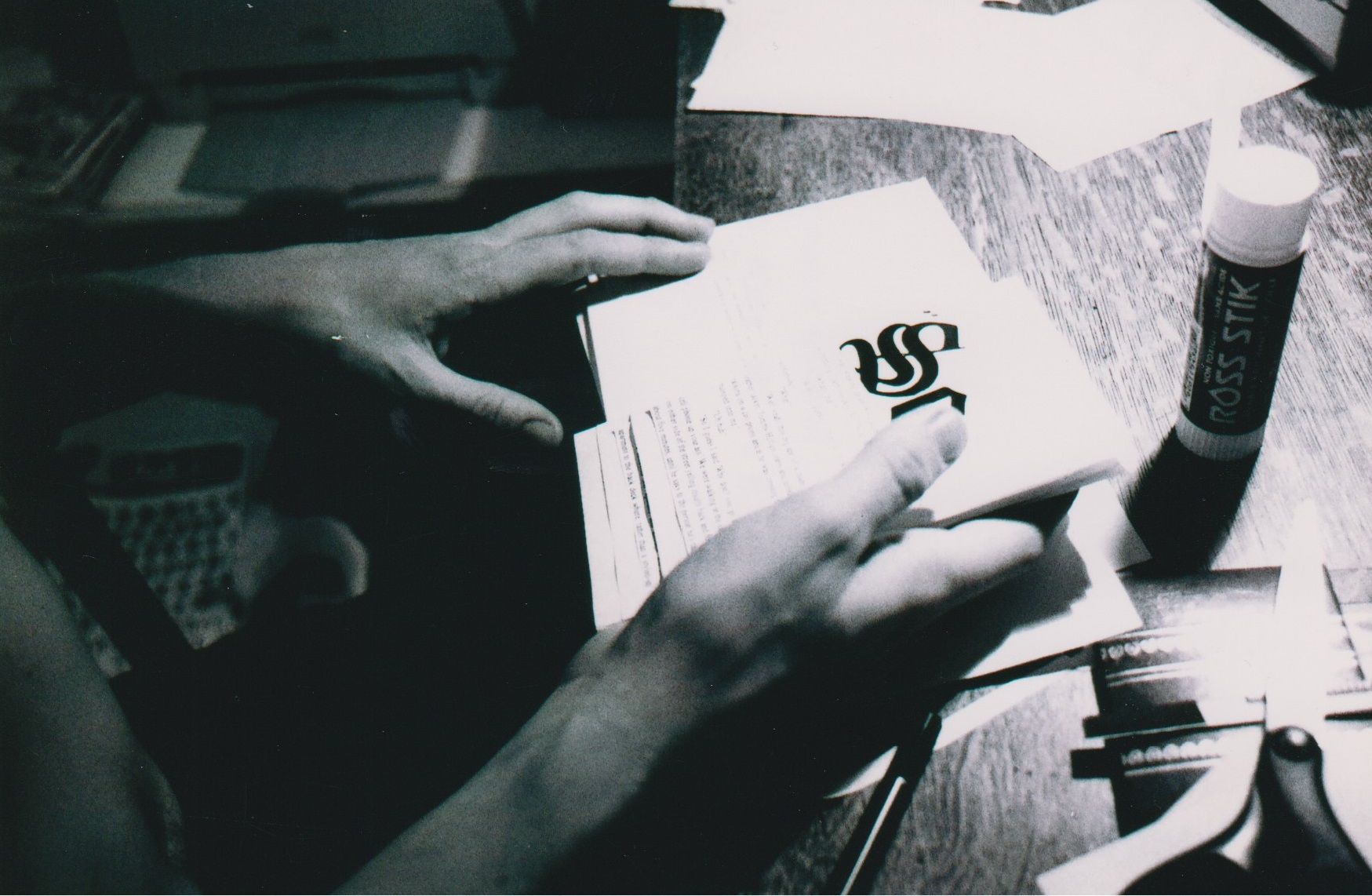
    Ghost Pine #13 (2014). Featured photo at top of article: Assembling Ghost Pine #8 (2004).

    Ghost Pine’s publication schedule has slowed from annual to once every few years as my writing practice has grown and diversified into the “overground” with formal publications, cultural journalism, creation grants and a Master’s degree. Nevertheless, the work I did on my zine over the last twenty years remains at the heart of who I am as a writer. There might be an assumption that one graduates from making zines to publishing books and other “real” writing, but I’ve put out two new issues of Ghost Pine since the book came out.

    Twenty years and fourteen issues later there is still a thrill to making a new zine. Writing and editing the stories, then doing my antiquated cut-and-paste layout (every year I make a resolution to learn how to lay it out on the computer and then don’t) and going to the copy shop to print, cut, and staple it together. I sell them at zine fairs and mail copies to my pen pals and to the people who order them online from as far away as Kuala Lumpur and Florianopolis, Brazil, often getting their zines in return.

    Slipping them into their envelopes, I’m reminded that this subcultural community that nurtured me as a young writer continues to thrive and produce amazing writing from voices that might otherwise have remained silent without this low-cost and low-pressure art form. The endurance of this feisty corner of the wider world of writing is extremely gratifying. Long live zines.


    JM headshot

    Jeff Miller has written the zine Ghost Pine since 1996. In 2010, the best stories from the zine were published as Ghost Pine: All Stories True (Invisible Publishing). His creative non-fiction and cultural journalism also appear in a number of anthologies and periodicals. He will be a CALQ Writer-in-Residence at the Banff Centre in February-March 2016.

    ghostpine.wordpress.com

    Photos: Sara Spike