Tag: writing

  • On the Back of Turtle Island Reads—by Shannon Webb-Campbell

    On the Back of Turtle Island Reads—by Shannon Webb-Campbell

    A year ago, I’d have never believed I would be asked to advocate Indigenous literatures on CBC for Turtle Island Reads. Given that I was living in St. John’s, Newfoundland, teaching and studying in the English department at Memorial University (MUN), I had no clue I’d be islanded again, but this time in Montreal. Let alone be invited to speak about Indigenous literature on national radio.

    Just over thirteen moon cycles later, after taking the first (and only) “Aboriginal Myth, Medicine, and Magic” course offered at the graduate level at MUN by Dr. Valerie Legge and co-instructor Amelia Reimer, I shared a knowing wink with Creator while sitting on the stage with my fellow Indigenous advocates. As a student of literature, I came out of the academy and into the public with Métis poet and musician Moe Clark, who advocated for Leanne Betasamosake Simpson’s This Accident of Being Lost; and Anishinaabe comedian and writer Ryan McMahon, who heralded Eden Robinson’s Son of a Trickster. I trumpeted Carol Daniels’ novel, Bearskin Diary.

    “I shared a knowing wink with Creator while sitting on the stage with my fellow Indigenous advocates.”

    We gathered at Tanna Schulich Hall at McGill University on September 20, days before the fall equinox. Our host and moderator, CBC’s Waubgeshig Rice and Nantali Indongo, facilitated a vital conversation spanning issues of storytelling, trauma, healing, and the need for Indigenous literatures. Truthfully, all three of us advocates could have sung praises for one another’s texts, as each book is made of powerful medicines and provocative storytelling, and each one embodies Indigenous knowledge systems.
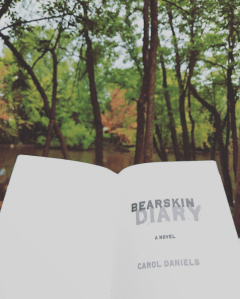
    Bearskin-diaryPart of the role of advocates is to select a book, and each of us picked texts that spoke to our own craft and the relationship to our own Indigenous being. Clark was drawn to Simpson’s This Accident of Being Lost because of its poetic and sonic qualities. Much like Simpson’s work, Clark’s music breaks and beckons to tradition. Simpson doesn’t adhere to the infrastructure of the colonial English language. She avoids capitalization. Sometimes she writes in Anishinaabe, and doesn’t feel it necessary to translate. Clark approached her pitch in a similar fashion.

    McMahon highlighted the fact that each of the authors were First Nations women: “We’re in a moment now for Indigenous women artists. We need to not forget that.” He pitched Robinson’s Son of a Trickster with his trademark humour and intelligence.

    As I first encountered Daniel’s Bearskin Diary when reviewing it for The Malahat Review last year, I recognized how much the novel has shaped my own work. Not only did I feel a strong kinship with the novel’s protagonist, Sandy, a Cree journalist and TV reporter for CBC who comes into her Indigenous culture through telling other people’s stories, but also with the book’s relationship to the ongoing genocide of Canada’s Missing and Murdered Indigenous Women, Girls, and Two-Spirits.

    “I feel a strong kinship with … the book’s relationship to the ongoing genocide of Canada’s Missing and Murdered Indigenous Women, Girls, and Two-Spirits.”

    My own work spans genre, as I began my writing career as a journalist. Much like Sandy, I became comfortable asking questions and conveying the narratives of other people’s lives. Criticism has always been equal parts discovery and intellectual engagement. It’s a place to find and be found. From there, I became a poet (Daniels writes poetry, too). My forthcoming book, Who Took My Sister? (BookThug 2018), is a collection of poems and texts that hold and carry trauma. These poems are contemporary poetic strategies, both haunting testaments and a mix of Indigenous medicines. Who Took My Sister? is a rally cry, a space for raising awareness and cutting truths. It bears witness to the national genocide of Indigenous Women, Girls, and Two Spirits, whose lives are cut short due to the colonial agenda.

    “Criticism has always been equal parts discovery and intellectual engagement. It’s a place to find and be found.”

    Who Took My Sister? is also being transformed into a touring classical music piece for violin and piano composed by Melissa Hui, and will be performed by Indigenous Inuk artist Laakkuluk Williamson Bathory in spring 2019.

    Poetry has been an ongoing journey with many twists and turns. Recently, it’s led me to writing plays. I’ve been working on The Landless Band, a theatre show about a character who grows up in the suburbs, then learns she’s Indigenous. Tying back to Daniel’s work, while her protagonist Sandy was visibly Indigenous with darker skin, her storytelling techniques overlap with mine: we both draw from a personal narrative and explore it through characterization. The Landless Band is being presented in a workshop form at LSPU Hall in St. John’s, Newfoundland in spring 2018 by Eastern Edge Gallery.

    “The most exciting writing in this country is rooted in Indigenous writers, playwrights, and poets.”

    While Turtle Island Reads promotes Indigenous literatures, it also honours the advocates and their practice. Having only recently arrived in Montreal, to find myself in a room full of avid readers who are excited about Indigenous writing was an honour. It’s a testament that we’re ready to step beyond the canon, and unpack Canadian literature. We’re making room for new voices. Perhaps I’m biased, but the most exciting writing in this country is rooted in Indigenous writers, playwrights, and poets.
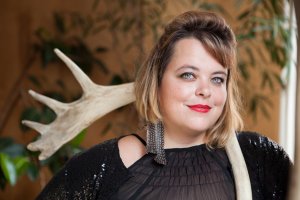

    Webb-Campbell by Dayna DangerShannon Webb-Campbell is a mixed Indigenous (Mi’kmaq) and settler poet, writer, and critic currently based in Montreal. Her first book, Still No Word (2015), was the inaugural recipient of Egale Canada’s Out in Print Award. She was the Canadian Women in the Literary Arts (CWILA) critic-in-residence in 2014, and sits on CWILA’s board of directors. Her work has appeared in many anthologies, journals, and publications across Canada, including the Globe and Mail, Geist magazine, The Malahat ReviewCanadian Literature, Room, and Quill and Quire. In 2017 she facilitated a book club-style reading of The Final Report of the Truth and Reconciliation Commission of Canada at Atwater Library. Who Took My Sister? is her second book.

    Photo credits: Courtesy of the CBC (header banner); Shannon Webb-Campbell (Bearskin Diary); Dayna Danger (headshot)

  • Writing Between Languages—by Veena Gokhale

    Writing Between Languages—by Veena Gokhale

    What do you do when a lot of the reality you portray in your fiction does not take place in English? Easy answer: you sprinkle your prose with words from other languages. As it turns out, this is not without its problems.

    Growing up in India, I learned my first language, Marathi, at home. I was sent to an English school right from kindergarten, where I had also learned Hindi, the language of the state I lived in. In the Indian Constitution, Hindi and English are designated languages of the Central Government. Presently, India has twenty-one other “official” languages. Generally speaking, every time you cross a state boundary you are in another “language territory.”

    English, though not my mother tongue, is nevertheless my “principal” language. I was in my twenties when I came across an essay by a Hong Kong-born writer of Chinese origin who described English as his principal language. I cannot thank him enough for giving me a way of describing the place of English in my life!

    When I became a journalist, I worked for an English-language magazine in India. But I had always loved mixing languages, using non-English words when I spoke in English. As a writer, I exuberantly introduced some Hindi words into my English articles. This was around the time that Salman Rushdie “decolonized the English language,” as he put it, through the innovative use of multiple languages that included sprinkling Hindi and Urdu words throughout the English text of Midnight’s Children, his groundbreaking Booker Prize winner. He did not translate the words.

    “But I had always loved mixing languages, using non-English words when I spoke in English.”

    I, on the other hand, was immediately challenged by my editor when I employed Hindi words. She came from southern India and knew little Hindi. Reluctantly, she allowed me to retain a few words, with the English translation in brackets.

    Fast forward to Canada in 2012. Guernica Editions had accepted my manuscript entitled Bombay Wali and other stories. Characteristically, the book contained some Hindi, Urdu, and Marathi words. I suggested putting an asterisk next to the words and explaining them in footnotes. My editor, Michael Mirolla, rightly protested. Some pages then would have had five asterisks or more! A solution was found by explaining a word here and there in the main text itself and adding a glossary explaining other words and phrases.

    In my forthcoming novel, Land for Fatimah, the protagonist takes a posting in Kamorga, an imaginary east-African country. This time, I introduced a made-up language for Kamorga, and named it Morga. Despite knowing five other languages to some degree, Anjali, the Indo-Canadian protagonist, is struggling with Morga.

    I used words in Morga in much of the dialogue. I italicised the “foreign” words and phrases and put the translations right next to them. For example: Kabari ani? How are you? Hoori. Good. Perhaps this is awkward and breaks the not-to-be meddled-with flow of the text. But to hell with it!

    Why this insistence on using words from other languages? As I explain in a note on language in Land for Fatimah, “I strongly believe in using non-English words and phrases in my fiction to bring home to the reader, directly and tangibly, the fact that s/he is reading about a non-Anglo culture.”

    “Why this insistence on using words from other languages?”

    There is a much-quoted speech by Indian freedom fighter, Bal Gangadhar Tilak: “Swaraj (self rule) is my birthright and I shall have it.” This original quote has gone around translated as “Freedom is my birthright and I shall have it.”

    Why couldn’t they have let the word “swaraj” be? Some might argue that keeping “swaraj” is awkward and unnecessary, and that freedom resonates more than self-rule. But such misquotation can be seen as a form of linguistic colonialism.

    Inspired by Tilak, I have my own writerly warrior cry: multiple languages are my blessed heritage and reality, and I shall flaunt them! Back when I lived in India, I loved switching between English and Hindi in mid-sentence. Now that I live in Montreal, I use French words when speaking English. Old habits die hard!

    I end Land for Fatimah’s note on language with these words: “Long live the diverse languages of the world! They bring us unfathomable riches.”

    I would love feedback on how other writers deal with the use of non-English words in their text and how readers respond when they come across them. Thanks in advance. Merci. Shukriya.


    VG wt flowersVeena Gokhale, an immigrant shape-shifter, started her career as a journalist in Bombay. This tough, tantalizing city inspired Bombay Wali and other stories, published by Guernica Editions in 2013. Veena first came to Canada on a fellowship, then came back again to do a master’s degree. After emigrating to Canada, she worked for non-profits. Land for Fatimah (to be published in 2018) is partly inspired by the two years she spent working in Tanzania. Veena has published fiction and poetry in anthologies and literary magazines and received writing and reading grants. veenago.com

    Photo credit: Shawn Leishman (header banner)

  • ‘Just Do It’ for Writers—by Carolyne Van Der Meer

    ‘Just Do It’ for Writers—by Carolyne Van Der Meer

    The thing about writing fiction is you need to know what kind of writer you are. The kind who needs a plan, or the kind who doesn’t. I was convinced I needed a plan. Lori Weber taught me I didn’t.

    Earlier this year, I was chosen as one of the mentees in the QWF’s annual mentorship program. The goal was to work on my young adult fiction novel with Lori, a prolific children’s writer and YA fiction novelist. I’ve been at this novel—my first—for a few years. I’ve worked with other mentors, attended workshops, and been part of writing groups. But I was stuck. And Lori, using wisdom gleaned from writing ten books, unstuck me. It has been euphoric.

    Prior to beginning the mentorship in February, I handed more than 100 pages over to Lori, written over the last three years. Chapters, scenes, flashbacks, character sketches—and a plan. A plan that outlined my novel in thirty-three chapters. This novel was planned to the hilt. Every move was carved out. So why couldn’t I write it?

    “I’ve been at this novel—my first—for a few years. I’ve worked with other mentors, attended workshops, and been part of writing groups. But I was stuck.”

    At our first mentorship session—a two-hour foray into scones, homemade jam, and Earl Grey—Lori asked me to tell her my goals for the four-month mentorship. Of course I wanted to advance my novel. But I wanted to talk about craft. I wanted to pick her brain. Hey, here I had, right in front of me, a very fine YA novelist, a successful one with some ten books to her credit—one, Yellow Mini, even written in verse. I’m a poet first—so Lori became my hero pretty fast. I wanted to understand how she does it. How does she hammer out all those words and weave them into a believable story, one that young people will not be able to put down? I wanted to know her secret.

    “This novel was planned to the hilt. Every move was carved out. So why couldn’t I write it?”

    It was simple: drop the plan.

    What? Yes, I had heard right. Get rid of that bloody plan.

    So as much as our mentorship together was about writing, it was also about teaching me something I didn’t at first believe I needed to learn—and something I doubted I was capable of learning. How?

    Well, she asked me, why did this novel need to be mapped out so tightly? I had a general idea, didn’t I, of where I wanted to go, so why not run with that? It didn’t seem to me to be enough. But Lori had plenty of examples, the most significant one being that she was hard at work on her eleventh book, one that she was mapping out—as it got written—on the wall in multi-coloured post-it notes. The plan didn’t come beforehand: it was being developed as she wrote.

    This was a completely foreign notion to me. I was used to writing poetry, where the idea could be banged out in a few minutes. I knew from minute one what my storyline would be and I could get it out in one sitting. Of course, then I would spend hours reworking and reworking—until I had something that I was convinced was jolting. Something that would move the reader in some way. And then Lori asked me the question that changed everything: why was writing my novel any different?

    Of course I had lots of reasons for her: because I didn’t know what the outcome would be; because I didn’t know how to deal with the passing of time; because I need to describe what happens in every second of every minute; because I need a plan to get from A to B.

    You just believe, she said. And you write. It was like the Nike slogan. Just Do It.

    Over the next few months—over many cups of Earl Grey and too many scones, Lori taught me how to “let go” and believe that I don’t need a prescription. If I had a strong general notion of the plot and of the various climaxes on the plotline, I could simply start writing and gently push myself towards the outcome. Her mantra of “just write it” became my own. Simple but true. Lori kept telling me that if I didn’t write it, there would be nothing to work with, nothing to fix. Just like the poem I could write in a few minutes and rework and rework.

    “Her mantra of ‘just write it’ became my own. Simple but true.”

    So apart from some very concrete accomplishments, such as a general plot overview, a complete character tree, the necessary historical research—and five completed chapters—I have come away from this mentorship with a new skill: being able to let go and just believe. Lori showed me how to work with intuition, energy, even faith. She claims she doesn’t know what will come out until she writes. So writing is the key. I believe her now. And I got rid of the plan. Really.


    If you are a Quebec-based English-language writer and you’d like to apply for mentor, or to be a mentor, visit the call for applications for the 2018 program.

    Carolyne Van Der Meer-4308

    Carolyne Van Der Meer is the author of Motherlode: A Mosaic of Dutch Wartime Experience. Her second book, a collection of poetry called Journeywoman, will be published by Inanna this fall.

    Photo credit: Bassam Sabbagh (headshot)

  • How Do I Research and Write About My Subject When There’s No Archive?—by Linda M. Morra

    How Do I Research and Write About My Subject When There’s No Archive?—by Linda M. Morra

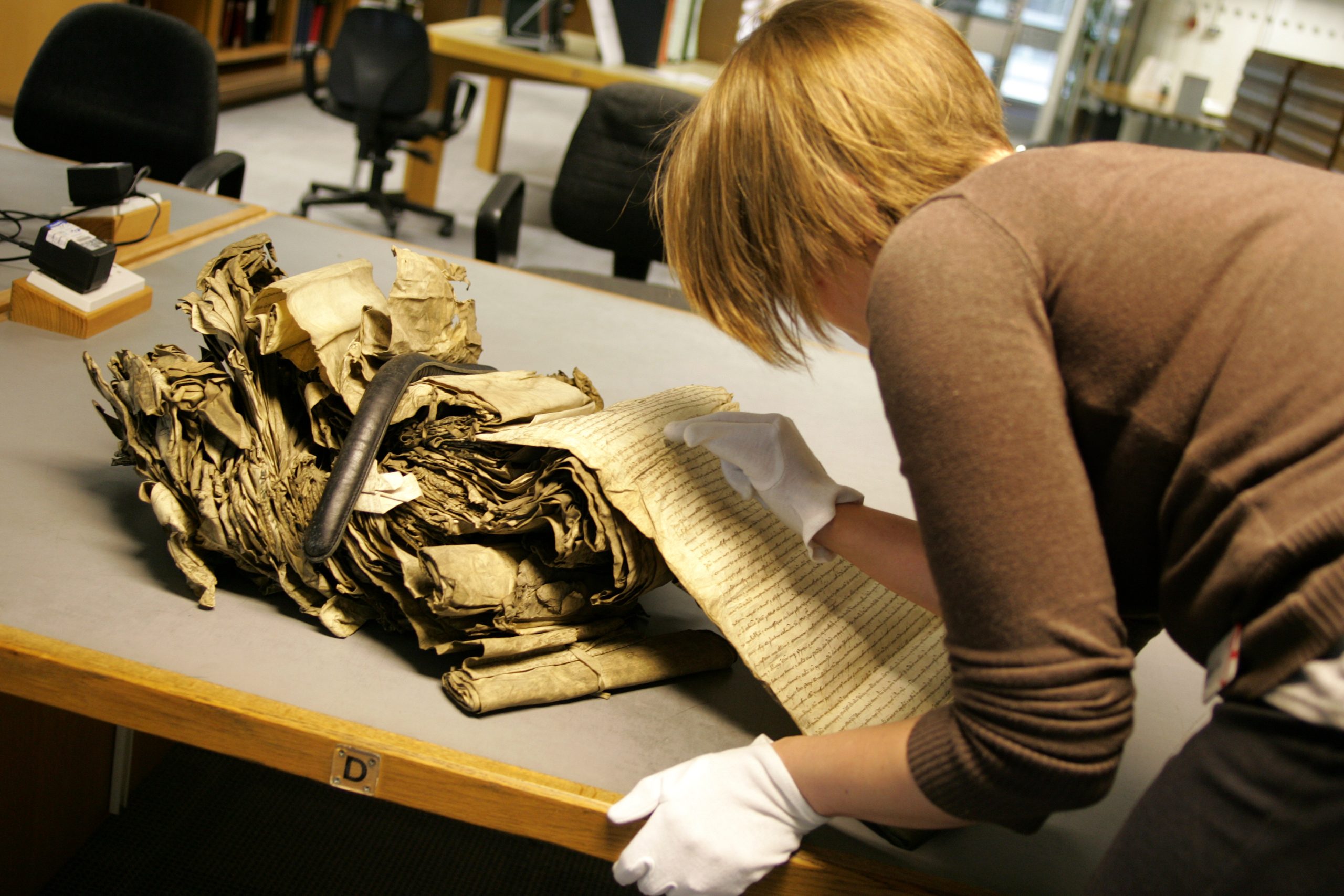
    When perusing the scrapbook of a Canadian female writer and artist, I find a twig of cedar clipped to its pages. Later, I read her handwritten letters, which reveal that the twig was exchanged as a token of affection between correspondents. I have been researching this writer for over a decade, and her archives have undergirded three of my books—a real gift, when I know that women’s archives are often scarce, if they exist at all.

    “But how do I research and write about my subject when there’s no archive?” This is a question I’m often asked because of the frequent lack of material about women’s lives. The answer is layered, multidirectional.

    I.

    Perhaps there is an archive—just not one in an official, state-sanctioned place, such as a university, museum, or library. There are materials; you just haven’t found them yet. You have to go beyond formal institutions and ask surviving family members of the subject in question—sometimes more than a few times. And you have to consult with documents in out-of-the-way places. The latter sometimes means borrowing someone’s truck—or hopping into a stranger’s—and carrying a pocket knife along with your laptop, just to be sure you’re going to be okay.

    “Perhaps there is an archive—just not one in an official, state-sanctioned place, such as a university, museum, or library.”

    II.

    How do I research and write about my subject when there’s no archive? Sometimes you don’t yet have access to the archive, so you have to know how to ask. You have to be there at the right time and the right place and the right day and ask the right person. (Surely, not that guy? Yup, that guy.) Sometimes it means drinking a Guinness for breakfast because that was what was offered to you, and you don’t want to be rude, and you were never one to back down from a challenge. Then it means waiting until you’re headed towards being more than just a bit tipsy, even after the whole omelette you ate for good measure, and then it means asking right then for permission to access files. Who knows if you slurred your words when you asked? That’s not on record anywhere. Sometimes that’s what it takes to gain confidence, and not just your confidence to ask for permission, but also his: he needs to know you’re a worthy candidate for permission. Drinking a whole Guinness at 9 a.m. apparently qualifies you.

    III.

    How do I research and write about my subject when there’s no archive? At other times, the archive is stashed away in a basement, hidden from prying eyes, waiting for daylight—or perhaps, you tell yourself optimistically, waiting for you. And accessing it takes earning trust, but not by drinking beer this time. No, this time it means taking all kinds of precautions: reading documents, preparing documents, writing documents, rewriting those documents, and rewriting them again. It means signing contracts, and trying to do all manner of intellectual calisthenics to be sure you’re in top form to handle this one just right. Oh, you’ll still get it wrong—or, at least, your copy editor will—but it won’t matter. It seems you were doomed not to get this one right. When you work with an archive that no one even knew existed, a misstep can happen in spite of your best efforts.

    “It seems you were doomed not to get this one right. When you work with an archive that no one even knew existed, a misstep can happen in spite of your best efforts.”

    IV.

    How do I research and write about my subject when there’s no archive? Maybe the archive isn’t a tangible thing, such as a document or photograph. My dear colleague and friend, TL Cowan, researches cabaret. A performance is an elusive thing, but someone’s memories about one night can help you reconstruct it; recollections about the scene tell you something about what a performer might have been trying to accomplish. Many witnesses recounted how a Kahnawake poetess at the turn of the century wore a stereotypical “Indian dress”—a short little buckskin number—before an audience of white men. Titillating, you might think, until you read the fiery tone of her lyrics and understand that where and how she performed her work added value and meaning to it. Then you realize she was giving these men unmitigated shit for their assumptions of superiority, and for the violence wrought upon Indigenous nations.

    V.

    How do I research and write about my subject when there’s no archive? Consider archival deposits that may not seem to have anything to do with your subject—at least, not at first. The Royal Canadian Mounted Police files offer one example. Maybe you’re not interested in the RCMP. Perhaps they’re not exactly your cup of military tea. (I personally prefer espresso, if it can be had.) But sometimes you may want to drink that tea because of what you might learn. The RCMP, as it turns out, spied relentlessly on women activists in the 1970s. They have files upon files on feminist associations and meetings. You don’t have to like RCMP tactics, but reading their records will reveal a lot to you about these women activists. And, later on, you can still drink your espresso.

    VI.

    How do I research and write about my subject when there’s no archive? Have you considered different searches on the internet? Ah, the digital world, that mysterious place that consistently reminds me of the ocean, which washes up a wealth of material one day and is a seemingly flat, calm, and inscrutable surface the next. What lies underneath that surface? If you just bait the right hook, what will you draw up? Sometimes the hook dangles there, brings in nothing much—an old shoe, candy wrappers, and some algae. You suppose it’s possible you can reconstruct something from the old shoe. Then, at other times, you find a whale, and you have no idea how to fish for whales. Befriend it, perhaps? Yes, that’s better, and don’t turn your back on it while it frolics in the harbour. How did that whale get there? You download everything you find that day, because tomorrow it may swim away back into the ocean, and only surface again with a whole new set of research terms, whatever those might be.

    “Ah, the digital world, that mysterious place that consistently reminds me of the ocean, which washes up a wealth of material one day and is a seemingly flat, calm, and inscrutable surface the next. What lies underneath that surface?”

    By now, you’ve tried everything you know. What do you have left? You may have found material completely unrelated to your current subject. A postmark, say, that proclaims “God Bless America” or “Help Retarded Children.” You wonder: has anyone written about these postal slogans? Your imagination begins to suggest a future project.

    UBC Archives Feb 22 2016 402_blurred

    Gather these materials. Delight in the wealth of all that’s left behind—from twigs to postmarks to letters. Leave your own trail, to form in effect a new archive—a gift for another generation of researchers. Finally, remember to call upon your own imagination. That has a peculiar and unaccountable wealth of its own. Don’t forget to visit that archive, ever.


    Linda-Morra-e3f6691b87ef626a8515ff84fa924af0Linda M. Morra is a professor of Canadian literature and Canadian Studies at Bishop’s University. Her book, Unarrested Archives (UTP 2014), was shortlisted for the 2015 Gabrielle Roy Prize in English; her edited edition of Jane Rule’s Taking My Life (2011) was a finalist for the LAMBDA prize (2012). She is the current president of the Quebec Writers’ Federation.
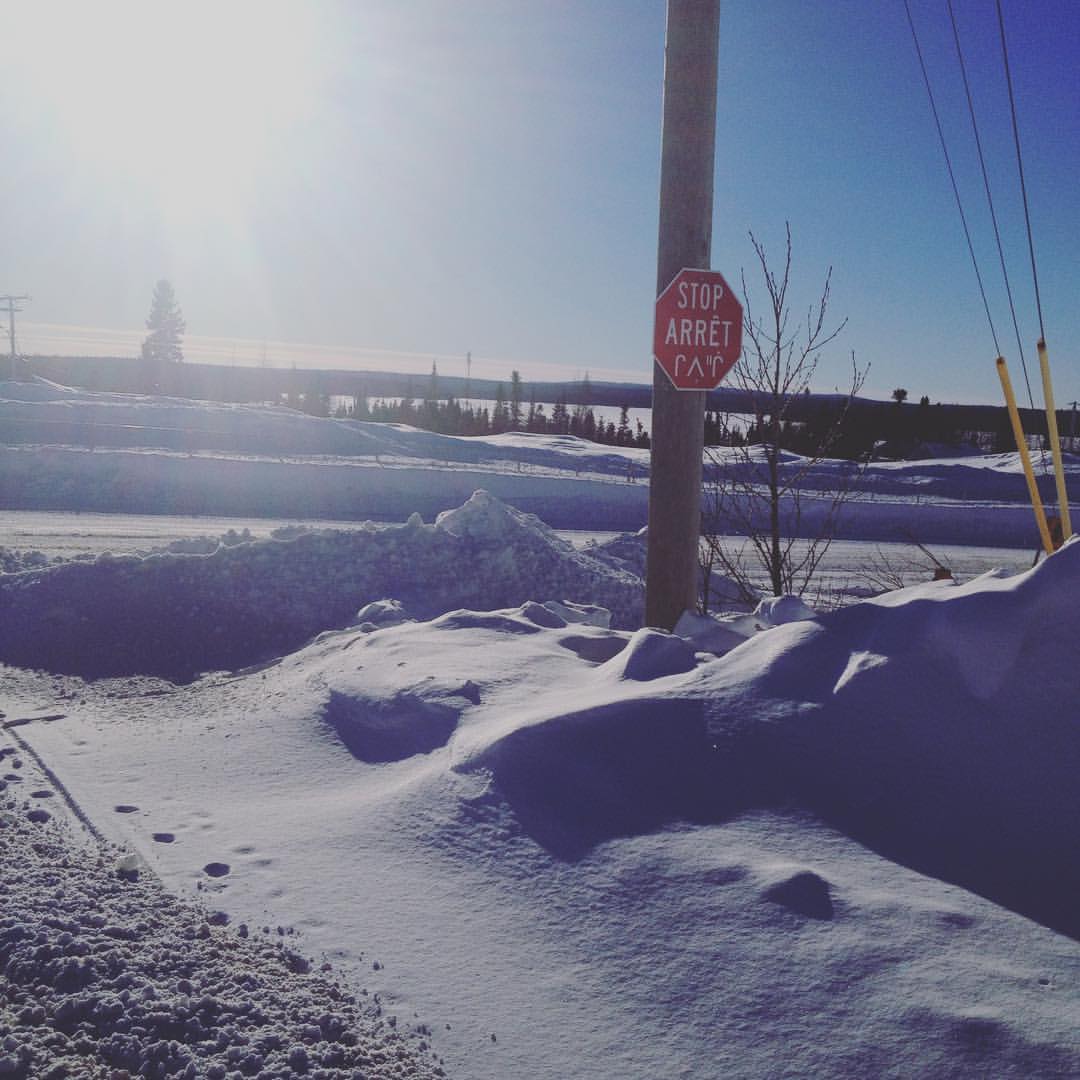

    Photo credits: The National Archives (UK) [CC BY 3.0], via Wikimedia Commons (top banner); Linda M. Morra (postmarked envelope)

  • Transcendence—by Francine Cunningham

    Transcendence—by Francine Cunningham

    I had the privilege of being an artist in residence in Mistissini, a community in northern Quebec, this February and March. The community was small and welcoming; the snow, on the other hand, was otherworldly. There were mountains of it piled and strung along the road to the school, like a miniature version of the Rockies I am used to. While I struggled with the overwhelming volume of the white stuff, I welcomed the natural beauty of the land, the quiet of the nights, and the stillness that comes from being outside the city. With nothing to distract me I was able to spend hours every night writing and painting. I read something like ten books and slept deeper than I have in a long time. It was a treat to turn off my email for six weeks, not take on any additional contracts, and really focus on my writing and visual art. I was teaching youth how to integrate their visual art with their writing through zines, so it was the perfect time for me to spend some time doing the same.

    16463091_10154140278245286_1071419733135569396_o

    The Mikw Chiyâm arts program was commissioned by the Quebec Cree School Board in 2015 and has just finished its second successful year. It brings together artists and students, the hope being that by creating a safe and creative space, students will be inspired to come to school more often and have a more positive experience once there.

    I am an Indigenous writer, artist, and educator, and have been working with Indigenous youth for over ten years. I have been a part of many different programs that use artistic practice as a way to intercede and help guide students onto a path that will give them confidence and knowledge so they can succeed in the world. The thing I hear most from students is how much they wish that they, as budding artists, were treated with the same level of care and given the same number of opportunities as in the sports or science concentration programs. Having an arts concentration program inside of a high school is remarkable; having one that has the level of support of Mikw Chiyâm is something I have never seen. It is literally making opportunities for young artists that they would not get otherwise.

    Often the arts can go unrecognized as a valid life path for a young person, but you just have to look to who the people are that are revitalizing our Indigenous communities and you will see artists at the forefront. When working with youth, Indigenous or not, I try to help them infuse their work, whether it’s fiction, poetry, or non-fiction, with a spark of who they are and their own unique point of view, with their own experience, tradition, and culture. Whether that takes the form of simply setting their dystopian dramas in their own community, or adding in bits of their language, or having characters that speak and act like them and their friends, these sparks are what makes their writing so unique.

    “I try to help them infuse their work, whether it’s fiction, poetry, or non-fiction, with a spark of who they are and their own unique point of view, with their own experience, tradition, and culture.”

    Growing up, I never read a story from a viewpoint that felt like my own: that of someone considered white passing, who grew up off the land, was raised in the city, yet is still Indigenous. I’ve found in my work with Indigenous youth that many are craving a varied point of view in the stories they read, something different than the stories they have thus far been presented with. There is a shame that comes with feeling like you are disconnected from your community. When you don’t know your language. When you can’t answer all the questions from non-Indigenous people. There is a shame that can infect a person when you aren’t what you see in movies, in stories—when you aren’t a real “Indian.”

    If not treated like a valid feeling, this void only serves to make youth feel more alone, more different, when in reality they have a whole network of people around them who feel the same way. Opening up space, letting discussion flow through these gut-wrenching topics, is so important. Oftentimes this can be the first time they’ve been allowed to talk about such things. I have found that once you break down those thick walls a flood of words come out. And eventually they land on the page. And they become something more than art. They transcend the writer. They help. They heal.

    “Once you break down those thick walls a flood of words come out… They transcend the writer. They help. They heal.”

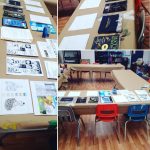
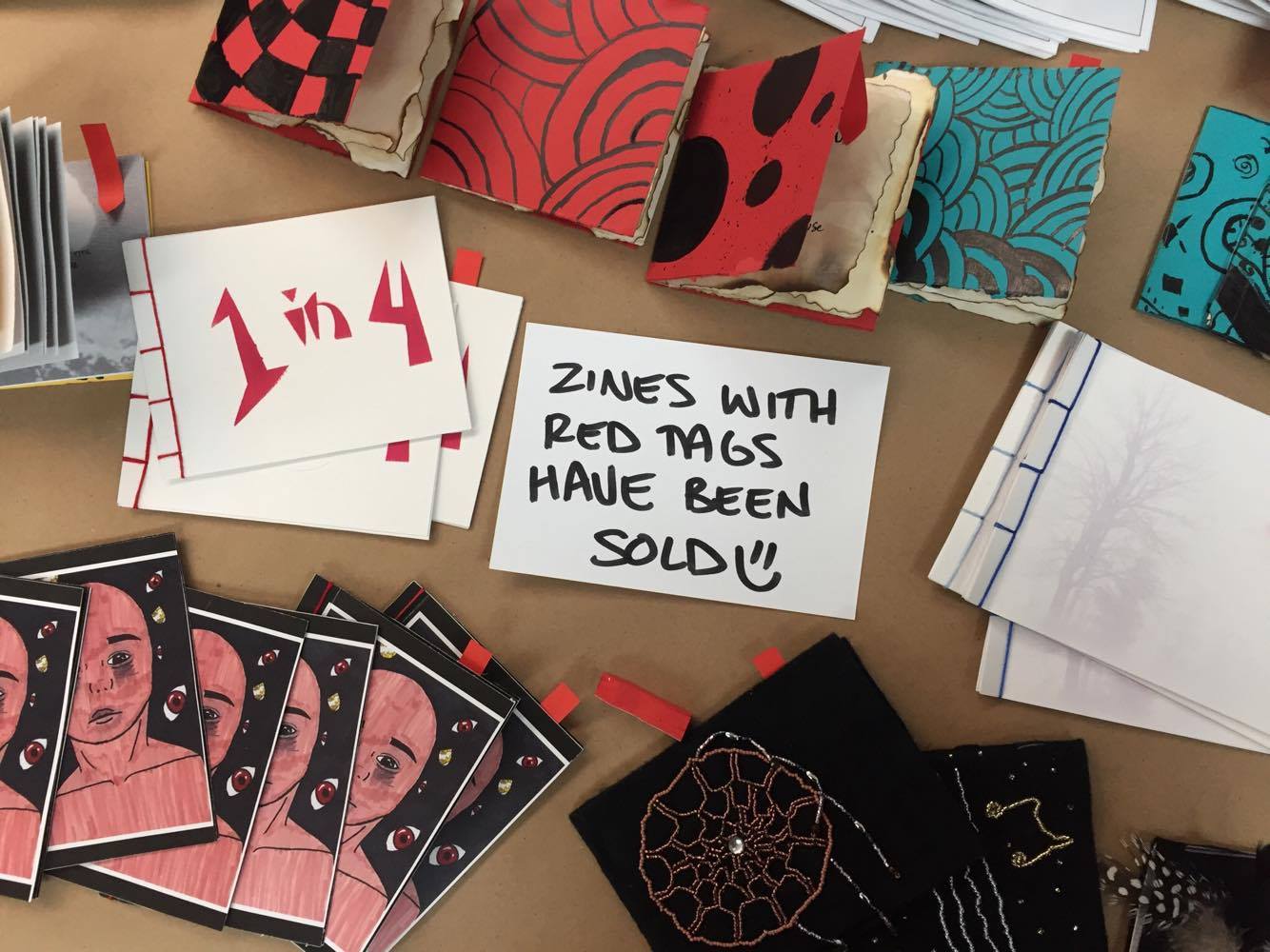
    The zines that the students created were powerful. They tackled issues like sexual abuse in the community, the stigmatization of mental illness, loneliness, and identity. These stories were told through humor, visual art, prose, and end-of-the-world disasters. At a final celebration night, we invited the community to come see the students’ work. For weeks, I had been telling them that people would buy their zines, that people other than me cared about what they were writing. The students wouldn’t believe me.

    Right before we opened the doors to let people in, they again tried to let me down easy, telling me not to get my hopes up, that no one would come and that was okay. They were trying to protect my feelings because I was so excited. But the community did come out. They read through all the zines, and by the end of the night we had sold out of everything we had created and made over five hundred dollars. The students were shocked. I was elated. I knew their words were valuable, that they were worth listening to. And now they had the proof.

    16998859_1686364578047373_2753448752955219953_n17015651_1686364321380732_2066677641393624379_o


    Headshot 2

    Francine Cunningham is a Canadian Indigenous writer, artist, and educator. Her creative non-fiction has appeared in The Malahat Review, the anthology Boobs: women explore what it means to have breasts (Caitlin Press), and more. Her fiction and poetry have appeared in The Puritan, Joyland Magazine, Echolocation Magazine, The Maynard, and more. She is a graduate of the UBC Creative Writing MFA program and a recent winner of The Hnatyshyn Foundation’s REVEAL Indigenous Art Award. You can find more about her at www.francinecunningham.ca.

    All photos in this piece are by Francine Cunningham.

  • How to Get Out of the Slush Pile—by Rachel Thompson

    How to Get Out of the Slush Pile—by Rachel Thompson

    I yawn and keep flicking through my virtual stack of submissions. I need one more piece that will not only fill a few pages in the next issue but also resonate with the writing I have already accepted for the magazine.

    A short story pops up; a few lines in and I’m wondering: is anything going to happen? Flick to the next one, and words start to blur together. Is this the same story, or another one? Why does it sound like everything I’ve already read today? I click, click, click, until I land on one that startles me at the first line. I read on. And on. Now I’m alert, driven to read to the end. I scan the cover letter and see it’s submitted somewhere else at the same time; a competitive voice in my head says, Mine first! I hit the “accept” button.

    Reading, accepting, and rejecting lit mag submissions has taught me so much about writing and publishing.

    For one thing, I’m totally over the idea that if my writing doesn’t make it into an issue of a magazine, it means they think my work is no good. Editors get many, many submissions: far too many for us to print. The people reading these can be tired (see above) and overlook things. We try to give it our best attention, but at our drop-dead deadlines, we have to make quick and cold choices.

    Writing that doesn’t begin at a critical moment upon which everything else hinges, or with an opening line that raises more questions than answers, is unlikely to hold my attention for long. You never quite appreciate in media res until you’ve read hundreds of submissions that languish in the beginning. If you’re writing narrative work, and you don’t open with an action or decision point, you’re going to lose me. Consider the opening line of Rebecca Fisseha’s story, “What Grows”[1]:

    “Once, upon a day of politics trouble, I saw my mother burying her gold in the vegetable and herb garden at the back of our house.”

    After just one sentence, I have so many questions. What is the politics trouble? Who calls it “politics trouble”? Why is the mother burying the gold? Where is this home? When is this trouble happening? When an opening line makes me ask at least three of the five W’s, I feel as if I have struck gold. No wonder I picked her piece for Room issue 38.1.

    More often I read submissions that start by explaining things to me—where we are, when we are, who these people are, etc., etc., when the most compelling narratives make us curious and allow us to savour the discovery of these answers. There’s a simple explanation for why this happens. New writers just don’t have the experience to know how many drafts professional writers go through before publishing. (It’s more than most think, likely by a factor of ten.)

    “You never quite appreciate in media res until you’ve read hundreds of submissions that languish in the beginning.”

    Speaking of explaining, in cover letters I find writers are often tempted to tell me what their writing is about, and why it’s important for me to read it. But I’m going to read it anyway. You don’t need to convince me. And telling me why I should read something I’m already going to read puts me off a bit. Let your work show me what it’s about. Let the cover letter just deliver the facts we ask for.

    Writers often ask me if simultaneous submissions are cast in a negative light. Quite the opposite. It’s more likely to compel me to accept something I like more quickly and it has never had the effect of turning me off of reading something.

    Another thing I’ve learned is that the earlier you submit in a reading period, the likelier your piece will make the cut. Remember how I said earlier I was looking to fill not only a space but to find a piece that would join in a conversation started by the other pieces I’ve already accepted? We truly do sometimes turn down some of the best work because it a) either repeats themes, styles or settings in work we’ve already accepted for the issue, or b) is too long to fit into the space we have left. Because most magazines will read the work in order of receipt, if your piece is in an early stack and we like what you’re doing, there’s a better chance we’ll make other pieces fit around your writing than vice versa.

    “New writers just don’t have the experience to know how many drafts professional writers go through before publishing. (It’s more than most think, likely by a factor of ten.)”

    Start in the middle. Revise, revise again, revise better. Don’t explain in your story or in your cover letter. Tell us you sent it elsewhere. And submit early. My last bit of advice is to submit more often. You’re only going to increase the chance your work is published by sending it out to more places.

    But make sure it’s the right place. If you’re sending to Room, a journal that publishes women and genderqueer writers, and you are in fact a man (this happens a lot)—then I can’t help you.


    rachelthompsonRachel Thompson’s book of poetry, Galaxy (Anvil Press, 2011), won the SFU First Book Competition. Contest judge Gregory Scofield said her poems had “Wonderful and clear imagery as well as a ‘real’ and ‘true’ sense of place, love, longing, family, and the constant struggle and re-negotiation of self and experience.” She’s a current editorial collective member and former Managing Editor at Room. Rachel helps writers level-up their writing lives with practical advice and kind support at LitWriters.co.

    [1] Used with permission.

    Photo credits: Joel Penner (top banner); Vivienne McMaster (headshot)

  • The Art of Mentorship: An Interview with Robert Edison Sandiford

    The Art of Mentorship: An Interview with Robert Edison Sandiford

    Every couple of weeks, Robert Edison Sandiford calls me from Barbados. Robert is one of this year’s QWF fiction mentors, and I am his protégé. We’ve made arrangements to speak at 5 p.m. via Skype so this interview would feel more face-to-face. At 5:10, we still have no audio so he switches from his desktop to his laptop. At 5:25 the recording app on my phone stops working. At 5:37 we decide we’ll have to hobble back and forth between the computers, a phone, and another phone app to somehow make it work. Afterwards, when it’s all sorted, he says: “Well, there’s a lesson about tenacity.”

    Robert was born in Montreal to Barbadian parents. He is the author of nine books that range in form from short and long fiction to memoir, graphic novels, and erotica. Over a period of four months, he’s worked with me on my own collection of stories and we’ve talked about many things: process and voice, the German writer Jenny Erpenbeck, and how baking helps to reduce stress. Robert answers my questions below.

    —Pamela Hensley

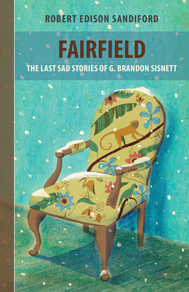
    Fairfield Cover

    PAMELA HENSLEY

    Let’s start with a quote from Fairfield, your most recent collection of short stories. In reference to engaging fiction, you say: “All that matters… is the individual and the moment.” Can you expand on that?

    ROBERT EDISON SANDIFORD

    In the context of the collection, it had to do with making the most of art. It had to do with knowing when something is ready or when an artist has what it takes. It comes from a quote by Matthew Arnold [“For the creation of a masterwork… two powers must concur, the power of the man and the power of the moment, and the man is not enough without the moment”]. How do you know when you’ve got what it takes? All we are is who we are and the talent that we have. My contention is that most people are a little better than they think they are. They can do better than they’ve done.

    HENSLEY

    Besides being a mentor, you’re an editor and teacher. How does one turn a good manuscript into a great one? Or a good writer into a great writer?

    SANDIFORD

    There has to be that spark within the work itself, or within the writer. There has to be something inside that person already that lends itself to greatness. And it may depend on how we define greatness. There are a lot of artists, not just writers, people who never enjoyed recognition while they were alive or young enough to enjoy it. So there’s that question again, of the individual and the moment and the individual and talent. There are certain things you can teach people to make them better writers but that sort of greatness, that may also depend on them.

    HENSLEY

    In Fairfield, a fictional editor writes that the character G. Brandon Sisnett borrowed from other authors, including one from Montreal who wrote Caribbean fiction on the themes of “familial loss and managing the pain of living.” Which are themes that recur in your work. Would you like to talk about theme?

    SANDIFORD

    I’m curious about theme. Both of us are writing from a particular place. Germany finds its way into your stories, as well as Canada. For me, it’s Barbados and Canada. Theme is distinct from subject matter but they inform each other. I write out of where I am but also where I come from. I do believe that all writing is regional, in a sense. People talk about things being universal but I think it goes to honesty. If you write in a way that is honest, the regional will get you to the universal. Someone will pick up the story halfway around the world and say, “I relate.”


    “There are certain things you can teach people to make them better writers but that sort of greatness, that may also depend on them.”


    HENSLEY

    Is place a detail?

    SANDIFORD

    Place is a necessary detail: your characters have got to be somewhere. But it’s more than that. It’s a space in which you invite the reader to share an experience. It’s about learning, actually. If I write about a particular place, I want you to feel that place. I want you to experience it as if you were actually there. Unless having a non-descript setting is important to telling the story, then why have this non-descript thing? I get the answer, “But I want it to be universal.” I just say, “Stop. What you may be doing is taking out the necessary edges that people need to relate to the story even more.”


    “I do believe that all writing is regional, in a sense. People talk about things being universal but I think it goes to honesty. If you write in a way that is honest, the regional will get you to the universal.”


    HENSLEY

    What’s the difference between style and voice?

    SANDIFORD

    Style and voice tend to be synonymous. But to make a differentiation, when writers are starting out I like to talk about approach. I used to talk about style but I think writers get confused. They say, “But the way I put it down is a style. I like to use all these ellipses when I write, that’s my style.” And I say, “No, that’s more of an approach and it may even be a bad approach.” Style is something that you develop over time. Voice is all those things combined. It’s reading a work and recognizing who it is. Ultimately, it’s telling a story in a particular way. It can’t be told by anybody else.

    HENSLEY

    You published your first story collection more than 20 years ago. Does it get any easier?

    SANDIFORD

    Hell, no! Publishing is more difficult now than it was before. Coming up with a story, I don’t know that that gets any easier. What gets easier, maybe, is knowing what works and what doesn’t. But I wake up every morning doing what I do and I have no regrets. Ever. That’s a hell of a thing to be able to say.


    On June 4, the 2017 QWF mentors and mentees will present new writing at the annual public reading in Montreal. Click here for more information.

    Rob Profile, ACA Painting BackgroundRobert Edison Sandiford is the author of nine books, most recently Fairfield: The Last Sad Stories of G. Brandon Sisnett. He is the founder, with the poet Linda M. Deane, of the cultural forum ArtsEtc Inc. A recipient of Barbados’ Governor General’s Award for his fiction and the Harold Hoyte Award for newspaper editing, he has also worked as a teacher and video producer.


    Pamela Hensley is new to Montreal, having relocated once again after returning from Germany to Ontario. She was selected to participate in the 2017 QWF Mentorship program and is currently attending her first QWF workshop. You can read her stories in Canadian journals, including The Dalhousie Review and EVENT magazine, and are invited to hear her read with other QWF mentees at The Comedy Nest, Montreal Forum on Sunday, June 4 at 2 pm.


    Photo credits: Pamela Hensley (top banner); Aeryn Sandiford (Sandiford headshot); Gordon Hensley (Hensley headshot)

  • Tuesday, or Was It Wednesday?—by Joshua Levy

    Tuesday, or Was It Wednesday?—by Joshua Levy

    One Tuesday—or was it Wednesday? —I visited my parents.

    Written anything lately? asked my dad, during supper.

    I had. I fetched my laptop from my car and read a short story about my brother’s recent engagement to them while we ate.

    When I was done, my dad said it was very witty, great use of metaphor, but why hadn’t I told the truth, the whole truth, and nothing but the truth, so help me God?

    My dad’s a lawyer.

    But, I said, it really happened. You were there!

    I never said those things, said my mom. And I made butternut squash lasagna that day, not hummus or feta salad.

    I felt accused. You uttered extremely similar things, I said. I can’t remember exact dialogue. But you’re right about the butternut squash lasagna. I’ll change that.

    They looked at me sadly, my parents did.

    I don’t think Menachem was wearing a fanny pack that day, added my dad.

    The point, I said, is that the major facts are all true, if not the minor ones.

    My dad stood up and went to the freezer, bent down behind the kitchen island, and resurfaced holding a tub of Neapolitan ice cream.

    None for me, Ricky, said my mom.

    Josh? asked my dad.

    Sure, I said.

    “My dad said it was very witty, great use of metaphor, but why hadn’t I told the truth, the whole truth, and nothing but the truth, so help me God?”

    He opened a cabinet next to the sink and grabbed two ceramic bowls. Each had a different colourful made-up bird painted on it. Or were they real bird species? My parents had bought them a decade earlier in Nova Scotia, while visiting my sister at university. Mind you, it could have been New Brunswick where they bought the bowls….

    I wasn’t sure. The facts felt like slippery fish in my hands.

    If you’re going to write non-fiction, offered my dad, while running a spoon under hot water, it should be 100 percent true.

    I agree, said my mom. Don’t make anything up.

    But, I said, I’m not. Memories change colours and shapes under different conditions.

    Two scoops or three? asked my dad.

    Different what? asked my mom.

    Two, I said.

    Different what? repeated my mom.

    Conditions. Like the passage of time or evolving perspectives. That stuff.

    My mom said, ah, I don’t buy it.

    A fact’s a fact, Josh, said my dad, handing me an ice cream bowl.

    One, two. I count two scoops in your bowl, declared my mom.

    My dad nodded. That’s a fact, he said.

    I sighed. I didn’t disagree with my parents. Facts are vital and I wanted them all.

    But my story had been about shining a light on unverifiable, deeper truths: family relations, love, loneliness. Whether Menachem wore his fanny pack or not on that particular day was, in my opinion, such a minor fact that researching it could stifle the creative process.

    “Memories change colours and shapes under different conditions.”

    Another Tuesday—or was it Wednesday?—I visited my parents.

    Written anything lately? asked my dad, during supper.

    I had. I fetched my laptop from my car and read a factually bullet-proof story about Visiting Day during my first summer at sleepaway camp to them while we ate:

    On Visiting Day, my parents came with my younger brother, Daniel. They brought me a bag of Archie and Spider-Man comics and some candy. My sister, Samantha, was probably also there, since she was less than a year old at the time.

    The camp director made a speech to all parents and campers. The speech was almost certainly in English, since that was the only language he spoke. I think we then went to the waterfront and paddled in a canoe, but that could be a memory from the following summer.

    I don’t remember if it was a sunny or rainy day, but I do remember the emptiness I felt when Visiting Day ended.

    That’s a terrible story, said my dad.

    Embellish a little, said my mom.


    linkedinJoshua Levy splits his time between Montreal, Canada, and Lisbon, Portugal. He is grateful to the QWF for their support over the years and has participated in eight QWF writing workshops to improve his craft. Joshua is a winner of the 2010 QWF Quebec Writing Competition and was longlisted for the 2007 competition. He has had poetry published in Carte Blanche, told stories live at Blue Metropolis for This Really Happened, and written for QWF Writes. Joshua has been published by the Oxford University Press, Véhicule Press, Maisonneuve, Vallum, The Feathertale Review, The Rumpus, and The Malahat Review. He is a regular storyteller on CBC Radio and recently received a grant from the Canada Council for the Arts to write a memoir.

    Photo credit: Seth Sawyers (top banner); Steve Gerrard (headshot)

  • Why I Loved Editing a Small Canadian Online Magazine, and Why I’m Leaving—by Laurence Miall

    Why I Loved Editing a Small Canadian Online Magazine, and Why I’m Leaving—by Laurence Miall

    Before I ever joined a magazine, or published a novel, for that matter, here’s how I imagined people who had responsibility over publishing texts. They were working in fancy university offices or in stylishly decorated apartments in artsier parts of town than my own, smoking cigarettes and drinking wine, sporadically casting a disdainful eye toward the “slush pile” (in my mind’s eye, the slush pile was either physically manifested, or online, it didn’t make a difference insofar as the disdain goes). And here’s what would happen if ever they came across my submission. They’d read a line, chortle to themselves, and say, “This poor, desperate bastard. Why does he waste our time?” Then all the editors would say in unison, “Let’s publish one of our friends, instead!”

    That’s how I imagined it.

    Maybe some literary journals are nepotism-only zones, I don’t know. I’ve only ever worked for carte blanche. I joined as fiction editor in 2014 and the first issue I worked on was Issue 20. Our most recent issue is #29, so that’s ten issues in total. As of Issue 23, I took on more responsibility for the magazine, taking over from our illustrious founder, Maria Turner, first in partnership with Ben Spencer, then with Gregory McCormick.

    Though the years, I have come to enjoy my vexed relationship with the slush pile. Every time I sit down to read, I want to love the next piece I’m going to discover. One of the very first stories I ever picked was Matthew di Paoli’s “Other Forms of Life,” and I found it so funny and quirky that I immediately started reading it aloud to Monika, my partner. I invited Matthew to read his story at a carte blanche event we were doing at the Blue Metropolis Literary Festival in Montreal, and he couldn’t come, so I read out parts of his story in his place. I loved the texture of someone else’s sentences coming from my lips, and the rhythm—almost like a form of breathing that was not my own.

    So yeah, the slush pile wasn’t like I’d imagined it, not at all. It was sometimes a source of some frustration, but also of great excitement and pleasure.

    Over the years, the comradeship of the entire carte blanche crew, and the support of the Quebec Writers’ Federation, was constant, making me realize that one of the biggest benefits of the literary life is not the writing itself but the community of other writers, editors, publishers, curators, and do-it-all’ers who keep culture humming along and livening up lives that would otherwise be lived in dank, solitary darkness.

    “I loved the texture of someone else’s sentences coming from my lips, and the rhythm—almost like a form of breathing that was not my own.”

    Chalsley Taylor, above all, has made the magazine the beautiful online presence it is today, and so it’s to her I would like to express my biggest THANK YOU. We started this journey at pretty much the same time. It’s no overstatement to say that this magazine would not be in the fine shape it is without her. With Cason Sharp now on the team, I believe carte blanche is going to keep on kicking ass in its cool, classy way. How can it not, with Nicola, Georgia, Bronwyn and the two Gregs bringing their brilliance to each and every issue?

    I am shortly going to be leaving the team in my official capacity as editor. I do so with mixed feelings. Once upon a time, I honestly felt I could tackle any amount of work that was thrown at me. The days seemed elastic. I could stretch them at either end, conjuring up just enough minutes or hours to always get things done. But I don’t feel that way anymore. I am trying to figure out how big each relative part of me is, and how to accommodate all those parts within a finite body. What’s the size of the editor in me, compared to the writer? And more importantly, the loving husband? The communications director? The friend? The son? The cooker and eater of meals, and the drinker of ales, and the sporadic watcher of Liverpool FC, and everything else?

    A few weeks ago, my second oldest friend disappeared from social media. In recent years, we hadn’t established any other form of communication except for Twitter and in-person visits. I had no phone number or email address for him. I started to wonder, nervously, if he was still alive. In 2016, I lost a dear friend to suicide. Another of my friends has struggled with brain cancer. These experiences and many others made me think dark and fearful thoughts.

    Day after day, my friend didn’t reappear. There was an envelope icon lit up in Twitter, indicating a message from him, but the message was an old one, and because his account was deactivated, the message itself had ghosted away. I tried to figure out what was the best course of action. Should I just show up at his house to check on him? No, I told myself. It wasn’t time for that. He’s not dead, I said to myself. He’s just taking a break from Twitter. Who can blame him? Donald Trump is president.

    My friend eventually reappeared, thank God. He found my email address and wrote to me. I was relieved, and felt a little foolish for my quiet panic.

    “I am trying to figure out how big each relative part of me is, and how to accommodate all those parts within a finite body. What’s the size of the editor in me, compared to the writer? And more importantly, the loving husband?”

    Realizing just how agitated I had become gave me yet another confirmation that I need to reappear—to myself. Working sixty- to seventy-hour weeks means you’re obliged to run on adrenaline and anxiety half the time. I get bent out of shape easily. I sometimes get inordinately fearful about small things. It’s time to slow down a little. Time won’t be warped and woven into shapes that better accommodate me. I must accommodate to time.

    Whatever happens, I am going to remain a friend to the carte blanche crew. I became an editor at approximately the same time as I had my first novel accepted for publication, so the two experiences effectively took me from zero to one as a literary person, according to my own weird binary measurement. I am enormously grateful to have had such opportunities.

    I still send stories to magazines sometimes, and I get my share of rejections, but I don’t get resentful about them. I am pretty sure that the people at the magazines are just that: people. Maybe some of them have similar traits to me. Maybe they’re a bit fucked up. Maybe they’re anxious, maybe overworked, maybe worrying about a loved one—like us all.


    miall-authorphoto-1Laurence Miall is a Montreal-based writer and communications expert. His first novel, Blind Spot, was published by NeWest Press in 2014.
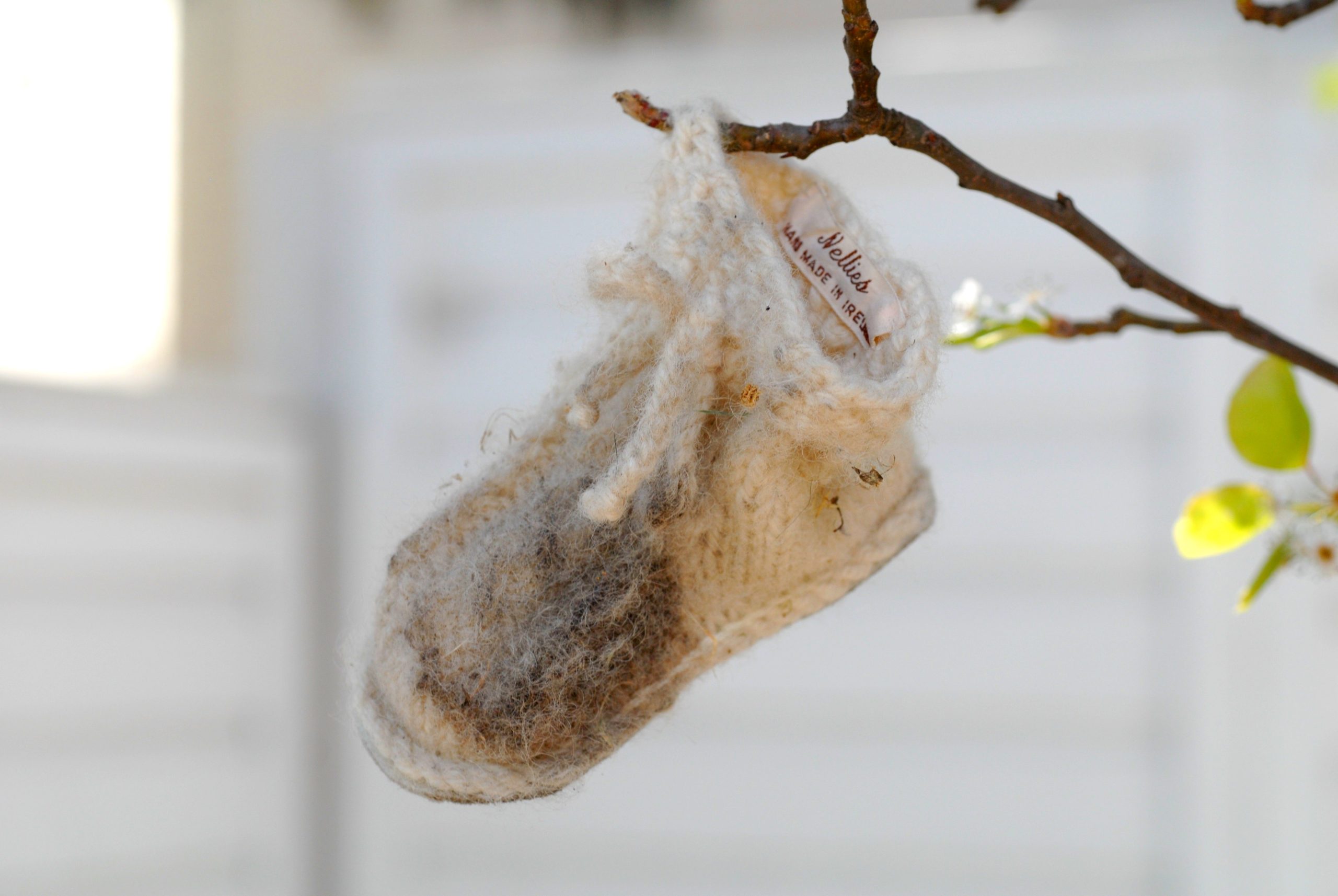
    Photo credits: Ben Brooksbrank; Owen Egan (author headshot)

    Apply to be carte blanche’s new editor.

  • ‘Been good, time to be bad’ by Richard Andrews

    ‘Been good, time to be bad’ by Richard Andrews

    Divorce, surviving a mass shooting, discovery of cancer at 24, and a walk on the wild side in California. Students enrolled in my Magazine Writing course often want to learn more than catchy leads, pitching stories, dealing with grumpy editors, and the Inverted Pyramid. They’re turning to writing as a form of therapy, closure, or a way to chart a life transition.

    Many participants are going through divorce, coming out, bored with their jobs, looking for purpose, or seeking validation of unconventional choices. Passive voice does not come up as a writing issue in these cases.

    One of our warm-up exercises is a version of that job-interview chestnut: Describe a difficult situation. How did you respond? What did you learn? However, the answers are rarely what you’d expect in an interview.

    When I first tried that exercise, I thought a failed recipe or a forgotten anniversary would be the limit of a student’s openness to a room full of strangers. But it turns out that the process of writing somehow gives people the license to share their most intimate feelings and personal experiences.

    “They’re turning to writing as a form of therapy, closure, or a way to chart a life transition.”

    In her piece, Camille* wrote the most moving opening line I’ve ever read: “Mom, I have fucking cancer. I’m a jobless, degreeless, broke 24-year-old that’s going nowhere in life.”

    Camille developed that lede into an article published by the Huffington Post, along with some of her unusual tips to other cancer survivors. Her responses to falling ill included throwing dishes,exploiting her boyfriend’s pity to get a Prince Charles Spaniel, and showing her scar to a club doorman to get in for free. “Go shopping, rock it with a Hermes scarf for your hair loss,” she advised. “And stay true to your emotions. Don’t cover them up.”

    Camille emailed me recently with the latest chapter of her life. Four years on she has things under control and is living happily with her boyfriend, a new baby, and the dog. Less happy was Ingrid, a survivor of the 2011 massacre by a right-wing extremist that left 77 Norwegians dead, including dozens of teenagers at a summer camp. Ingrid escaped death by hiding behind a boulder but left Norway for Canada to put distance between herself and the tragedy. Her writing revealed a young woman trying to deal with the apparent meaninglessness of life, after a horrific experience and the loss of friends.

    When she joined the class she wrote she was at Stage Five of Grieving (acceptance). However, I’m not sure how much meaning she finds in reports that the convicted shooter recently won a human rights case against the Norwegian government about his prison conditions. (He had previously complained that his PlayStation was outdated.)

    Nicole, on the other hand, had no illusions about the meaning of life: it was to blast her husband, who’d left for a younger woman. Despite gentle suggestions that other topics were worth writing about, Nicole shared reports each class about the weight gain and balding of her ex, plus the styling challenges of his mistress.

    Other class writings have included an account by one student who woke up at the minority end of a complex threesome after a wild party. Another wrote of baking hash brownies, forgetting them on the kitchen table, and coming home to find her peckish parents “stoned out of their tree.”

    Sometimes a class exercise changes lives, and here I credit Hemingway’s creation of the Six-Word Story. His ‘saddest short story in the world’ (For sale: baby shoes, never worn) reputedly won him a bar bet and spawned dozens of websites devoted to flash fiction.

    “For sale: baby shoes, never worn.”

    I use the Six-Word Autobiography as a variation on the original concept for an exercise on writing headings. It can produce some telling results when people try to summarize the main theme of their life into a bumper sticker.

    There’s regret (Found true love, married someone else), contentment (Painful nerd kid, happy nerd adult), the search for meaning (Tried it all, but still looking), or resignation (Turning into Mom without being one).

    Some months after the end of one course I received an email from Pamela saying the six-word exercise had made her sit down for the first time in years to think about what she was doing and where she was going.

    “When I saw what came out on the page, I decided to leave my life in Montreal and move to California,” she wrote, leaving most details to my imagination.

    Pamela, if you’re reading this, I hope you’re still writing. Please send me your latest chapter and let me know what happens when your story is:

    Been good, time to be bad.


    richard-seville

    Richard Andrews is a freelance journalist who teaches Magazine Writing at McGill Universityric_andrews@hotmail.com

    *All names have been changed

    Photo credit: FlickR