Tag: art

  • Writing Fiction in the Age of Artificial Intelligence—By Duncan Hart Cameron

    Writing Fiction in the Age of Artificial Intelligence—By Duncan Hart Cameron

    Has it all been for nothing? 

    All of the hours that I have spent in front of my computer, rising at dawn to be at my station, pounding out stories, working through the fear of not being good enough, of not being able to put something great on the page, something that is part of me, that is me. The scrawls in my notebook, the daydreaming when I walk. The small steps and incremental gains. The steady getting there.

    All for naught.

    Because ChatGPT or something like it—an artificial intelligence—will one day write a poem or a short story or even a novel that is as compelling as one of my own. Somewhere, a bunch of programmers are laughing at me: “You think what you do is special? I can make an app for that.” And they have.

    So why should I bother to write at all?

    Because it is not just about the result or the finished product. Not even close. I’m sitting here, holding one of my books in my hand, an anthology of short stories that I helped edit and to which I contributed. I admire the cover that took so many hours to format and the font that we debated for far too long. I flip to my piece, about falling in love in Paris while on exchange, and I remember when I wrote it. The feeling of gliding across the keyboard because I was on a roll. The delight I took in capturing a tender, painful moment in my life in words. Giving it existence and conveying it to others.

    The process I went through to publish the story imbued the entire project with meaning, like looking down a trail that you have hiked and taking pride in the work that it required to get there. That sweaty, joyful glow. The trail is just a trail, a path in the woods, until you have walked every foot of its length. Then it becomes something more. Something that is part of you. Imagine being plunked down at the end and looking back. Would you feel the same pride? Of course not. The trail would be meaningless, and your only relationship would be with the shortcut. (Which, in the case of AI, is very short indeed!) Likewise, a book is not just the words on the page. It is the physical manifestation of our grit and our pain and our faith. It is a symbol of our effort to impose meaning on our lives. Because that is what writing does. It gives us purpose. I know where I will be tomorrow morning and the morning after. I organize my social life, my diet, my sleep, and my family time around this central goal. There is clarity and comfort in that, not to mention satisfaction. I don’t think us writers can imagine living any other way.

    And what about the reader? Reading is about the writer, not just about the book. We read to be entertained, sure, but we also read to have a kind of communion with the author. We want to hear their voice in our minds and to know what they know. We want to taste their insight and their imagination and their courage. A bot could theoretically write a book like One Day in the Life of Ivan Denisovich or The Gulag Archipelago. But would those bot-made pieces really have the same meaning as Aleksandr Solzhenitsyn’s work, published after having spent eight years in a Russian prison? Of course not.

    Incidentally, ChatGPT can “write” in the style of Solzhenitsyn, or Ernest Hemingway, or Jane Austen, because their books already exist. It is essentially a massive synthesizer of existing data, improved by constant refinement of its answers to prompts, and it predicts what is likely to be the next sentence based on billions of previously written texts. Without authors (without us!) producing real work, Chat GPT, and other AI models like it, have nothing to say.

    And that’s the core of it, isn’t it? You can’t untether art from the world. Art is inextricably linked to human experience and to human will. Otherwise, what the heck is it? Writing is not plagiarizing thoughts and feelings, it is confronting our own inadequacy, our fears, our yearnings and spilling it on the page in a way that resonates with others. The catalyst is empathy, which links the reader and the writer together. Bots do not know what it is like to lose a loved one or to suffer rejection or to yearn for revenge. Only humans do. And it is that knowledge that readers seek when they open a book. 

    In the end, bots will produce cool stuff, even great stuff, things we could never have imagined before (check out DALL-E); but writers will continue to write, and readers will continue to read human work, because the process itself makes the act and the result meaningful. If anything, we will start to see more novels that explore the ways that AI intersects with and changes art, rather than rendering that art extinct.

    As that unfolds, you know where I’ll be. In front of my computer toiling away, or daydreaming on a walk.

    Duncan Hart Cameron has taught college-level philosophy in Quebec for over twelve years. Born in Ontario, he lived in BC before moving to Montreal in 2001 to pursue a Master’s in Philosophy. A passionate writer and editor, he recently helped found Les éditions comme au vingtièmea bilingual literary review and independent publisher focused on supporting emerging writers, poets, and screenwriters living in Montreal and the Laurentians. His first novella, Eclipsed, is set to appear in the Fall of 2023 and explores the hold that our past can have on our present, especially in our most intimate relationships.

    Photos: Loz Pycock via Flickr (header banner); Duncan Hart Cameron (headshot)
  • A Body Divided—By Joe Bongiorno

    A Body Divided—By Joe Bongiorno

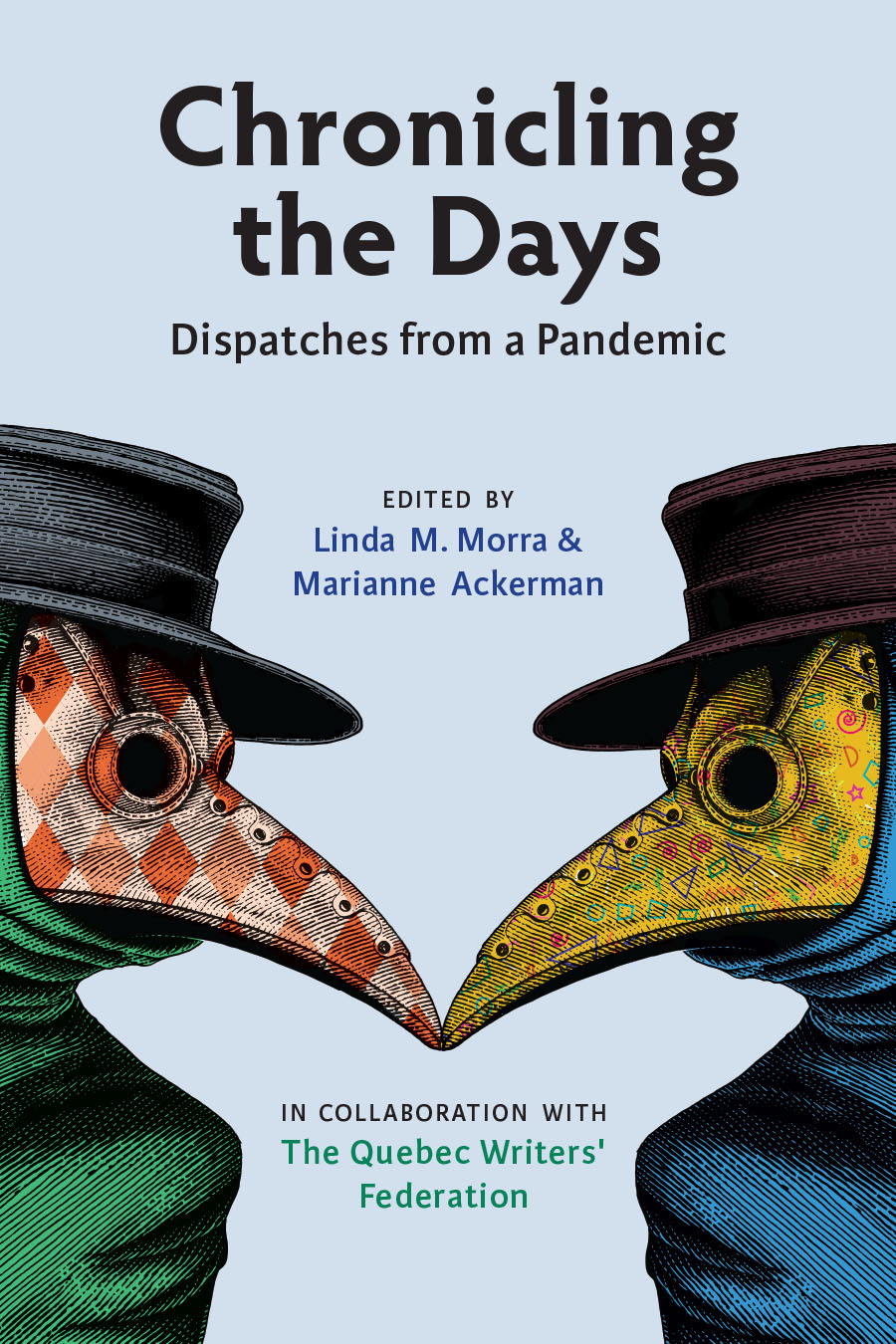
    In April 2020, we invited writers in Quebec to submit a story of a single day during the strange, uneasy time of coronavirus and pandemic, of social distancing and self isolation, of lockdown and quarantine.

    We’re thrilled to announce that these stories have been gathered in Chronicling the Days: Dispatches from a Pandemic (Guernica Press). To learn more and buy the book, please visit https://www.guernicaeditions.com/title/9781771836579.

    Please also join us on the QWF FB Community page, and let the authors know if their words resonated.

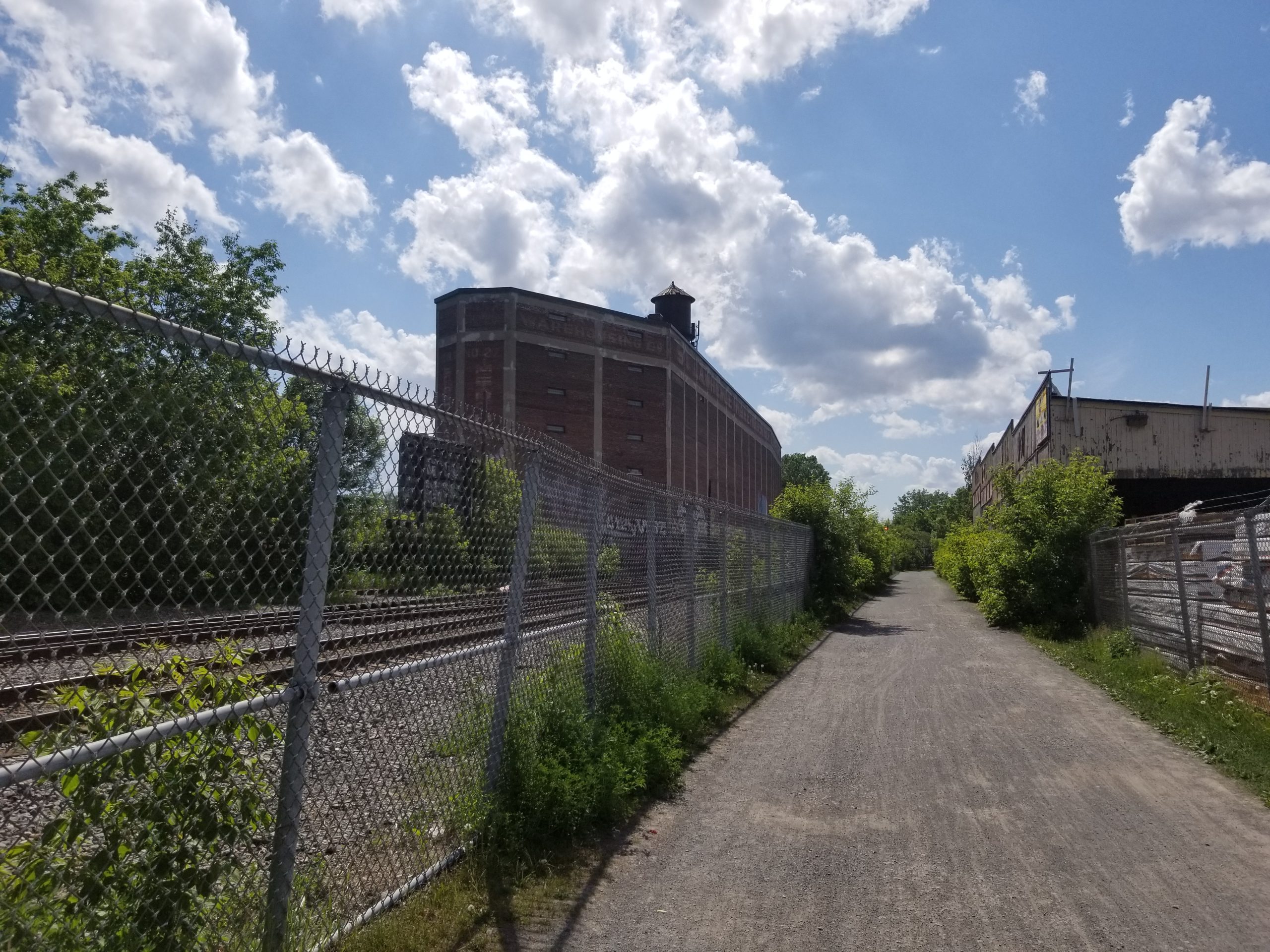
    I jog on the gravel path along the train tracks. I readjust my surgical mask and stray off into the grass to maintain a two-metre distance from a cyclist. My butt throbs. Pain gives way to numbness. Hamstring nerve pinched. I’m out of breath. My lungs open up to the cool air, fortunate to be left breathless by exercise and not COVID-19.

    To read the rest of the story, please support our community and check out Chronicling the Days: Dispatches from a Pandemic

  • The Joyous Sea of Words—by Erín Moure

    The Joyous Sea of Words—by Erín Moure

    “one dusk après une autre I sit ici on this sofa diagonal to the window, and in sitting it’s presque as if everything’s crumbling into bits: cramps in the guts: setting sun weaving humid nuances: spaces from où move déjà les occupations cérémoniales of light and lune: between the crowns of sombreros or entre les durs vides of the fig tree that devastate into shadow and suspicion in the crépuscule of the sea resort: figuier, couronne, sombreros: la ancestral speech of fathers and grands-pères that infinitely vanishes into memory, they entertain all speech et tricot: these Guaraní voices simplement eternalize as they go on weaving: ñandu: there is no better fabric than the web des feuilles tissées all together, ñándu, together and between the arabesques that, symphonique, interweave, checkerboard of green and bird et chant, in the happy amble of a freedom: ñanduti: ñandurenimbó:”

    — Excerpt from Paraguayan Sea

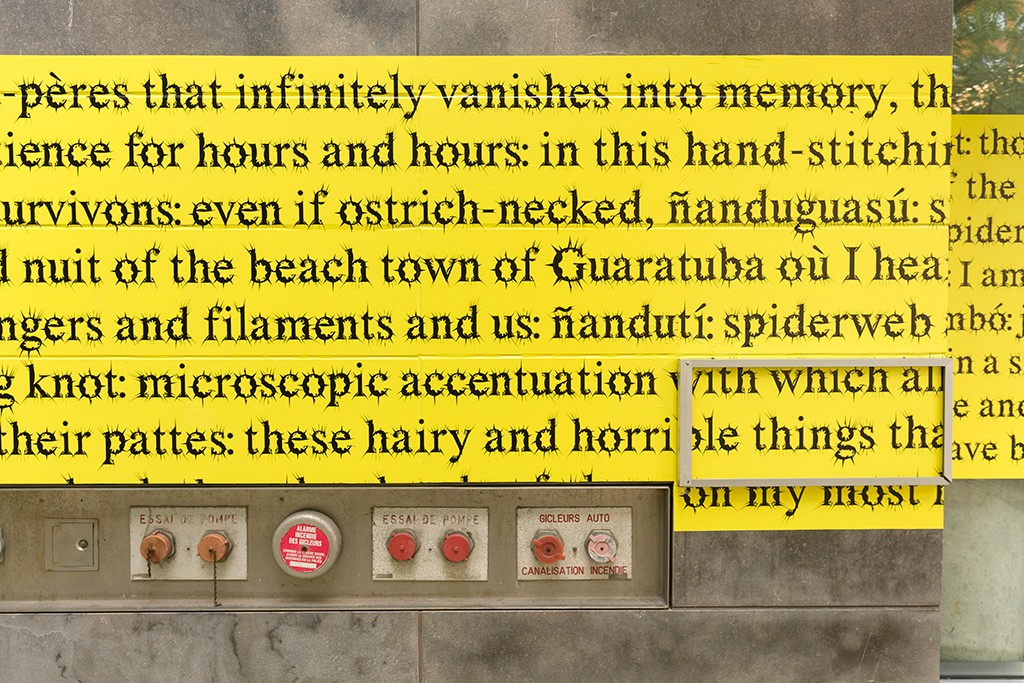
    1504277468990On the evening of November 9, 2017, there was sheer delight on all sides at Concordia University’s FOFA Gallery in Montreal, where the public gathered with me, artist Andrew Forster, and renowned translation theorist and researcher Sherry Simon to talk about Forster’s outdoor exhibition, Mer paraguayenne / Paraguayan Sea. For months, the EV building at the corner of Ste. Catherine and Mackay streets has been wrapped with wide, yellow banners holding words from Wilson Bueno’s Paraguayan Sea, in my translation. The bright colour of the banners and the strangeness of Forster’s barbed font attract the attention of passersby to words in three languages.

    Forster, a longtime creator of design works and mixed-genre, public access art, teaches part-time at Concordia. He created a font that seems to have an excess of serifs, that looks almost like barbed wire and seems to needle the viewer. The text on the banners is from the late Brazilian writer Wilson Bueno’s novel, Mar Paraguayo—famed in South America—which I recently translated from the original Portuñol (a mixture of Portuguese and Spanish) and Guaraní (an Indigenous and official language in Paraguay).

    Translating this novel was a daring act. How to translate a mixed-language book into English? Well, by translating into mixed languages, of course—into a “mixelated” English. I ended up producing a polylingual text incorporating French, English, and Guaraní. And what better place to do that than in Montréal, a ville francophone majeure that deliciously contaminates all the other languages brought to it?

    At the event, I read for five minutes from my translation of Paraguayan Sea and talked about how languages change the mouth, and how, therefore, reading from a mixed-language book confounds the accent, creating an aural sound event that is unexpected every time. It is as if my mouth were a public hubbub and not mine, as if my mouth belonged now to language itself and not to me and my Erín brain.

    Forster spoke about his work of art, and the way he chose to “turn Bueno’s language toward the street,” via my translation. He wanted Bueno’s text to flow there, to make a building vibrate with language that interpellates the passersby. He asks: “How does this viscera of poetic language compete with all the other words of advertising and branding on the street?” The text, he noted, is not simply bilingual, or trilingual, but moves in and out of three different languages, making one meaning coalesce, then shatter, then re-form. As such, the banners reflect not an official politics or policy of language, but a lived and creative amalgam of language and meaning, one reflective of Montréal’s urban multiplicity. Forster quoted art critic Stephen Horne, who says in an as-yet unpublished essay that my collaborative work with Forster resists and protests not meaning (for it overflows with meaning) but “proper meaning.” It’s an unruly text that Wilson Bueno created in Brazil, and now we can embrace it as ours.

    Forster spoke too of creating the font, and how the project was funded. For it was funded not by the agencies that fund laboratories far from the street, but in great measure by the part-time faculty association at Concordia, CUPFA—which believes in art and language as well as in collective agreements. The banners, Forster noted, even become part of the view from inside the Pharmaprix drugstore across the street.

    We heard comments from folks who’d seen the work from taxis, and, amazingly, there were two people from Paraguay present. They had come because the Guaraní language called to them from the street.

    “: here I sit: ñandu: to inflect into the crochèterie my ñanduti renderings: ñandutimichĩ: smallest ti-fleur that persists with the needle barely for the excruciating patience of a few hours: in these sutures, salt clocks, that keep themselves smeared with the fluctuating couleurs du coucher du soleil that play themselves out in les automnes de maintenant: here ñandu: an opacity of feeling: je m’assois: assise: ñandu: my cancerish word is s’asseoir: me voir: ñandu: winter more than automne panique autumn: ñandu: what is the secret of identité entre these deux things absolument distinctes: spiders and scorpions?”

    — Excerpt from Paraguayan Sea

    1504277528360Ñandutí, said Valeria, a Montréal architect from Paraguay, I saw nothing else but the word “ñandutí” and I thought: “What is this word doing here? How did it get here?” It is not usual to see Guaraní in Montreal. She googled the word and Concordia together, found out about the event, and came. She spoke of the significance of the fabric and lace known as “ñandutí,” how it weaves seven-million Paraguayans together, and how amazing it was to see its weft embracing English and French in Montréal.
    It’s one of the joys of translation that, as a translator, I can bring a work into my community and convoke other people into the flow of words that is also a sea of language containing us all. In this case, though, Paraguayan Sea, in my translation, was published in the USA, not Canada. Canadian literary small presses rarely publish translations of works by foreigners, even if translated by Canadians, because they are not able to use their Canada Council funding in such cases to offset the cost of publishing and marketing. As a result, it is difficult to invite Canadian-chosen and translated works across borders to join us in book form. This time, it was an artist (Andrew Forster), a university (Concordia), a fine arts gallery (FOFA), and a part-time teachers’ association (CUPFA) who invited the words of Wilson Bueno across that final border. To be with all of us.


    erin-moure_authorphotoErín Moure is a poet and translator. She has published over 30 books of poetry, essays, memoir, and translations from French, Spanish, Galician, and Portuguese. She lives in Montreal.
    Author’s note: Thanks to the FOFA Gallery, Concordia professor Sherry Simon, Montréal artist Vida Simon, Paraguayan poet Christian Kent, Chilean poet Andrés Ajens, Brazilian poet and editor Claudio Daniel, the spirits of Wilson Bueno and Nestór Perlonguer, and above all Andrew Forster, all of whom are now joined in the beautiful web of language to which Wilson Bueno convokes us, urging us to move across borders, languages, genres, and genders, to delight in literature and reading and life.

    Andrew Forster’s exhibition, Mer paraguayenne / Paraguayan Sea, is held at the FOFA gallery until December 8, 2017 (FOFA Courtyard, intersection of Ste. Catherine and Mckay streets).

    Visit the Nightboat Books web page to learn more about Erín Moure’s translation of Wilson Bueno’s Paraguayan Sea.

    Photo credits: Guy L’Heureux (yellow banners); Terence Byrnes (author’s headshot)

  • Transcendence—by Francine Cunningham

    Transcendence—by Francine Cunningham

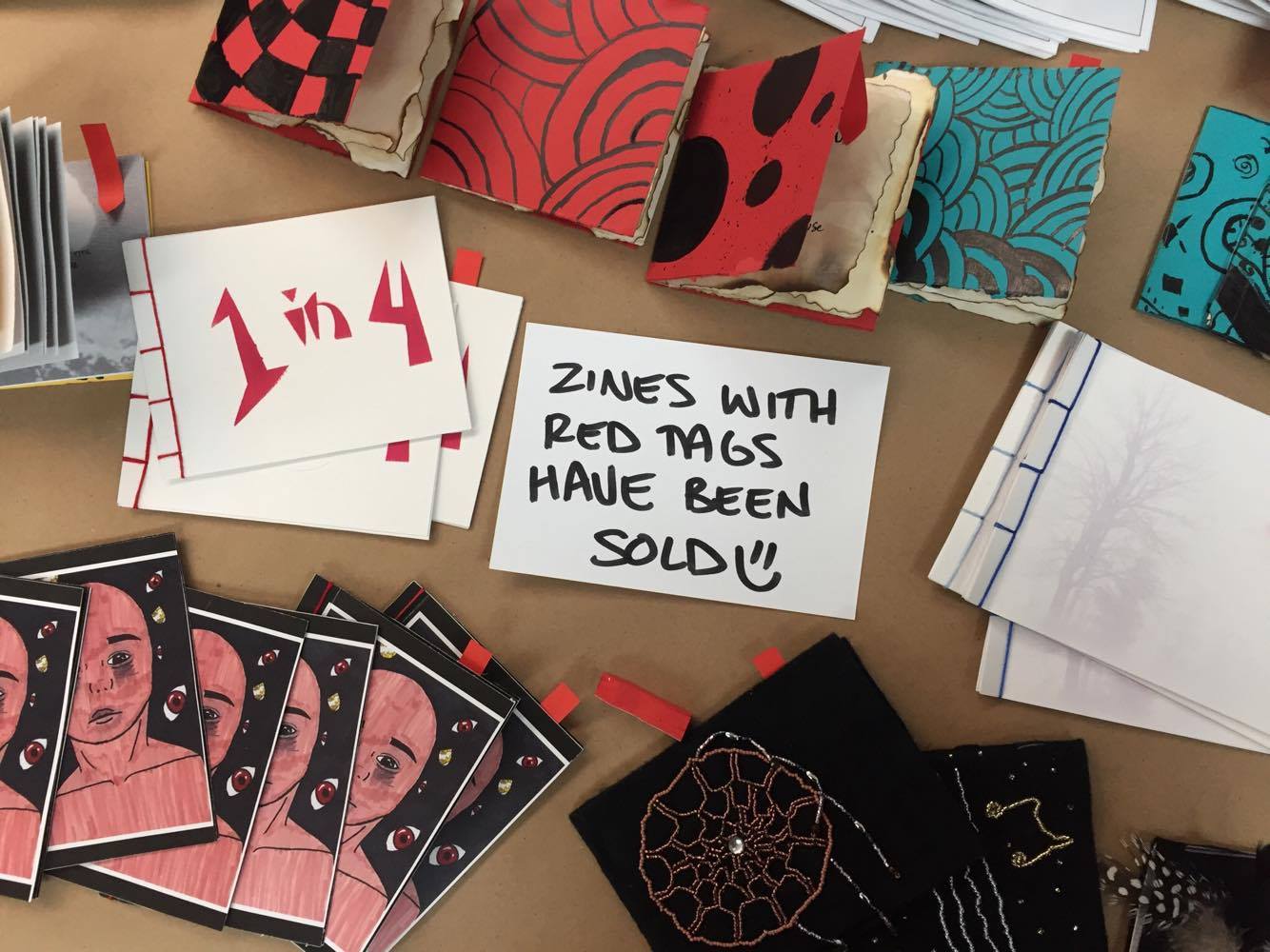
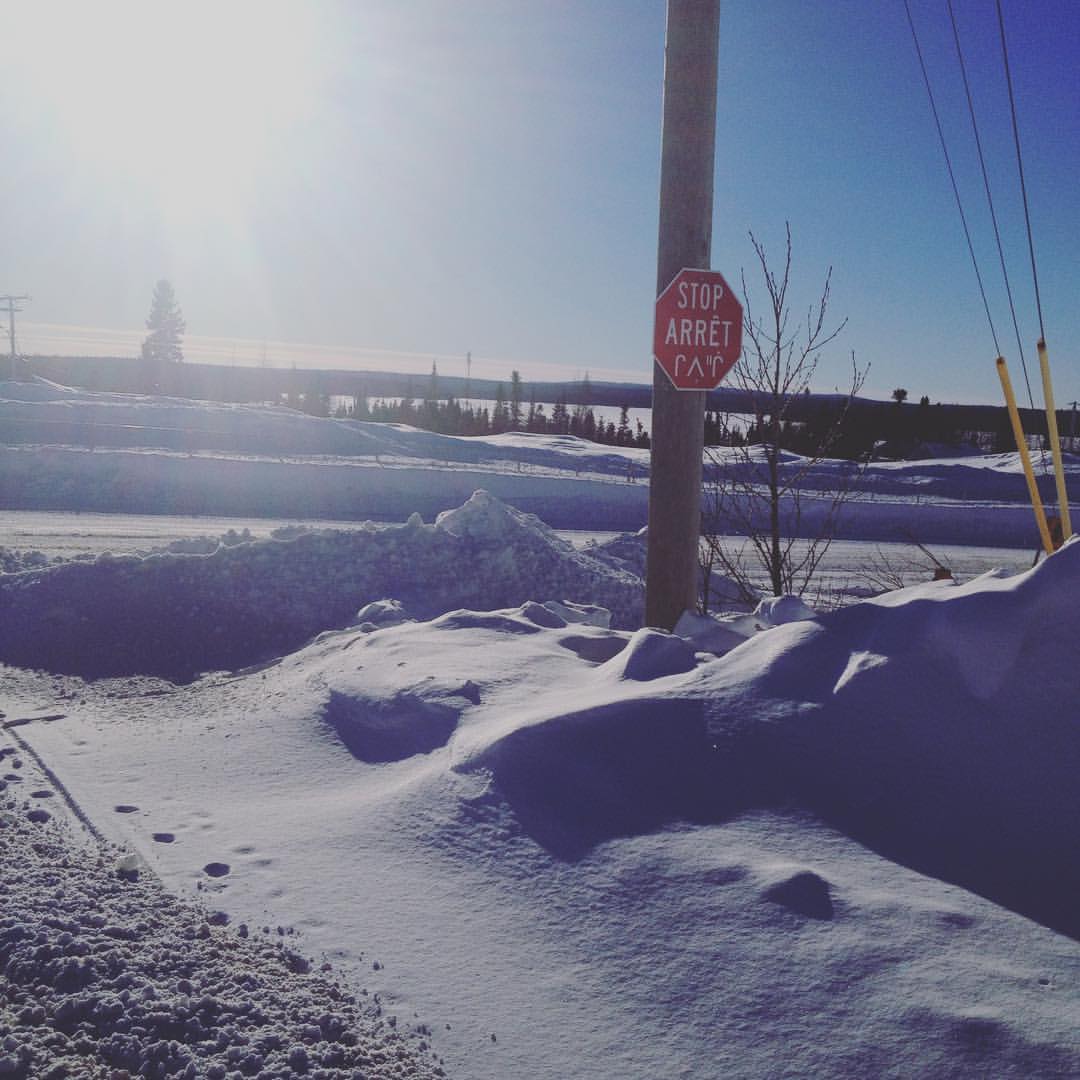
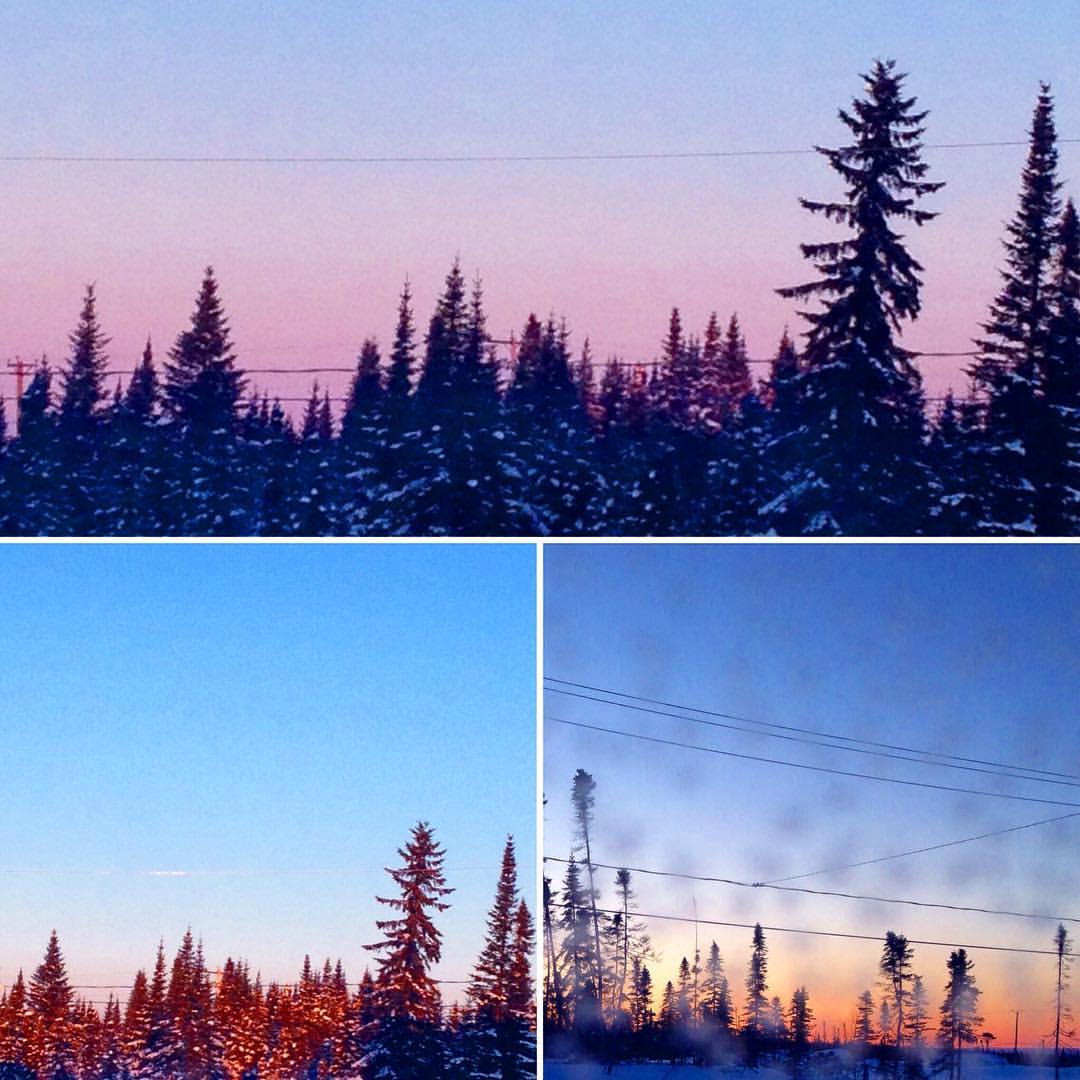
    I had the privilege of being an artist in residence in Mistissini, a community in northern Quebec, this February and March. The community was small and welcoming; the snow, on the other hand, was otherworldly. There were mountains of it piled and strung along the road to the school, like a miniature version of the Rockies I am used to. While I struggled with the overwhelming volume of the white stuff, I welcomed the natural beauty of the land, the quiet of the nights, and the stillness that comes from being outside the city. With nothing to distract me I was able to spend hours every night writing and painting. I read something like ten books and slept deeper than I have in a long time. It was a treat to turn off my email for six weeks, not take on any additional contracts, and really focus on my writing and visual art. I was teaching youth how to integrate their visual art with their writing through zines, so it was the perfect time for me to spend some time doing the same.

    16463091_10154140278245286_1071419733135569396_o

    The Mikw Chiyâm arts program was commissioned by the Quebec Cree School Board in 2015 and has just finished its second successful year. It brings together artists and students, the hope being that by creating a safe and creative space, students will be inspired to come to school more often and have a more positive experience once there.

    I am an Indigenous writer, artist, and educator, and have been working with Indigenous youth for over ten years. I have been a part of many different programs that use artistic practice as a way to intercede and help guide students onto a path that will give them confidence and knowledge so they can succeed in the world. The thing I hear most from students is how much they wish that they, as budding artists, were treated with the same level of care and given the same number of opportunities as in the sports or science concentration programs. Having an arts concentration program inside of a high school is remarkable; having one that has the level of support of Mikw Chiyâm is something I have never seen. It is literally making opportunities for young artists that they would not get otherwise.

    Often the arts can go unrecognized as a valid life path for a young person, but you just have to look to who the people are that are revitalizing our Indigenous communities and you will see artists at the forefront. When working with youth, Indigenous or not, I try to help them infuse their work, whether it’s fiction, poetry, or non-fiction, with a spark of who they are and their own unique point of view, with their own experience, tradition, and culture. Whether that takes the form of simply setting their dystopian dramas in their own community, or adding in bits of their language, or having characters that speak and act like them and their friends, these sparks are what makes their writing so unique.

    “I try to help them infuse their work, whether it’s fiction, poetry, or non-fiction, with a spark of who they are and their own unique point of view, with their own experience, tradition, and culture.”

    Growing up, I never read a story from a viewpoint that felt like my own: that of someone considered white passing, who grew up off the land, was raised in the city, yet is still Indigenous. I’ve found in my work with Indigenous youth that many are craving a varied point of view in the stories they read, something different than the stories they have thus far been presented with. There is a shame that comes with feeling like you are disconnected from your community. When you don’t know your language. When you can’t answer all the questions from non-Indigenous people. There is a shame that can infect a person when you aren’t what you see in movies, in stories—when you aren’t a real “Indian.”

    If not treated like a valid feeling, this void only serves to make youth feel more alone, more different, when in reality they have a whole network of people around them who feel the same way. Opening up space, letting discussion flow through these gut-wrenching topics, is so important. Oftentimes this can be the first time they’ve been allowed to talk about such things. I have found that once you break down those thick walls a flood of words come out. And eventually they land on the page. And they become something more than art. They transcend the writer. They help. They heal.

    “Once you break down those thick walls a flood of words come out… They transcend the writer. They help. They heal.”

    The zines that the students created were powerful. They tackled issues like sexual abuse in the community, the stigmatization of mental illness, loneliness, and identity. These stories were told through humor, visual art, prose, and end-of-the-world disasters. At a final celebration night, we invited the community to come see the students’ work. For weeks, I had been telling them that people would buy their zines, that people other than me cared about what they were writing. The students wouldn’t believe me.

    Right before we opened the doors to let people in, they again tried to let me down easy, telling me not to get my hopes up, that no one would come and that was okay. They were trying to protect my feelings because I was so excited. But the community did come out. They read through all the zines, and by the end of the night we had sold out of everything we had created and made over five hundred dollars. The students were shocked. I was elated. I knew their words were valuable, that they were worth listening to. And now they had the proof.

    16998859_1686364578047373_2753448752955219953_n17015651_1686364321380732_2066677641393624379_o


    Headshot 2

    Francine Cunningham is a Canadian Indigenous writer, artist, and educator. Her creative non-fiction has appeared in The Malahat Review, the anthology Boobs: women explore what it means to have breasts (Caitlin Press), and more. Her fiction and poetry have appeared in The Puritan, Joyland Magazine, Echolocation Magazine, The Maynard, and more. She is a graduate of the UBC Creative Writing MFA program and a recent winner of The Hnatyshyn Foundation’s REVEAL Indigenous Art Award. You can find more about her at www.francinecunningham.ca.

    All photos in this piece are by Francine Cunningham.

  • Don’t Blink by Marianne Ackerman

    Don’t Blink by Marianne Ackerman

    Choosing a book title and cover is a lot like naming a baby. Quite a few people tend to weigh in, so the process can be a serious source of anxiety. Yet somehow, once you settle, the choice seems obvious.

    In the case of my new short story collection, Mankind and Other Stories of Women, the title was spontaneous. The title story, “Mankind,” first saw the light of day last Christmas as a monologue directed by Harry Standjofski, performed by the wonderful Leni Parker at Centaur Theatre’s annual Urban Tales event. For Leni’s character, a lonely woman enduring Christmas Eve with her box of wine and chocolate, the word mankind is a euphemism for the scent of a man. It’s very much a woman’s story. So are the other nine, hence the title. I made a conscious effort to focus on women this time after my last collection, Holy Fools + 2 Stories (Guernica 2014), was full of male characters—puzzling, since I thought I’d won the struggle over the animus-domination of my imagination ages ago.

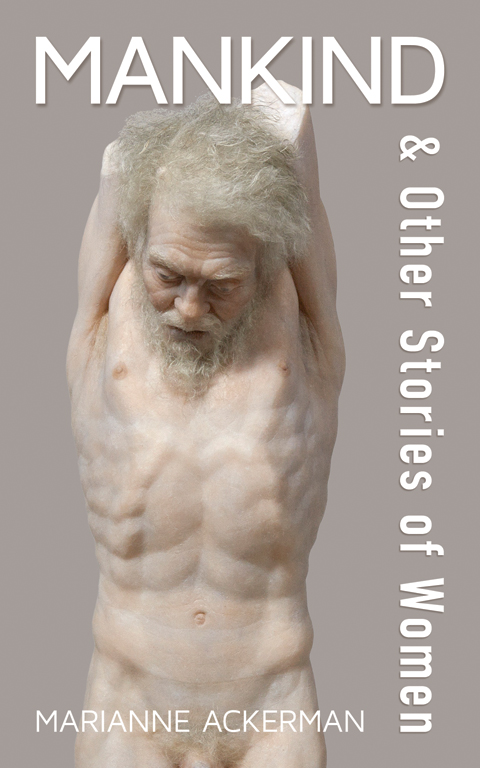
    The cover was not obvious. On a brief trip to Calgary in April, I discovered an amazing sculptor at the Trépanier Baer Gallery. Walking through the door, I was hit by the super elongated shape of a very thin, nearly naked corpse behind glass: Evan Penny’s Homage to Holbein, an eerie rendering in silicone and real hair of a Christ-like figure, almost fourteen feet long and chillingly life-like. My first thought was, this work belongs at the entrance to a church. It’s a religious experience.

    Days later, the images were still strong. Perusing the gallery website, I settled on Marsyas (Model), a twenty-four-inch high sculpture of a male torso, inspired by a Greek statue, which was part of the exhibition. Covers are traditionally the publisher’s domain, with input from the author. But I’ve known my publisher Mike Mirolla for a long time. I know he’s a dark soul. He loved the image immediately. Thus began the dance by which a raw visual idea and text become one.

    I could not explain why that image worked with my stories, which tend to be airy, urban, sometimes playful, and, some people say, funny. Maybe the figure’s vulnerability, resistance or air of fatalism speak to the tragic thread found in all comedy. As I revised the manuscript for publication, I found myself working him into the first story, “Mina,” which is about a friendship of rivalry and complicity between two women, their creative struggle, and one crazy night.

    mankind-final-cover

    “As I revised the manuscript for publication, I found myself working him into the first story…”

    After the normal back and forth, designer David Moratto’s concept was finalized. I slapped the cover up on Facebook, eagerly announcing my forthcoming fall book. It was mid-winter. The response was pretty well total negativity. Some of my dearest friends, smart people, said it was awful, scary, repellent. Nobody would touch this book!

    I was not prepared. I threw myself on the bed, lamenting once again my weakness for getting over-involved in practically everything. Now I’d have to face Mike and David with bad news, not to mention the gallerist, Yves Trépanier, and the artist, whose work I love.

    Mike did not share my panic attack, but held back. Yves did not. “Don’t listen to them! It’s a strong cover,” he barked via email. “You were right the first time. Don’t blink.”

    “The response was pretty well total negativity. Some of my dearest friends, smart people, said it was awful, scary, repellent. Nobody would touch this book!”

    Next to my control freakishness, impulsiveness is probably my greatest flaw. Here was somebody I respected telling me to trust my impulse. I looked at the cover again. At the other options I was trying to like. I asked Yves what his wife thought. He assured me she loved it. So I decided to take his advice, remain faithful to my first impulse. Well, except for a last-minute tussle over (ahem) how much “cleavage” should appear below my name. I did not want readers to be distracted by a dangling sack of flesh.

    Now that a stack of books is sitting on the dining room table, I can’t imagine a better cover than Evan Penny’s classy, classical all-too-human torso. I have no idea what readers will think, how it will affect their desire to pick up this book. But the baby isn’t mine any more. It is thoroughly herself.


    Mankind and Other Stories of Women will be launched along with three other local titles from Guernica Editions at Montreal’s Atwater Library (1200 Atwater Ave.) on Thursday, September 29, 6 p.m. The event is co-sponsored by the QWF. Click here for more information on the launch.

    ma-for-qwf-piece-sept-7

    Marianne Ackerman writes plays and novels. marianneackerman.com

    Photo credits: Photo of Evan Penny’s Marsyas Model (2016) courtesy of Evan Penny, and Kevin Baer – TrépanierBaer Gallery; Lesley McCubbin (headshot)