Tag: time

  • Pushing Past the Fear of Writing Nonfiction—By Chanel M. Sutherland

    Pushing Past the Fear of Writing Nonfiction—By Chanel M. Sutherland

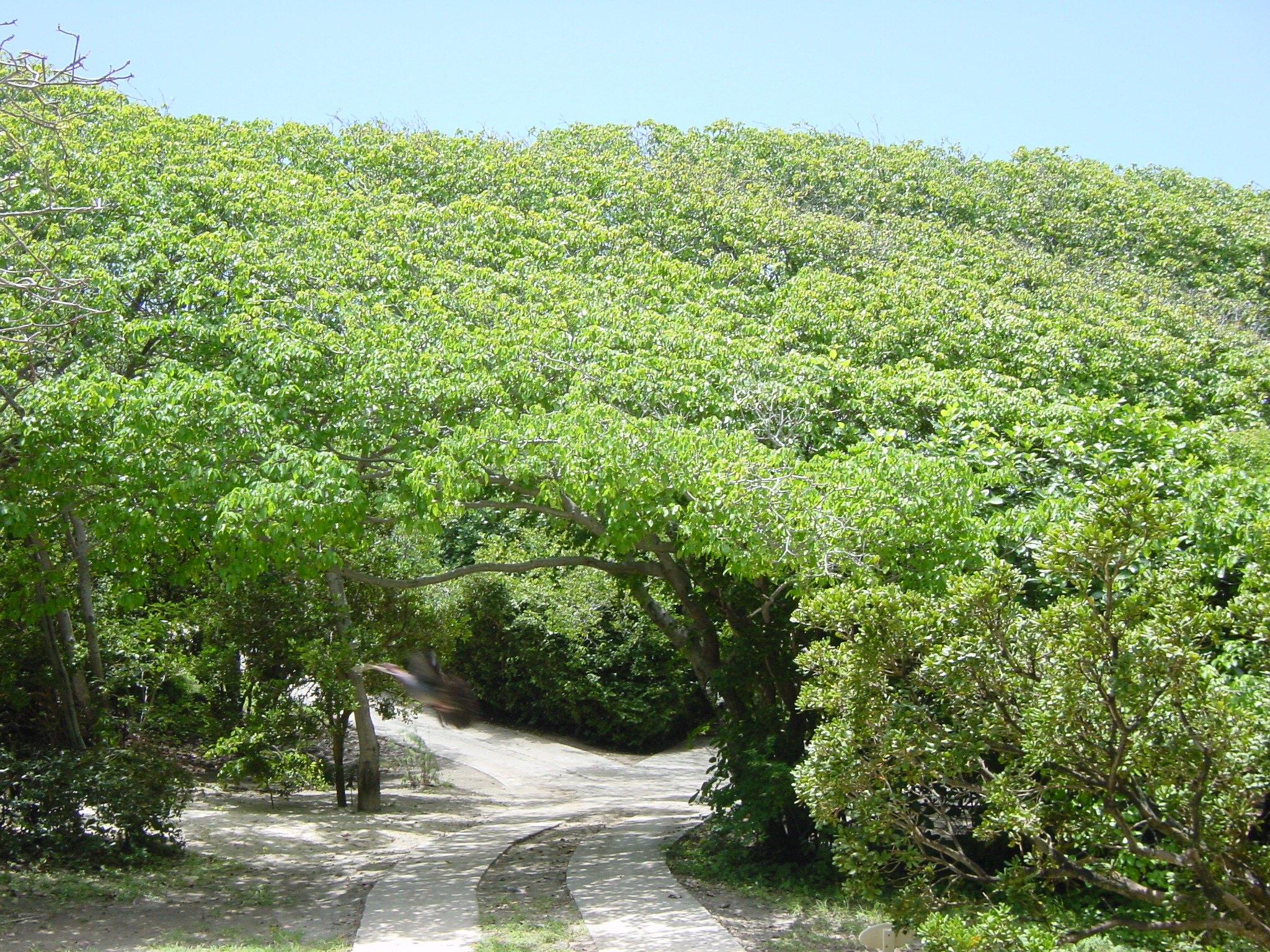
    The trees of St. Vincent and the Grenadines.


    If I’m being completely honest, writing nonfiction terrifies me. 

    But recently, I’ve felt compelled to write the truth.

    To write the stories that have shaped the trajectory of my life and—as if that wasn’t enough—have lodged themselves into my creative conscience, demanding to be told at all costs.

    It started with a single story, “Umbrella,” that I wrote out of pure exigency two years ago. 2020 was a heavy year for many reasons. The world became saturated with personal stories and confessions. Everywhere I turned—social media sites, the news, books, conversations with friends—people spoke out about their experiences with various kinds of discrimination and violence. 

    Suddenly, I found myself confronted by my own memories. They rose out of the trenches of my mind like shadows growing bolder in my darkest hours. They wanted to be written.

    Before, if you had asked anyone who knew me as a writer, they would have told you that my stories mainly deal with the unreal or unproven: futuristic robots, aliens walking around in human skin, scarecrows climbing down from their perch to seek revenge on those who impinge on their domains. This is the realm of storytelling where I feel most at home. One can argue that I write these stories to stay detached from real life.

    I had spent more than two decades circumnavigating my memories and deferring the day when I’d have to finally write about them. When they began to emerge unprompted, I knew my time had come. For the first time in a long while, I found myself turning away from speculative fiction to write something that made me uncomfortable. Nonfiction.

    “Umbrella” is the second nonfiction story I have ever written and the only piece I have shared with readers. Perhaps it is short and breathy for that reason. A panic attack on paper. When it won the 2021 CBC Nonfiction Prize, not only was I surprised, I was frantic. 

    Was I ready to expose myself in this way?

    The simple answer was no, but I’ve since learned that nothing is ever simple when it comes to writing. If it were, it would hardly be worth it.

    It became clear that nonfiction had chosen me, and I had no choice but to take the plunge and see it through. Once I decided to start curating a collection of stories based on my experience as a Black Caribbean immigrant child, I faced another difficult question.

    How much can I reveal about others in my stories?

    In this case, the “others” were primarily my family, and without their support, I knew that I would not be able to write the collection. There were no stories without them. My mother was the catalyst for many integral moments in my childhood. My grandparents the glue that fixed the pieces together in many ways—however imperfect. 

    I’ve always been a solitary writer. I prefer to be completely isolated when writing, and I usually avoid discussing any story until it is completed. With these stories, I knew there were people I needed to speak to and include from the start. 

    Not only was nonfiction changing my craft, but it was also now impeding on my process.

    Having that first conversation with my mom was one of the greatest moments we have shared. It was a warm autumn day; mom and I were meeting up for our weekly walk around the neighbourhood. I don’t recall how I broached the subject of writing the stories. Knowing myself, it would not have been direct.

    What I do remember is the excitement mom expressed in learning that I wanted to do this. She answered any questions I had, voluntarily filled in gaps in my recollection, and even offered to help with the research. Her reaction trickled down to my sisters and aunts, and before I knew it, everyone else was on board.

    I will forever cherish a messaging thread between mom, my sisters, aunts, and me. We were trying to remember the name of a tree native to St. Vincent and the Grenadines. We all knew it by a different name and had our own tales about it, but no one could figure out its one true name.

    This tree became the emblem of my nonfiction endeavor. A thing from my family’s collective past that—though still elusive—we are learning more about each day from one another. 

    As I continue to research and write these nonfiction stories, there is a certain sense of unshackling from the past. And while I begin to see who I am today refracting from each new piece, I am also illuminated by another light: that of my family. 

    So, maybe being terrified of writing nonfiction is not such a bad thing after all.


    Chanel M. Sutherland is the winner of the 2021 CBC Nonfiction Prize for her story “Umbrella” and the recipient of the 2022 Mairuth Sarsfield Mentorship, a component of the Quebec Writers’ Federation’s Fresh Pages initiative. Born in St. Vincent and the Grenadines, Chanel moved to Montreal, Quebec when she was ten years old. She holds a BA in English Literature from Concordia University, and is currently writing her first book, a collection of short stories that explore the Black Caribbean immigrant experience. csuther.com

    Photos: Lyn Gateley via flickr; Chanel M. Sutherland (headshot)
  • I Thought I Was Writing a Potboiler—By Robyn Sarah

    I Thought I Was Writing a Potboiler—By Robyn Sarah

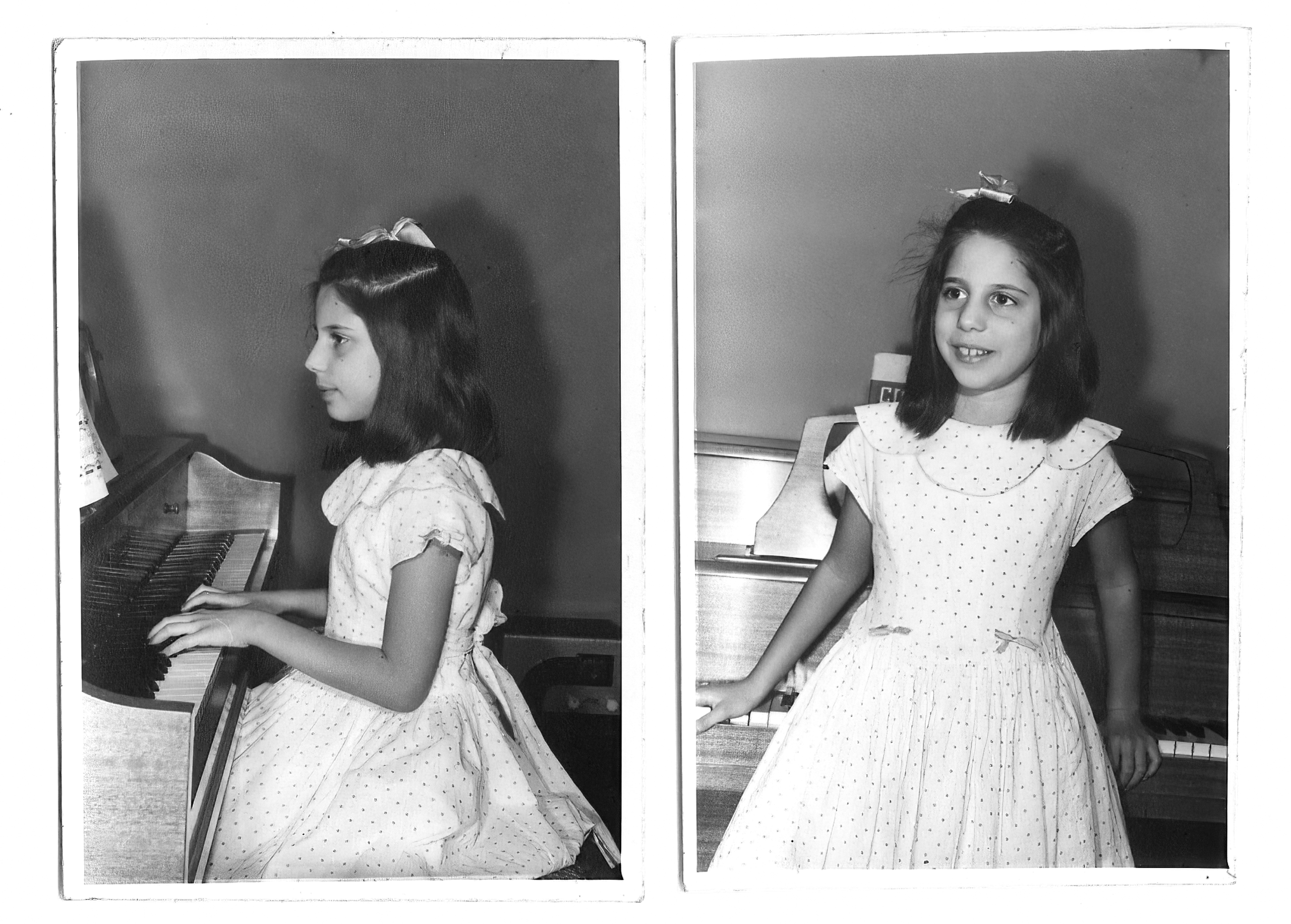
    Robyn Sarah, age eight. (Photo courtesy of author)


    I’m a literary writer to the bone: nothing I’ve written has ever paid enough to keep food on the table for long. But in 2009, during a spell when my muse for poetry and fiction seemed to have gone AWOL, I had the idea to write a short personal narrative, a book I could finish quickly and get published quickly. A potboiler, so to speak—not in the commercial sense, but to reassure myself that I was still a writer. It would be a story about returning to study piano at the age of fifty-nine, after a thirty-five-year lapse, culminating (hopefully) in a modest recital on my sixtieth birthday. A debut at sixty! I had never performed on piano as a teen or young adult. Of course, I would have to live this story before I could tell it. One year of goal-oriented piano lessons, during which I would track my progress in a journal; then a few months to turn the field notes into a book.

    Ten years later, the manuscript still wasn’t finished. And it wasn’t short.  A two-year purgatory of editing and revising had yet to begin. Music, Late and Soon was finally published in August 2021. Only vaguely does it resemble the book I thought I was going to write. What happened? How did I lose control over the best-defined, most straightforward writing project I had ever conceived? 

    The key may be in that term, “writing project.” Poetry is my primary genre, and while some poets do conceive poetry collections around a premeditated subject, I’m not one of them; my poems have always been composed individually, to be gathered later into collections. Even individual poems tend to begin without a clear subject in mind, but rather with some observation of the moment—an image, a feeling, a memory fragment, maybe just a phrase I like the sound of. My short stories begin similarly; there’s never much plot or a clear idea of where I’m going. This makes for some anxiety while writing, but it’s my natural process as a writer.

    When I contacted my old piano teacher (then in his eighties) and outlined my project, asking if he might be willing to give me some guidance, he wondered why I was fixated on the idea of performing, especially on a schedule. “Why not just start working again, and see where it leads? Playing the piano is like any art form, any creative process. It can’t be forced, it doesn’t work by deadline.”

    In retrospect, he had answered my “What happened?” question before it could need to be asked—had I really been listening. Wasn’t I listening? I thought I was. I thought he was saying something I already understood as a writer. But I didn’t think what he was saying applied to the book I had in mind. This book was going to be different. It was going to be easy—a straight line from here to there. The return to lessons, the year of preparation, the recital, The End.

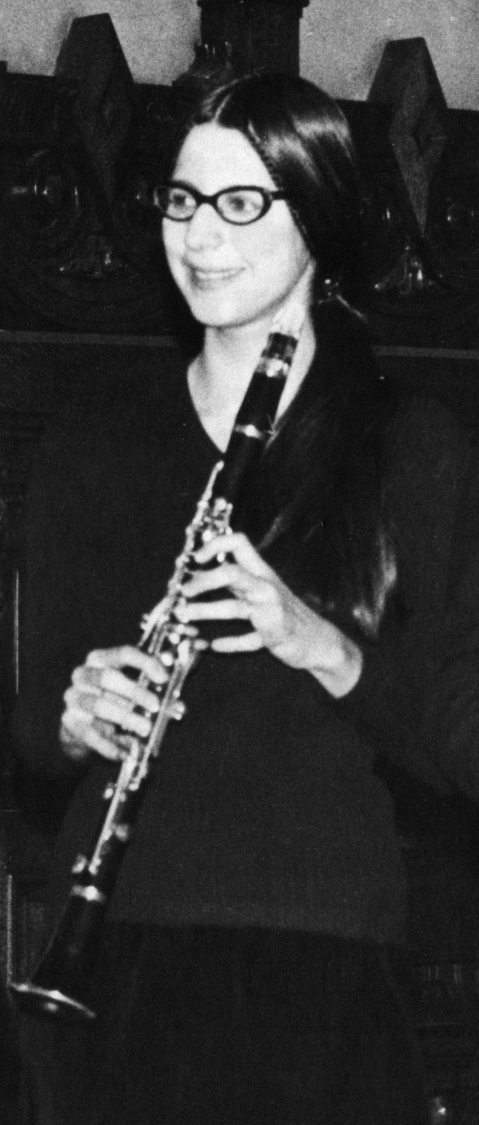
    But wait. A “return” to lessons implied a past. Why had I stopped studying piano? Why was I now fixated on the idea of performing? Moment of truth: I might need to provide a bit of backstory if I expected to interest a reader in my late-life musical venture. I did, in fact, have some experience of musical performance; the trouble was, it wasn’t on piano. For a decade I had studied clarinet in a professional music school, aspiring to a career as an orchestral musician. I had graduated, but had not pursued that path. Nor had I ever really looked back or asked myself why.

    Robyn Sarah, circa 1972.
    (Photo courtesy of author)

    Obviously this wasn’t the time or place to get into all that: it would just complicate the main story. Sticking to my plan, I began studying piano again, keeping detailed notes on the lessons. In tandem, I wrote some reminiscences of childhood: earliest memories surrounding the piano, early lessons with three different teachers before I came to study with the mentor I’d just reconnected with. I drafted a first chapter based on this material—a summary that, I thought, adequately contextualized where I was coming from. It glossed over my music school years on clarinet, allotting them a passing mention but keeping the focus on piano.

    Next moment of truth. I read the chapter aloud to a friend I’d known since high school, who had studied piano with the same teacher-mentor and was now a professional pianist and educator. After listening affably, expectantly, to the end, he was silent a moment, then blunt. “So, what’s the purpose here? I’m not getting a sense of why I should care about all this. And how could you leave out your ten years as a clarinetist?”

    “I didn’t! They’re there.” I pointed to the relevant paragraph. 

    “What, that’s it? Are you telling a story, or writing a CV? Those years were a fundamental part of your musical history! You aren’t being honest with the reader here. This isn’t you. I’m not hearing your real voice, because you’re not telling your real story.”

    My heart sank, because I recognized immediately that he was right. The bottom had just dropped out of my “project.” But once I accepted that, the book suddenly came to life. I realized I did have a story to tell—a buried one, on which the significance of the current one depended. I was going to have to delve into that unexamined past and make some sense of it, find out how it connected to my present moment. There were mysteries to explore here…

    I began asking myself questions: one led to another. I dug up and pored over surviving journals and letters from my high school and music school years. Present self and past selves collided and seemed to have things to say to each other. The pianist and the clarinetist had things to say to each other. The writer and the musician had things to say to each other. They all had questions of their own about creative process: what nurtures it, what can get in the way of it?

    A familiar anxiety swept over me as I realized that my “potboiler” was morphing from a brief narrative with a one-year time frame into a musical autobiography spanning my whole life. How was I going to weave all these strands into something coherent and beautiful that I sensed could be made of them, the way a composer weaves together multiple voice-lines in contrapuntal music? A familiar excitement tempered the anxiety, giving me the patience to spend ten years finding out.


    A Biblioasis Interview with Robyn Sarah

    Robyn Sarah reads her poem “Station”, from her Selected Poems, Wherever We Mean to Be (Biblioasis, 2017).

    “The book’s title is taken from this poem. I chose it because it expresses something that runs through all my poetry: a fascination with the way past and future, memory and intention, inhabit our present moment.”


    Spotlight on Wherever We Mean to Be by Robyn Sarah


    Photo by Stephen Brockwell

    Robyn Sarah is a Montreal poet and writer whose 2015 poetry collection, My Shoes Are Killing Me, won the Governor General’s Award for that year. Her “potboiler” was short listed for last year’s Mavis Gallant Prize for nonfiction.

  • Writing about Not Writing—By Sivan Slapak

    Writing about Not Writing—By Sivan Slapak

    Is a writer who isn’t writing still a writer? And if so, for how long a stretch? These are the questions I’ve been asking myself—actually, tormenting myself with—for the last year or two.

    Even at my most active I’ve never had a writing routine. I wish I could say I’ve always woken up to meet my muse at 9 a.m. each morning. Nevertheless, I’ve somehow managed to amass material over the past few years, with a collection of interwoven short stories as the intended goal.

    When I began crafting some stories about five years ago, I didn’t call myself a writer. The verb was okay: “Writing a bit,” but not the noun. I’ve kept journals since childhood, met in writing groups since my teens. Then came academic papers, grant writing gigs, and so on. So, I’ve been engaged in the act in various ways throughout my life. But “writer”? It seemed pretentious, or premature at best. Like the difference between having an artistic spirit, and creating art.

    Despite some early successes—getting published, shortlisted, even awarded (!)—I found it challenging to accept, and introduce, myself as a writer. (“I just write a bit!”) But with time, I allowed myself to settle into the identity. In some ways this has calmed other questions about my place in the world, when I, like so many of us, feel I’ve made a life of living on the seams. For a writer, that’s not a bad spot to be.

    But what does a writer who hasn’t been writing call herself? (“Lost,” when she’s panicking.) I know we’re supposed to believe that lulls and blocks are part of the creative process (I’ve read The Artist’s Way, too) and that resting and inputting—reading, seeing art, living life without notating it—is an incubation period. And I suppose I do essentially think that. Yet at some point this ‘incubation’ begins to feel more like stagnation, and the idea of ‘writer experiencing a lull’ is harder to buy than ‘not a writer anymore.’ Especially when the pause becomes longer than the writing that preceded it.

    Of course, there are lots of reasons for a writing hiatus. The simple ones are limits of time and energy. For me, I’ll say work: over the years it’s mainly been in the community and arts sectors (to my joy), often as a coordinator or editor. I love these roles and they offer flexibility, but I’ve noticed I easily choose working on others’ projects over my own, even when I don’t have to. Before I had a job, my blocks were caused by the paralyzing anxiety of NOT having enough work, or not having work I like. So, there’s always something. And there’s always the hauling undertow of social media to compound the issue. In any case, like many writers I know, I struggle to prioritize writing time, and the obvious excuses are less complicated than facing other, less conscious motives. Whatever the reasons, the longer I go without writing, the more miserable I feel.

    What about my short story collection? What about being a writer?

    In recent years I’ve hung on, by my fingertips, to the fragile thread of a notion that I’m still a writer. An unproductive one, but still.

    Thankfully, I seem to be slowly emerging from my dry spell, and I’ve been looking back on what’s kept me holding on: I have to credit the writing group I’ve been part of for several years. I haven’t submitted in ages, but I’ve stayed in as a reader and tried to be an active presence in our little community. Their support has buoyed me.

    I also took two QWF workshops. I didn’t produce new work, but it gave me a chance to revisit some pieces and say, “Hey, this isn’t horrible!” (And have peers say similarly encouraging things.)

    This year I began writing daily morning pages, which put a pen back in my hand and is as close to a routine as I get. In the winter, riled up about a political issue, I wrote an op ed, which was published. Soon after, so was an old story I’d dusted off. I attended a ‘Shut Up and Write’ session in a QWF writer’s house. And just recently I met the criteria to have my “Literary Writer” profile approved by the Canada Council for the Arts. Bureaucratic recognition though it is, I felt grateful to receive it.

    So, there have been steps, some small and some more significant, in the realm of writerly activity. Not (yet) my completed short story collection. Or even another short story. But something, maybe more than I thought. Enough movement to feel reassured that while I’ve been fretting over stagnation versus incubation, my writer-self has kept busy.


    profile 2017 leslie schachter

    Sivan Slapak is a writer working in the arts and culture sector of Montreal. Her short stories have won and been shortlisted for fiction awards, and appeared in publications such as The New Quarterly, Montréal SeraiJONAHmagazine, and in an anthology published by Véhicule Press. Sivan lived abroad for many years and is fascinated by the encounters that take place when distinct communities meet, a theme she enjoys exploring in her writing, and in her life—and in the short story collection she hopes to complete soon.

    Photo credits: Sivan Slapak (header image); Leslie Schachter (headshot)

  • What Playing Piano Taught Me About Writing-by Carly Rosalie Vandergriendt

    What Playing Piano Taught Me About Writing-by Carly Rosalie Vandergriendt

    The movers cost about as much as the piano. When they pulled up in front of our house on a muggy day last August, I understood why. Cars darted around the delivery truck as two men coaxed the swaddled instrument down a ramp and onto a dolly. They worked swiftly. Soon, the piano was being ushered up the walkway to our home. I stepped out of the way.

    “Who plays?” asked the first mover, in a thick eastern European accent. “You or him?” He nodded at my partner, who was standing on our front porch with a mystified look on his face.

    “Both of us,” I said. It was both true and untrue. My partner, a musician, could play the piano. You wouldn’t find him fleshing out a riff on one, though, as he often did on guitar. As for me, I’d played as a child and into my late teens. But the only keys I’d graced as of late were the ones on my MacBook.

    The movers hoisted the piano up our front steps. I hovered while they deliberated removing our front door. My partner hurried away to procure the necessary tools. Then the men decided they wouldn’t remove the door. When my partner reappeared, the piano was crossing the threshold.

    “You play Bach?” the first mover called to me as he disappeared inside the house.

    “Ten years ago I did,” I said. Piano still felt like a first love, cast off with the arrival of adulthood. During my time at university, the digital piano I’d optimistically bought and shuffled from one apartment to another had all but gathered dust. Eventually, I had resigned myself to reality and sold it off.

    Now, I was keenly aware of the privilege of owning a piano, especially in the city, where space, soundproofing, and noise-tolerant neighbours are limited. My partner and I had just moved into an apartment that felt like a real homeanother privilege. Fortuitously, that home also happened to be on the ground floor.

    With the piano stationed in our living room, the movers left as quickly as they’d arrived. I stared at the instrument with both awe and unease. It had been my partner’s idea: something for both of us. Privately, I had reservations. Where would I find the time? Could I even still play? Would this piano, like its abandoned digital cousin, become a symbol of the person I wanted to be, instead of the person I actually was?

    “Would this piano, like its abandoned digital cousin, become a symbol of the person I wanted to be, instead of the person I actually was?”

    I spend a lot of time thinking about the person I want to be. I may call myself a writer, but without a published book, I don’t always feel like one. I may have a string of small-time successes, but those publications are also reminders of the frustrating slowness of the writing process. Patience is a virtue when it takes years to go from an idea to a polished manuscript to a published story.

    “I spend a lot of time thinking about the person I want to be. I may call myself a writer, but without a published book, I don’t always feel like one.”

    The piano arrived during a transition period. The move meant more financial responsibility, and as a freelancer, I quelled my anxiety by taking on a full-time contract in addition to my regular workload. Suddenly, I was juggling clients and rising at an unspeakable hour, hoping to squeeze in some writing. Most of the time, I was barely managing my inbox. I thought constantly about my stalled manuscript, and envisioned its completion date slipping farther and farther into the future.

    Playing music, I soon remembered, was exhilarating. My fingers settled back into the waltzes and études I hadn’t played in years. I had never been a technically oriented player; now, the mistakes I made mattered little, if at all. There was nothing to prove and no one to prove it to. The joy of playing was enough.

    As busy as I was, piano felt like a reprieve instead of an obligation. Sometimes, just seeing the piano—the fact that it took up a quarter of our living room made it hard to miss—was enough to make me stop whatever I was doing, sit down, and play. Why, I wondered, couldn’t writing be that easy?

    “Sometimes, just seeing the piano… was enough to make me stop whatever I was doing, sit down, and play. Why, I wondered, couldn’t writing be that easy?”

    As summer turned into fall and fall into winter, I kept juggling work commitments. Yet, I knew it wouldn’t be like this forever. A few months of industriousness meant I was in a position to be more selective in the months to come.

    Meanwhile, I’d learned a new song on the piano. I hadn’t told myself I would learn anything; I’d simply made a habit of sitting down on the bench. My new musical practice served as a reminder that it is the act itself, not the end result, that counts. As the year wound down, I kept thinking about my manuscript but I stopped agonizing over when it might be finished. All I can do is keep writing when I can. That is enough.


    CRV_HeadshotCarly Rosalie Vandergriendt is a Montreal-based writer and translator whose work has appeared in Prairie Fire, Matrix, The Malahat Review, The Fiddlehead, RoomPRISM International,and elsewhere. Her story “Resurfacing” was recently shortlisted for the Carter V. Cooper Short Fiction Prize. Carly is a recent graduate of the University of British Columbia’s Optional-Residency Master of Fine Arts in Creative Writing program, and is currently working on a short story collection titled Playing the Man. Visit her at carlyrosalie.com or follow her @carlyrosalie.

    Photo credits: Simon-Pierre Lacasse

  • Why I Loved Editing a Small Canadian Online Magazine, and Why I’m Leaving—by Laurence Miall

    Why I Loved Editing a Small Canadian Online Magazine, and Why I’m Leaving—by Laurence Miall

    Before I ever joined a magazine, or published a novel, for that matter, here’s how I imagined people who had responsibility over publishing texts. They were working in fancy university offices or in stylishly decorated apartments in artsier parts of town than my own, smoking cigarettes and drinking wine, sporadically casting a disdainful eye toward the “slush pile” (in my mind’s eye, the slush pile was either physically manifested, or online, it didn’t make a difference insofar as the disdain goes). And here’s what would happen if ever they came across my submission. They’d read a line, chortle to themselves, and say, “This poor, desperate bastard. Why does he waste our time?” Then all the editors would say in unison, “Let’s publish one of our friends, instead!”

    That’s how I imagined it.

    Maybe some literary journals are nepotism-only zones, I don’t know. I’ve only ever worked for carte blanche. I joined as fiction editor in 2014 and the first issue I worked on was Issue 20. Our most recent issue is #29, so that’s ten issues in total. As of Issue 23, I took on more responsibility for the magazine, taking over from our illustrious founder, Maria Turner, first in partnership with Ben Spencer, then with Gregory McCormick.

    Though the years, I have come to enjoy my vexed relationship with the slush pile. Every time I sit down to read, I want to love the next piece I’m going to discover. One of the very first stories I ever picked was Matthew di Paoli’s “Other Forms of Life,” and I found it so funny and quirky that I immediately started reading it aloud to Monika, my partner. I invited Matthew to read his story at a carte blanche event we were doing at the Blue Metropolis Literary Festival in Montreal, and he couldn’t come, so I read out parts of his story in his place. I loved the texture of someone else’s sentences coming from my lips, and the rhythm—almost like a form of breathing that was not my own.

    So yeah, the slush pile wasn’t like I’d imagined it, not at all. It was sometimes a source of some frustration, but also of great excitement and pleasure.

    Over the years, the comradeship of the entire carte blanche crew, and the support of the Quebec Writers’ Federation, was constant, making me realize that one of the biggest benefits of the literary life is not the writing itself but the community of other writers, editors, publishers, curators, and do-it-all’ers who keep culture humming along and livening up lives that would otherwise be lived in dank, solitary darkness.

    “I loved the texture of someone else’s sentences coming from my lips, and the rhythm—almost like a form of breathing that was not my own.”

    Chalsley Taylor, above all, has made the magazine the beautiful online presence it is today, and so it’s to her I would like to express my biggest THANK YOU. We started this journey at pretty much the same time. It’s no overstatement to say that this magazine would not be in the fine shape it is without her. With Cason Sharp now on the team, I believe carte blanche is going to keep on kicking ass in its cool, classy way. How can it not, with Nicola, Georgia, Bronwyn and the two Gregs bringing their brilliance to each and every issue?

    I am shortly going to be leaving the team in my official capacity as editor. I do so with mixed feelings. Once upon a time, I honestly felt I could tackle any amount of work that was thrown at me. The days seemed elastic. I could stretch them at either end, conjuring up just enough minutes or hours to always get things done. But I don’t feel that way anymore. I am trying to figure out how big each relative part of me is, and how to accommodate all those parts within a finite body. What’s the size of the editor in me, compared to the writer? And more importantly, the loving husband? The communications director? The friend? The son? The cooker and eater of meals, and the drinker of ales, and the sporadic watcher of Liverpool FC, and everything else?

    A few weeks ago, my second oldest friend disappeared from social media. In recent years, we hadn’t established any other form of communication except for Twitter and in-person visits. I had no phone number or email address for him. I started to wonder, nervously, if he was still alive. In 2016, I lost a dear friend to suicide. Another of my friends has struggled with brain cancer. These experiences and many others made me think dark and fearful thoughts.

    Day after day, my friend didn’t reappear. There was an envelope icon lit up in Twitter, indicating a message from him, but the message was an old one, and because his account was deactivated, the message itself had ghosted away. I tried to figure out what was the best course of action. Should I just show up at his house to check on him? No, I told myself. It wasn’t time for that. He’s not dead, I said to myself. He’s just taking a break from Twitter. Who can blame him? Donald Trump is president.

    My friend eventually reappeared, thank God. He found my email address and wrote to me. I was relieved, and felt a little foolish for my quiet panic.

    “I am trying to figure out how big each relative part of me is, and how to accommodate all those parts within a finite body. What’s the size of the editor in me, compared to the writer? And more importantly, the loving husband?”

    Realizing just how agitated I had become gave me yet another confirmation that I need to reappear—to myself. Working sixty- to seventy-hour weeks means you’re obliged to run on adrenaline and anxiety half the time. I get bent out of shape easily. I sometimes get inordinately fearful about small things. It’s time to slow down a little. Time won’t be warped and woven into shapes that better accommodate me. I must accommodate to time.

    Whatever happens, I am going to remain a friend to the carte blanche crew. I became an editor at approximately the same time as I had my first novel accepted for publication, so the two experiences effectively took me from zero to one as a literary person, according to my own weird binary measurement. I am enormously grateful to have had such opportunities.

    I still send stories to magazines sometimes, and I get my share of rejections, but I don’t get resentful about them. I am pretty sure that the people at the magazines are just that: people. Maybe some of them have similar traits to me. Maybe they’re a bit fucked up. Maybe they’re anxious, maybe overworked, maybe worrying about a loved one—like us all.


    miall-authorphoto-1Laurence Miall is a Montreal-based writer and communications expert. His first novel, Blind Spot, was published by NeWest Press in 2014.

    Photo credits: Ben Brooksbrank; Owen Egan (author headshot)

    Apply to be carte blanche’s new editor.

  • Finding Perspective: Writing in the Dark at Berton House by Shelagh Plunkett

    Finding Perspective: Writing in the Dark at Berton House by Shelagh Plunkett

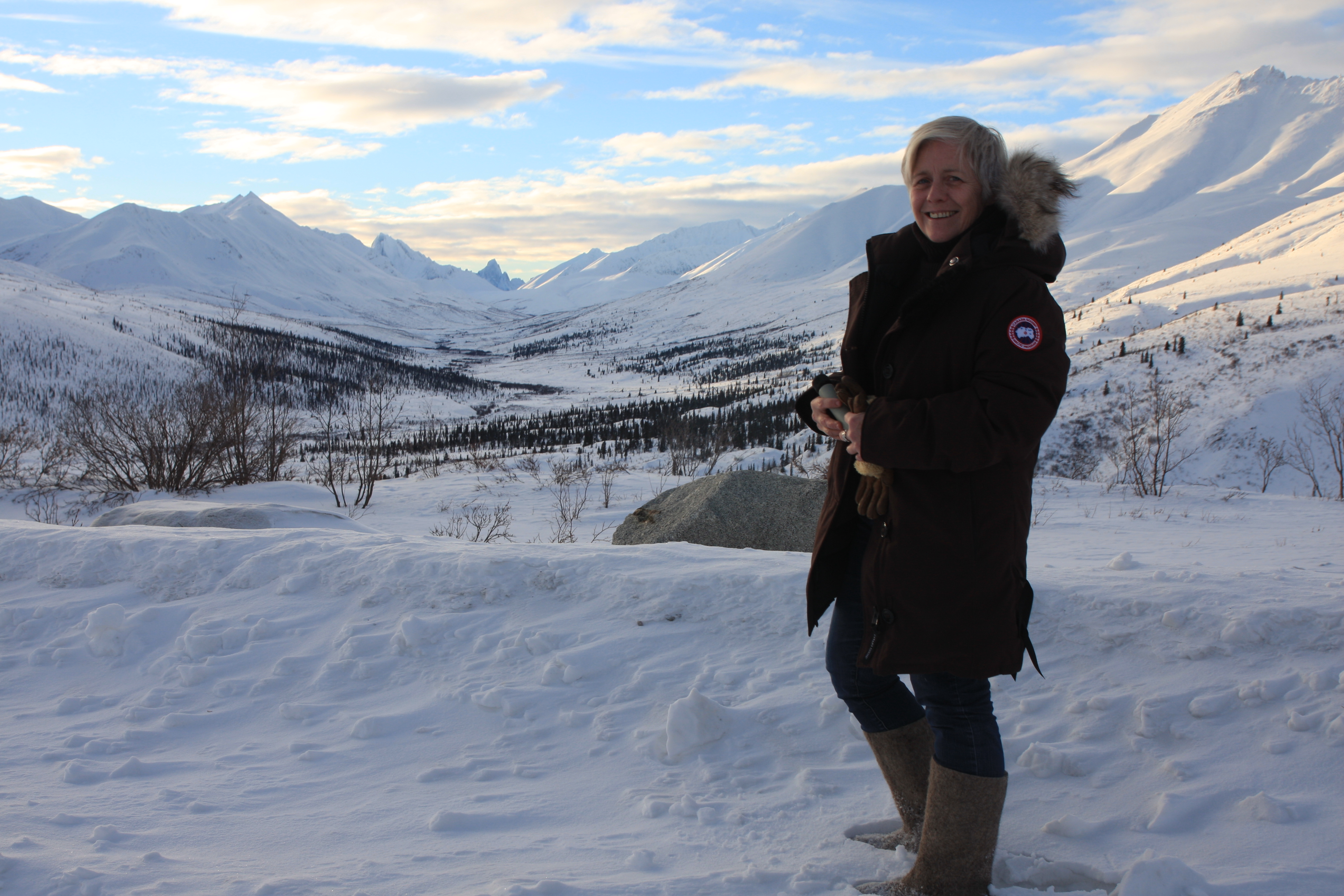
    On the wall above my desk in Montreal is a photograph taken in February at the Arctic Circle. The print is four feet wide by almost three feet high and foreground takes up most of that space. The horizon line is high on the print and marked by the Richardson mountains: white and treeless. It was -34C that day and my eyelashes froze together while I focussed the camera. In the foreground are the faint stains of a recent caribou kill, one hoof hidden amongst highbush cranberry and yellow grass poking out of the hard snow.

    ice lashes

    The perspective is deceiving. Trails of Black Spruce bisect the wide flat plain in middle distance and lead toward the base of the distant rounded mountains. Those peaks look close enough to touch, but they are many kilometres away.

    It is an image that encapsulates much of what I learned during my three-month residency at Berton House in Dawson City, Yukon.

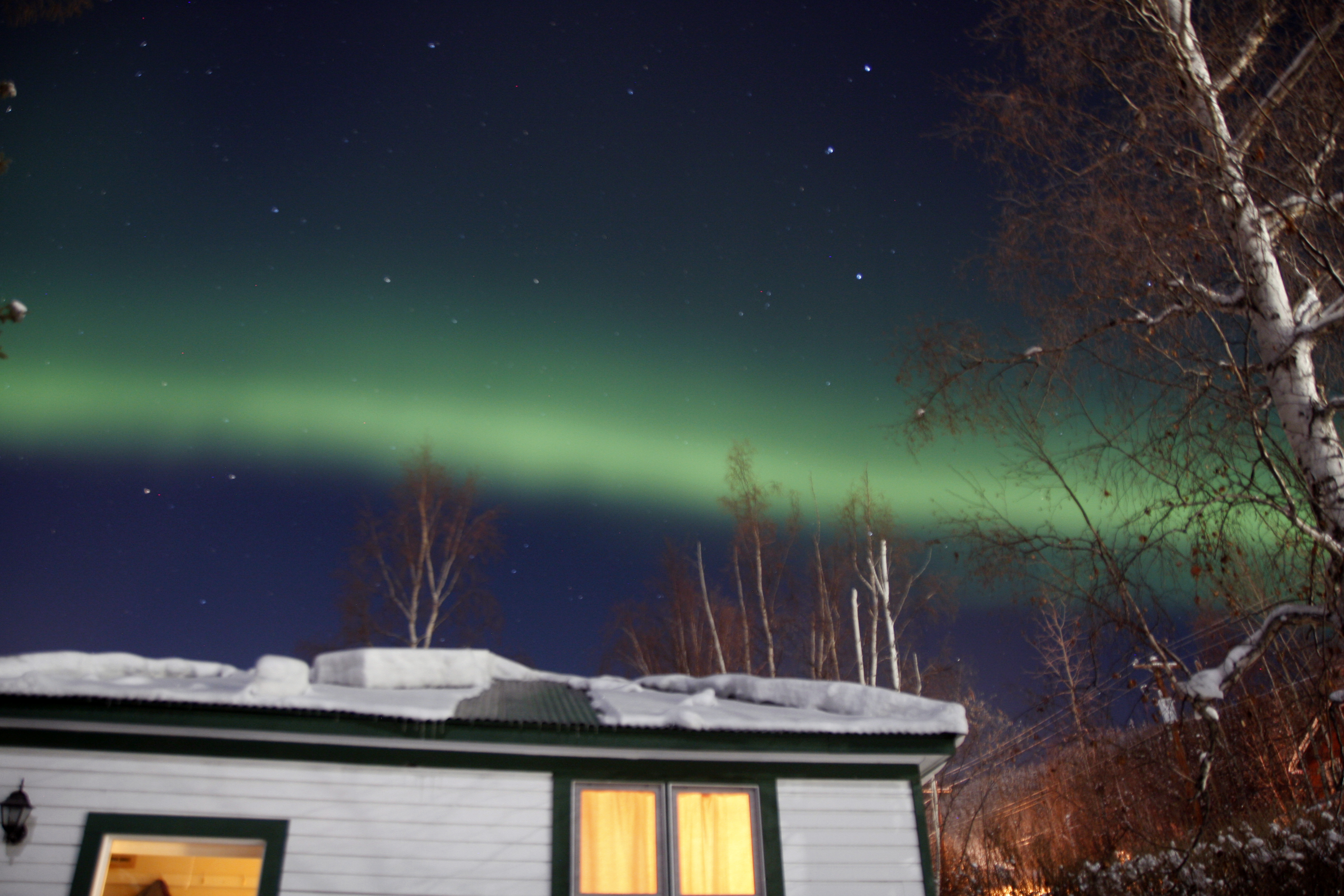
    green over Berton House

    Berton House is owned and operated by the Writers’ Trust of Canada and each year four authors, supported by Canada Council grants, are chosen to spend three-month stints at the house. Residents do not have to teach or lecture, offer manuscript evaluation or coach emerging writers. In fact, they don’t even have to write while staying at the house. CanLit icon Pierre Berton, when gifting his house as a retreat, made that stipulation. He said, “the main purpose is not to let them write, but simply to give them time off from writing if they want it, or time off to think about writing or about the place they’re living in.” In the house are two binders of letters each resident has left for the next. Over the winter I spent a few hours reading what Lawrence Hill, Charlotte Gray, Joan Thomas, and the rest of the residents who’d come before me had to say. Some got a fair bit of work done. Others shut down Dawson’s bars nightly. Everyone left with something new: a stronger sense of their writing, the seed of a manuscript, suitcases of notes and ideas, friendships.

    swirl over 7th ave

    “The main purpose is not to let them write, but simply to give them time off from writing if they want it, or time off to think about writing or about the place they’re living in.”

    I landed in Dawson on December 23. When I stepped off the plane at 10:30 a.m. it was still too dark to see the tiny terminal building fifty feet away. My eyelashes froze—yeah, that happened a lot—and I immediately lost sight of my seatmate, a woman in a velour tracksuit who’d come to Dawson to “experience the Yukon winter.” Betty and Dan Davidson, part of the Berton House team, eventually found me in the crush of people inside the terminal. I was taken on a quick tour of town: “Here’s the curling rink. Do you curl?” I don’t. “Here’s the Anglican Church. Here’s the Baptist Church. Here’s the Catholic Church. Here’s the nondenominational worship house. Are you a churchgoer?” I am not.

    When they dropped me off at the house it was 12:30 p.m. and still too dark to see across the road. I watched the cloud of vapour left by their car’s tailpipe dissipate and sighed as the house settled around me, pipes banging as the heating system fired up. I was the seventy-fourth Berton House writer-in-residence, and I had the place all to myself. I didn’t know anyone living in that remote town. It would be dark for most of my stay (or so I was led to believe) and bitterly cold (or so it had been in the past). Alone in the cold and the dark, I would write reams.

    “I had the place all to myself. I didn’t know anyone living in that remote town.”

    The phone rang. I was invited to a Christmas Eve party and then to a Christmas potluck and then to a Boxing Day gathering and a New Year’s dinner. Did I know about the twice-weekly film festival screenings? Would I like to snowshoe up the Dome? Was I coming to the gallery opening and lecture next week?

    For a town of about 900 winter residents, Dawson was hard to keep up with.

    Initially the invitations arrived with an accompanying “don’t feel obliged, we know you’re here to write.” Initially, I agonized over the daily choices: write or hike, write or read, write or … and ground myself to a standstill over words that weren’t piling up. In my self-inflicted wracking I lost sight of why I write and nearly turned my prized three-month residency into the demise of my writing.

    “I agonized over the daily choices: write or hike, write or read, write or …”

    Raven angels

    But, at some point, I came to my senses and relearned something important. Perhaps it was the night I spent lying on my back on the frozen Yukon River hypnotized by the Northern Lights or while I was listening to Tr’ondëk Hwëch’in storytellers speak on the cultural importance of “story” or maybe when I stepped over the Arctic Circle. At some point I remembered that sometimes that thing which seems so close can’t be reached until one moves away from it.

    Sometimes to write good stories we have to stop trying to write.

    IMG_6713

    When I left Dawson the airport terminal was again packed, but this time I knew everyone. I came home with new friendships, more than one thousand photographs, and twenty-two thousand words towards a new book.


    IMG_5482

    Shelagh Plunkett is an award-winning writer and journalist living in Montreal. Her work has been published in various Canadian and American journals including The WalrusenRoute MagazineGeistThe Vancouver Sun and The Globe and Mail. In 2007 she won the CBC Literary Award for creative non-fiction and her memoir of growing up in Guyana and on Timor, Indonesia, The Water Here is Never Blue, was short listed for the Mavis Gallant Prize for Non-Fiction and the Concordia University First Book Prize. She has just returned south after three months in Dawson City, Yukon as the Writers’ Trust Berton House writer-in-residence and is now in the thick of a new manuscript tentatively titled Caught By All That’s Come Before. Follow Shelagh on Twitter and Instagram @shelaghplunkett. shelaghplunkett.wordpress.com

    Photos: Shelagh Plunkett

  • Hello Baby, Bye Bye Books by Mike Steeves

    Hello Baby, Bye Bye Books by Mike Steeves

    Man holds baby while reading a book

    My daughter was born on August 25, 2014, and during the interminable lead-up to her birth I was, like all new parents, subject to a deluge of unsolicited advice, warnings and thinly-veiled threats from family, friends and complete strangers about what I could expect as a new parent. One of the warnings I heard most often was that the time I had for reading was going to be severely curtailed.

    Maybe my friends didn’t appreciate how dedicated I was to my routine, because I soon discovered that it was actually pretty easy to carve out the three hours I needed in order to stay on top of the steady stream of books that I had begun purchasing early on in my wife’s pregnancy as a way of offsetting my anxiety over not reading enough.

    For starters, I used to bike to work. But once I realized that I could eke out at least forty minutes of reading on my daily commute, I started taking the metro to work, thereby forgoing the last form of physical activity I practiced with any sort of regularity.

    Another threat to my reading habit was the immense amount of time required to help my daughter sleep. Newborns spend a lot of time sleeping, but they are notoriously bad at it and require assistance (referred to as ‘soothing’). This basically amounts to walking the streets of your neighbourhood with your baby stuffed into one of those obnoxiously priced “carriers.” Once I was over the new-dad jitters and was no longer trying to impress passersby with the baby I had strapped to my chest, I got into the habit of doing laps around the pond at Parc Outremont while reading from a book that I held in front of me. I made my way through Michael Hamburger’s translations of Paul Celan this way, and while I typically have little memory for poetry, many lines from this work are now frozen in place, triggered every time I pass a fountain or leafless tree. And one of the most memorable reading experiences of the last few years is the time I spent on a cold bench at Parc Saint-Viateur with my daughter sleeping in the carrier as I read the final pages of Peter Handke’s A Sorrow Beyond Dreams while kids dressed up as penises made their way to Halloween parties.

    Happy Halloween

    ” …the time I spent on a cold bench at Parc Saint-Viateur with my daughter sleeping in the carrier as I read the final pages of Peter Handke’s A Sorrow Beyond Dreams while kids dressed up as penises made their way to Halloween parties.”


    My aforementioned friends, the ones who warned that I would have to sacrifice my love of reading to my role as a new dad, were also an enormous tax on the time I had for reading. By refusing dinner invitations, birthday party invites, brunch for babies, etc., typically blaming my absence on my daughter, I was not only able to keep up my reading schedule, but, after I had refused enough of these kind invitations, they no longer came in with any regularity, which also spared me the enormous time-suck of responding in a considerate manner something to the effect that “I would love to! But…”

    While it turns out that my friends were wrong about finding the time to read, there is one aspect of parenthood they were right about, but that I’d never taken very seriously: I may still manage to find a comparable quantity of time, but the quality of that time has been seriously degraded. I can sit for hours with Knut Hamsun’s Pan in front of my face, but I regularly find myself rereading the same line over and over again. Or an hour passes and I don’t even make it to the bottom of the page I started on. I’ve managed to read an impressive number of excellent and difficult works, but I’ve hardly retained anything. Within a week or so of finishing a book, I even struggle to remember what I had just read (except for the Celan). So while I have plenty of time to read, I can’t maintain the level of focus and attention I had in my pre-paternal reading sessions.

    Which brings me to the final obstacle to my reading habit – writing. Before my daughter was born I used to try to write at least a few lines every night, but even this small commitment now seems to take an inordinate amount of time away from doing the thing that I really enjoy (it would be quite a stretch to say that I enjoy writing). On account of the soul-wearying exhaustion I feel at the end of every day, I find it pretty easy to excuse myself from writing for the night and to settle into a good book. And by “settle into a good book” I mean “read the same line over and over again until I eventually pass out on the couch.” My friends say that it’s perfectly natural to neglect my writing for the next year or so, and that eventually I will find the time and energy to start up again. I hope they’re right. Goodnight moon.


    Bookjacket_M Steeves

    Mike Steeves lives with his wife and child in Montreal, and works at Concordia University. Giving Up is his first full-length book of fiction. Connect with Steeves on Twitter @SteevesMike.

    Photos: Via Flickr; no changes made (top); Mike Steeves (Halloween); Nikki Tummon (headshot)

  • Busting the Myth of Work-Life Balance by Susan Olding

    Inside the Cardinal Studio, one of the Leighton Studios at Banff Centre for the Arts.

    About a year ago, I was invited to give a talk to some graduate students at Queen’s University about what was billed as “work-life balance.” Sure, I said. Why not? That should be easy.

    There was only one small problem. For me, “work-life balance” is an unattainable mirage. I am the farthest thing from an expert on the topic.

    The truth is, most of my days pass in a blur of immediate “to-dos.” And the hours that I so carefully set aside for creative work often go instead to the unanticipated trip to the doctor, the emergency phone call from the school or the rush-rush project for the paid job.

    I used to spend a lot of time feeling resentful, inadequate and guilty about that. Because other people seemed to combine their creative work with the rest of their lives successfully. Other people seemed to have some magical ability that allowed them to flourish in the face of constant interruptions and distractions.

    Except, when I questioned them, these paragons of multi-tasking all felt exactly the same as I did: weary, overwhelmed and vaguely at fault for failing to maintain their inner equilibrium in the face of multiple competing demands.

    “Other people seemed to have some magical ability that allowed them to flourish in the face of constant interruptions and distractions.”

    Those of us who don’t blame ourselves for this state of affairs sometimes blame the pace of contemporary life. After all, we’re all juggling numerous roles, and we’re all subject to the relentless beeps, pings and dings of our various devices. No wonder we feel beleaguered.

    But what if the problem is less about us, less about the world and more about our basic expectations? What if the language we use contributes to our sense of failure? What if the problem is the metaphor itself?

    What does “work-life balance” even mean?

    Imagine a seal, spinning a ball on its nose. Stop that insane momentum and the whole thing comes crashing down over its head.

    Is that how we want to construct ourselves – as performing circus animals? Is that how we want to conduct our writing lives?

    Consider other images of “balance” – say the scales of justice… or a teeter-totter. Load up one side and the other comes crashing to the ground. The whole apparatus seems so precarious! No wonder we feel so inadequate. No wonder we fear the possibility that something might shift.

    Yet shift it must. Change it must. For “balance” implies stasis – and stasis is antithetical to the creative life.

    What if, rather than “balance,” we spoke instead in terms of dynamic harmony, or cycles, or an ebb and flow? That way, we might not feel so guilty or inadequate whenever we had to give one role or another precedence in our lives for a period of time. Say the first few years of our son’s life, or the first few months of a new paid job, or the last few months of work on a novel, when nothing and nobody in the world matters so much as those characters, and we can barely pull ourselves away from our created world to face the real one.

    Thinking in terms of ebb and flow rather than “balance” has made it a little easier for me to give myself fully to whatever role is demanding most of me that moment – whether that be partner, wage-earner, teacher, parent, friend, writer.

    Outside the Cardinal Studio, one of the Leighton Studios at Banff Centre for the Arts.
    Outside the Cardinal Studio, one of the Leighton Studios at Banff Centre for the Arts.

    It has also helped me recognize the enormous value of writing retreats. I’ve been privileged to participate in several formal residencies, at places like the Banff Centre for the Arts, the Vermont Studio Center, Wintergreen Studios in Ontario and Sage Hill and Stegner House in Saskatchewan. Each of these provides a different kind of experience, but every one offers uninterrupted time and quiet – two of the most precious and hard-to-source ingredients for the creative stew.

    Of course, it’s fun to travel, exciting to stare out at different views and blissful to let somebody else do the shopping and cooking and cleaning for a change. But retreats don’t have to be formal or lengthy or costly to be valuable. In fact, some of my most memorable or useful retreats were short, cheap and close to home. Like the weekend I spent in an absent friend’s house powering through the final edits on an important manuscript. Or the day the rest of my family went to Toronto and left me digging in our back garden. In the process, I uncovered the seed of the next book.

    Alas, I never did manage to tell those Queen’s students anything helpful about “work-life balance.” Instead, I read them some poetry that I wrote while crouched on one side of the work-life teeter-totter. And dared to suggest that if we’re lucky, there’s no real dichotomy, and “balance” is beside the point. Work is part of life, not separate from life, and life means growth – and change.


    Susan Olding

    Susan Olding is the author of Pathologies: A Life in Essays, winner of the Creative Nonfiction Collective’s Readers’ Choice Award for 2010, and selected by 49th Shelf and Amazon.ca as one of 100 Canadian books to read in a lifetime. Her writing has won a National Magazine Award, two Edna Awards and many other honours. A graduate of UBC’s MFA program, she lives with her family in Kingston, Ontario. In the spring of 2016, she’ll facilitate a one-day workshop for the QWF called “Telling It Slant,” where she’ll share some strategies for adding depth and originality to your memoirs, personal essays and short fiction. You can find her at www.susanolding.com.

    Photo (top): Inside the Cardinal Studio, one of the Leighton Studios at Banff Centre for the Arts.

  • Slow Writing by Chris Galvin

    Like bread dough, my writing seems to require time to rise in a warm, draft-free place. The long proofing period is necessary; turn up the heat to hurry the rising, or don’t leave it long enough, and I get a stodgy, dense loaf.

    Under ideal conditions – solitude, free time and excitement about what I’m writing – the words pour forth quickly. It’s exhilarating. But normally, I write when I can. I like to have control over an essay or story as it forms, and I edit as I write, considering each sentence as I put it to paper – does it say what I want it to say, or does it imply something else? I read what I’ve written aloud – does it have the right rhythm?Is my translation of Vietnamese dialogue as true to the original as possible? Does it sound natural?

    The second proofing of the dough is as important as the first. Even when the writing happens quickly, I know from experience that it’s best to put it away overnight before taking another look at it, and then to put it aside again for at least a few days, or better yet, weeks. Sometimes it takes years. My essay Floating Life began as a food and travel vignette about visiting a family in the Mekong Delta. It worked, but it was bland. The recipe was missing something.

    Chris bakes muffins too

    I kept looking for directions in which the essay might develop. I didn’t find the core of the piece, the defining ingredient, until a few years later when a friend read it and asked me how flooding in the delta affected the farmers. Coincidentally, I was reading about how the delta is one of the areas most adversely affected by sea level change in the world. I realized that this was what I wanted to write about. The words flowed and the essay doubled in length. The anthology that was to publish it, Foreign and Far Away, limited submissions to 1,200 words, but time had given me the distance to recognize that some of my words added nothing and stole space from important details. Rereading my essay with fresh eyes, I was able to see what needed to be added or culled.

    Sometimes, the needed words, the mots justes, can be stubborn. They elude me; they won’t be forced out. I need almost as much time away from a piece, not writing it, as I need for writing it. As with a crossword puzzle, I put it away for a while, think of something entirely different, walk by the lake or try out a new recipe, and suddenly, the words come to mind.

    When I’m struggling with a piece, wondering if it will ever be ready, I remind myself that the long proofing time that frustrates me so much is often just what my essays need to rise properly, to develop their best texture and to emerge from the oven tempting and toothsome.


    Chris Galvin divides her time between Quebec and Việt Nam. She writes mostly about food, travel and nature, and sometimes pens short fiction. Her writing and photography have appeared in various anthologies and literary journals, including DescantPRISM InternationalAsian ChaThe Winnipeg Review, and others. She has written in Vietnamese and English for several Vietnamese publications. Chris is currently working on a collection of essays about living in Việt Nam.